
Certification and corporate liability
Certification may provide useful system evidence, but does not by itself determine a 231 liability assessment. Control effectiveness and actual facts need separate examination.…
Read the insight ↗ SAFETY FIRSTPEOPLE FIRSTPASQUALE MAGLIULO
HSE INSIGHTS
Ideas, questions and practical perspectives to bring prevention from documents into everyday work.
Certification may provide useful system evidence, but does not by itself determine a 231 liability assessment. Control effectiveness and actual facts need separate examination.…
Read the insight ↗
During transfer, an ambiguous message can delay a response. Agreed channels, terminology and receipt confirmation help manage changes and emergencies. Communication during a…
Read the insight ↗
Before entry, explain routes, waiting points, emergencies and loading rules in a language the driver understands. Before your next shift, check how this risk is managed in your…
Read the insight ↗
A sample does not automatically describe the entire system. Recording periods, sites and activities examined clarifies the scope and limits of conclusions. Sampling allows some…
Read the insight ↗
A comfortable glove may be wrong for the task. Cuts, abrasion, heat and chemicals require different checks: the material name alone cannot determine suitability. Cuts, abrasion…
Read the insight ↗
An intact glove can allow a substance through at molecular level. Material, chemical, temperature and use duration require selection based on manufacturer data. A glove’s…
Read the insight ↗
Rain can mobilise substances on surfaces. Understanding drainage, activities and potential contamination supports prevention and abnormal-condition planning. Heavy rain connects…
Read the insight ↗
Match speed to visibility, surface conditions and traffic: the posted limit alone does not make a manoeuvre safe. Before your next shift, check how this risk is managed in your…
Read the insight ↗
Describing an error does not explain why it was likely. Available information, interfaces, workload and conditions help explain how the decision arose. Knowing that someone made…
Read the insight ↗
Collection should follow the classification and arrangements for the waste involved. A generic sign cannot resolve uncertainty about compatibility, containers and destination. An…
Read the insight ↗
Rain can move residues beyond the area where they were deposited. Assess surfaces, drainage and exposed materials to make pollution prevention practical. After rainfall, I would…
Read the insight ↗
Start by defining the objective, scope and criteria. Then consider recent changes, recurring problems, shifts, contractors and previous audit results. An infrequent task may…
Read the insight ↗
Take a pump replacement. Calling the spare equivalent is not enough: the team needs to understand which characteristics affect its service, which interfaces may change and which…
Read the insight ↗
Consider an emergency isolation valve. Which documents define its function? Which checks demonstrate its availability? How is a defect communicated to the shift, and who decides…
Read the insight ↗
Saying thank you is a good start. The next step is to explain who owns the issue, which checks are needed and how feedback will be given. A solution may take time, but silence…
Read the insight ↗
An extractor’s presence alone does not demonstrate exposure control. Position, use and effectiveness checks should match the actual process. I would watch how the worker…
Read the insight ↗
Check compatibility for the substance, concentration and conditions of use. Manufacturer data and the safety data sheet support selection; a laboratory result is not a universal…
Read the insight ↗
Response depends on the substance, plant and anticipated spread. People should know how to receive instructions and what the site plan requires of them. During an exercise, I…
Read the insight ↗
Sparks and heat can reach adjacent rooms and concealed materials. Planning should cover openings, lower levels and any post-work fire watch required by the site. Before…
Read the insight ↗
Twenty equally urgent actions can overwhelm a team. Distinguishing immediate concerns, dependencies and expected benefits makes the allocation of attention and resources…
Read the insight ↗
Replacing the instrument does not resolve uncertainty over earlier measurements. Assess which results may be affected and how to establish their validity. Imagine a check…
Read the insight ↗
Showing a task once does not guarantee learning. Demonstration, supervised practice and feedback should be organised by competent people in controlled conditions. During…
Read the insight ↗
A control never planned differs from one planned but unusable. Distinguishing them guides corrective action and review of system responsibilities. After an event, I would start…
Read the insight ↗
A wrongly positioned valve can connect areas intended to remain separate. Identification, configuration control and competence deserve field verification. On a walk-through, I…
Read the insight ↗
Visible material change is a warning, but its absence does not prove protection. Glove selection should consider degradation, penetration and permeation separately. A glove that…
Read the insight ↗
Following a request from purchase to use reveals interfaces separate checks can miss. Evidence should connect decisions, delivery and verification of the outcome. Take a…
Read the insight ↗
Tensioned lines and vessel movement create rapidly changing exposure. Planning, competence and area control should account for the actual mooring arrangement. Before the…
Read the insight ↗
Delegated functions need examination alongside competence, powers and actual resources. Assigning an outcome without the means to achieve it creates an organisational gap worth…
Read the insight ↗
Article 20 of Italian Legislative Decree 81/08 connects workers’ care for their own safety and that of others with the instructions, training and resources available to them.…
Read the insight ↗
Within its scope, Article 26 of Italian Legislative Decree 81/08 sets duties connected with contracted works and services. Cooperation and coordination require the parties to…
Read the insight ↗
Article 37 of Italian Legislative Decree 81/08 addresses training for workers and other specified roles. Content, duration and delivery arrangements should be considered…
Read the insight ↗
The reconstruction should distinguish what was observed, what was reported and what remains a hypothesis. Times, authorised photographs, site conditions, relevant documents and…
Read the insight ↗
Before use, complete the manufacturer and site checks: a safety-critical defect requires withdrawal from use and reporting. Before your next shift, check how this risk is managed…
Read the insight ↗
The AED’s location should be known and accessible during work. Required checks, signage and first-aid arrangements are part of its actual availability. I would look at the route…
Read the insight ↗
Construction completion and process readiness are different checks. A pre-startup safety review helps establish whether modifications, tests, procedures and competence support…
Read the insight ↗
A harness is one component of a system. Selection should address compatibility, anchors, working conditions and emergency arrangements with competent support. A harness works…
Read the insight ↗
Interpret readings in the context of sampling location, instrument and working conditions. Atmospheric monitoring needs a strategy defined by competent people. Before work, I…
Read the insight ↗
Recognising a condition that requires stopping is an observable objective. Expressing objectives as actions helps select exercises and assessment criteria. An objective such as…
Read the insight ↗
Traceability should reflect risk and relevant requirements. Linking batches, records and destinations helps contain a problem when it emerges. A readable marking is not yet a…
Read the insight ↗
Reduce reversing through one-way routes; where it is necessary, follow the site procedure and keep the area clear. Before your next shift, check how this risk is managed in your…
Read the insight ↗
An audit starts before the first interview: we need to know what we want to examine, within which boundaries and against which criteria. Without that clarity, even a lengthy…
Read the insight ↗
A procedure can be up to date and still remain distant from what happens at the plant. This is where an audit can help: tracing the connection between the documented system and…
Read the insight ↗
When a plant handles dangerous substances, a useful audit should help establish whether its safety management system works in practice. The UNI 11226 series addresses this…
Read the insight ↗
When a task cannot start as planned, explaining the constraint and developing alternatives helps the team. Credibility grows when the solution maintains risk control. Saying that…
Read the insight ↗
Arrogance enters work when experience, status or expertise becomes a reason not to listen. Saying that a task has always been done a certain way can end a conversation before a…
Read the insight ↗
A register of environmental aspects is useful when it guides decisions. In an ISO 14001 audit, follow one significant aspect and examine how its assessment connects with…
Read the insight ↗
A risk assessment describes what could happen and the controls planned. In an ISO 45001 audit, the next step is to examine how those controls enter everyday work: who applies…
Read the insight ↗
Going along to avoid disagreement means withholding a useful concern because we do not want to challenge a decision, disappoint someone or stand apart from the group. It is…
Read the insight ↗
Distraction occurs when attention moves away from something that needs our control towards another stimulus or thought. It is not limited to mobile phones. Conversation…
Read the insight ↗
Here, a gap in knowledge is not a judgement about a person's worth. Nobody knows every substance, item of equipment or working condition. A problem develops when the limit is not…
Read the insight ↗
Improvisation becomes a concern when a situation differs from the plan and we respond with a solution that has not been assessed. Adapting a component, using equipment for…
Read the insight ↗
Impulsiveness means moving from a stimulus to an action without allowing enough space for a check. A late delivery, an alarm or an urgent request can create pressure to intervene…
Read the insight ↗
In this campaign, neglect means overlooking a necessary precaution because it appears minor, repetitive or easy to postpone. A familiar leak, an unanswered report or a checklist…
Read the insight ↗
Recklessness is choosing to face a risk mainly on the strength of personal ability or good luck when adequate conditions are missing. It may be driven by a wish to demonstrate…
Read the insight ↗
ISO 45001 audits
A prevention process can treat reproductive health as a topic concerning women alone and overlook relevant male exposures. The INAIL 2026 publication on the occupational physician's role offers a focused audit question: how does the organisation identify and review reproductive hazards across its ac…
Read the article ↗
An interlock causing repeated stops needs investigation and maintenance. Manage faults through authorised arrangements so bypassing does not become routine. An interlock that…
Read the insight ↗
A valid permit does not freeze site conditions. A new contractor, an alarm or a process change calls for reassessment before continuing under site procedures. A permit captures a…
Read the insight ↗
An occupational safety model should connect assessment, controls, competence and review with actual operations. A collection of procedures without implementation leaves real work…
Read the insight ↗
Before crossing, stop clear of the vehicle path and make sure the driver has seen you. Before your next shift, check how this risk is managed in your work. A blind spot changes…
Read the insight ↗
A shared checklist requires actual verification of conditions. Non-applicable items and points needing rechecking should remain clear to both parties. A checked box matters when…
Read the insight ↗
Under Italian law, the employer must assess all occupational health and safety risks and prepare the risk assessment document (DVR). This duty cannot be delegated: appointing a…
Read the insight ↗
Ordinary prescription glasses do not establish adequate workplace protection. Select protective equipment compatible with vision correction, without pressure or movement that…
Read the insight ↗
An inspection observes specific conditions; an audit evaluates evidence against defined criteria. Connecting them helps when the outcome states what was actually checked.…
Read the insight ↗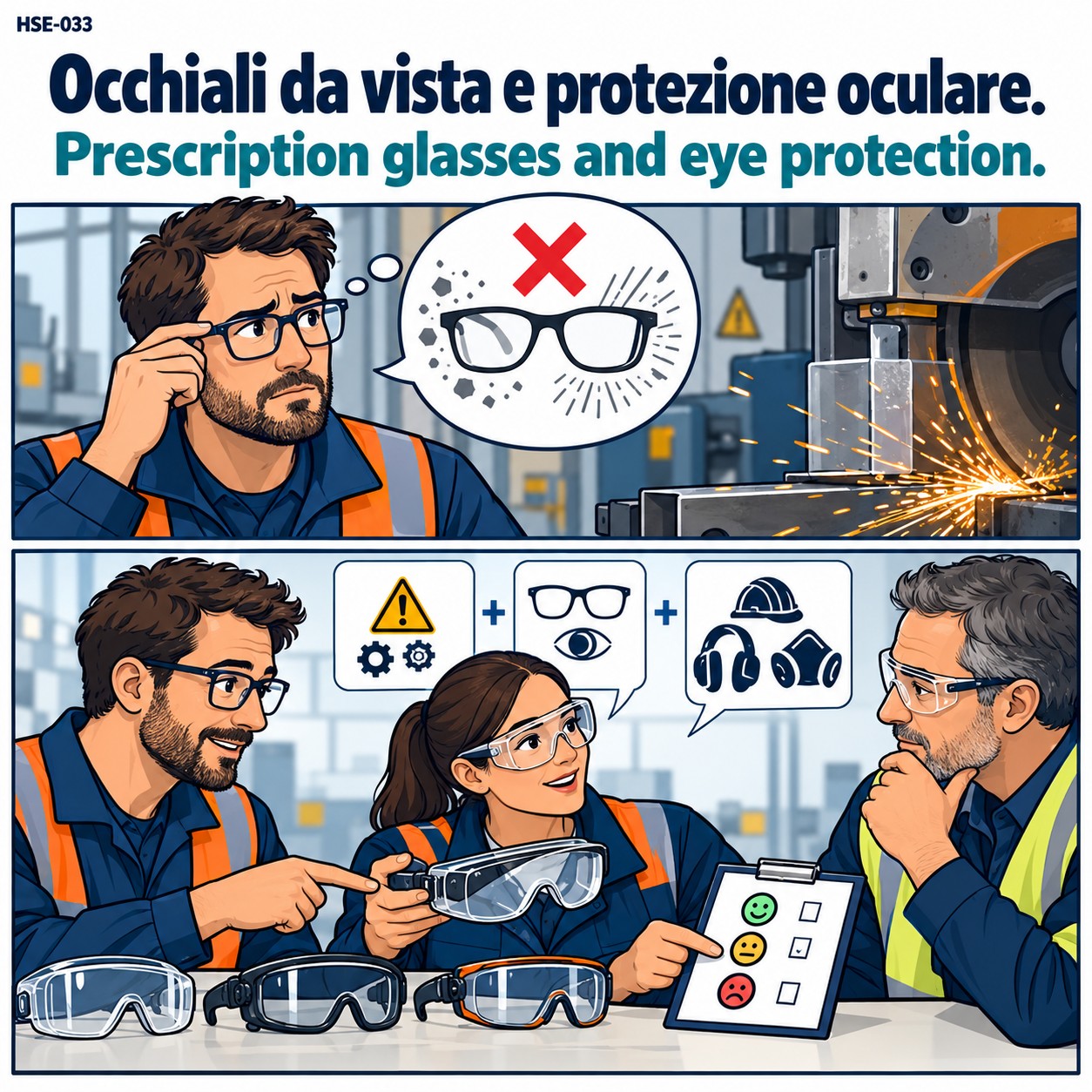
Ordinary prescription glasses do not automatically replace eye protection. Selection should consider the hazard, vision correction and compatibility with other PPE. How do you…
Read the insight ↗
Use pedestrian routes and designated crossings: painted lines need segregation measures suited to the risk. Before your next shift, check how this risk is managed in your work. A…
Read the insight ↗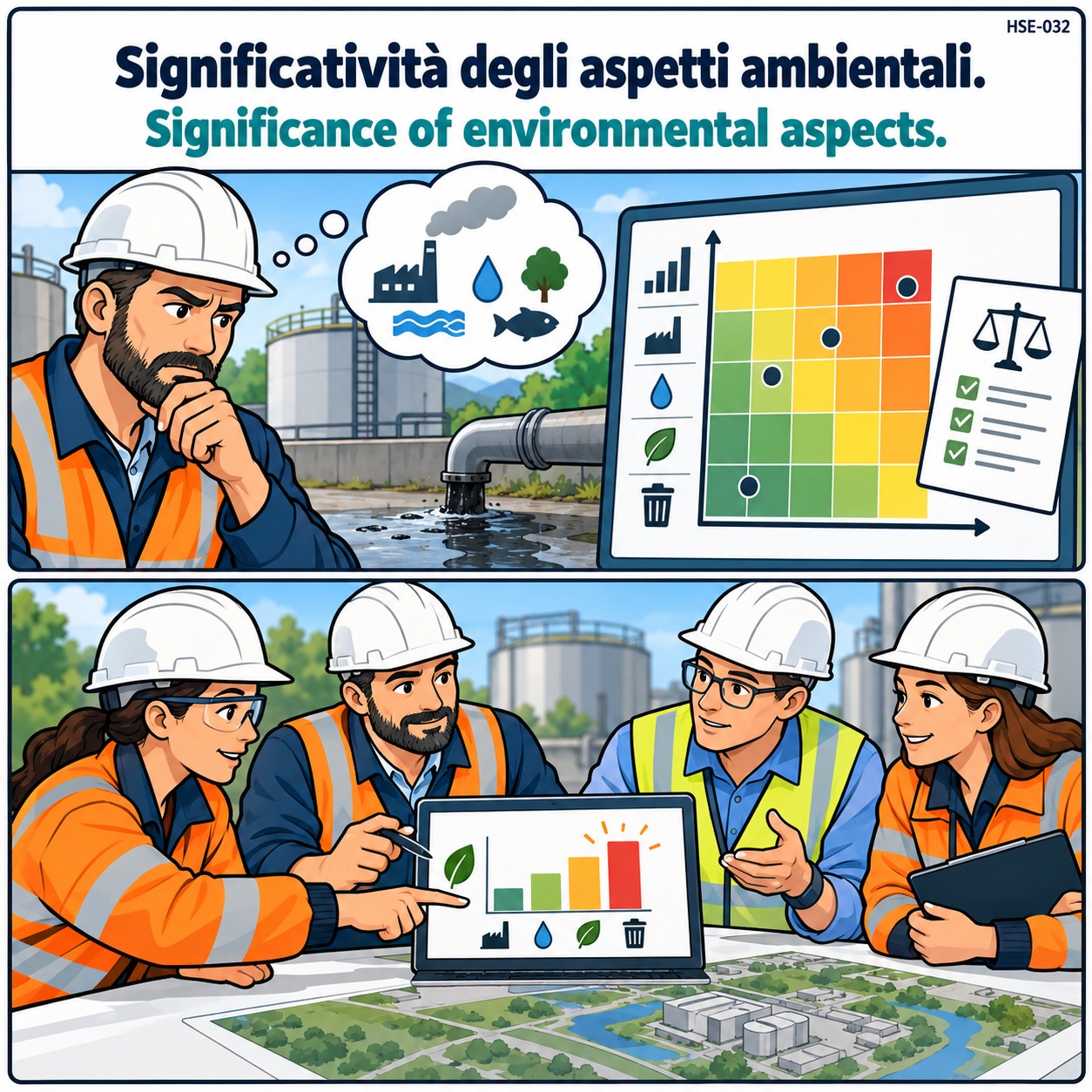
A useful score needs understandable criteria and consistent data. Frequency, impact and relevant obligations should not obscure infrequent but significant cases. Who needs this…
Read the insight ↗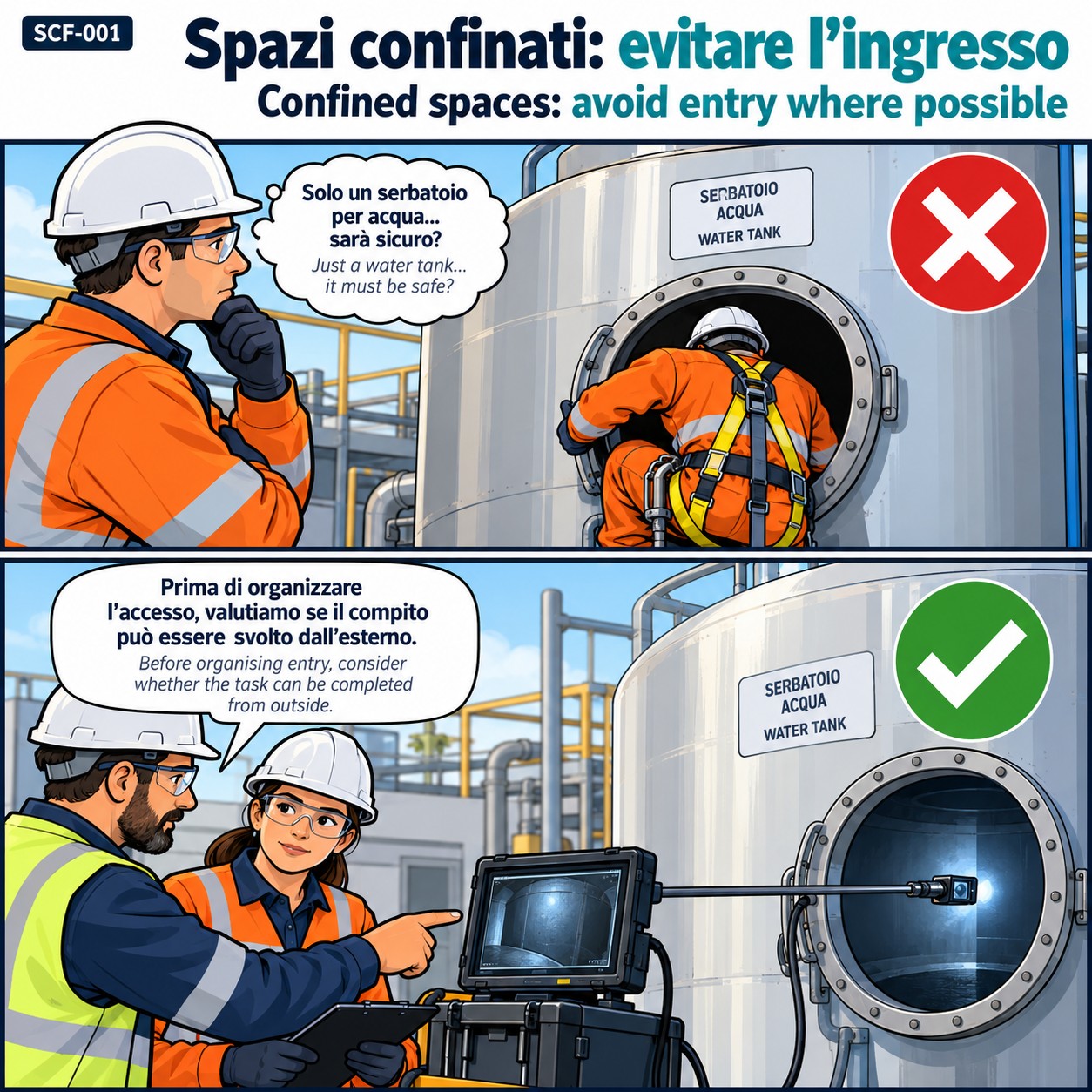
Before organising entry, consider whether the task can be completed from outside. A location’s name cannot replace assessment of its hazards and actual conditions. What evidence…
Read the insight ↗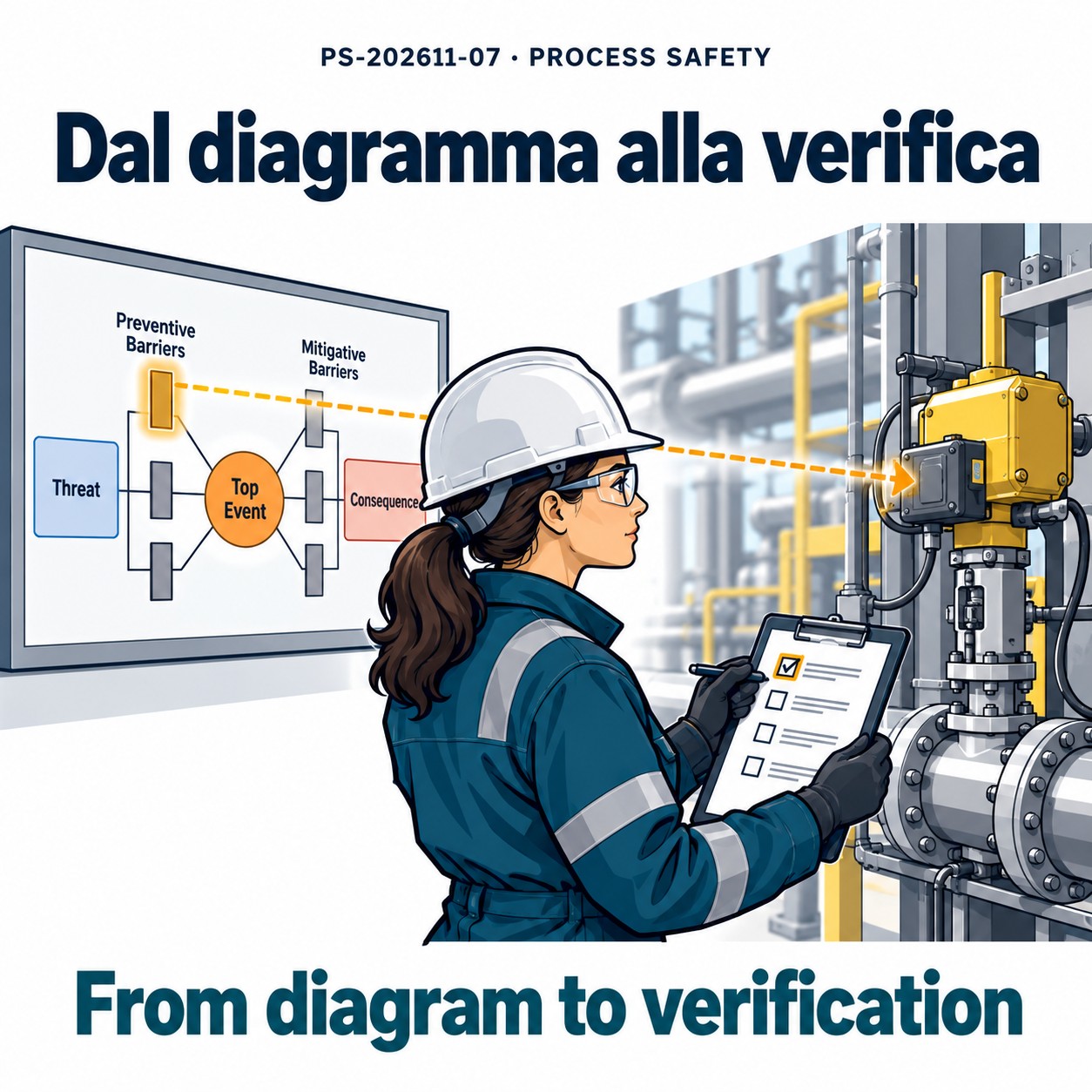
A barrier on a diagram needs an operational life. A bow-tie connects threats, loss of control and consequences. It becomes useful when each barrier has a defined role, an owner…
Read the insight ↗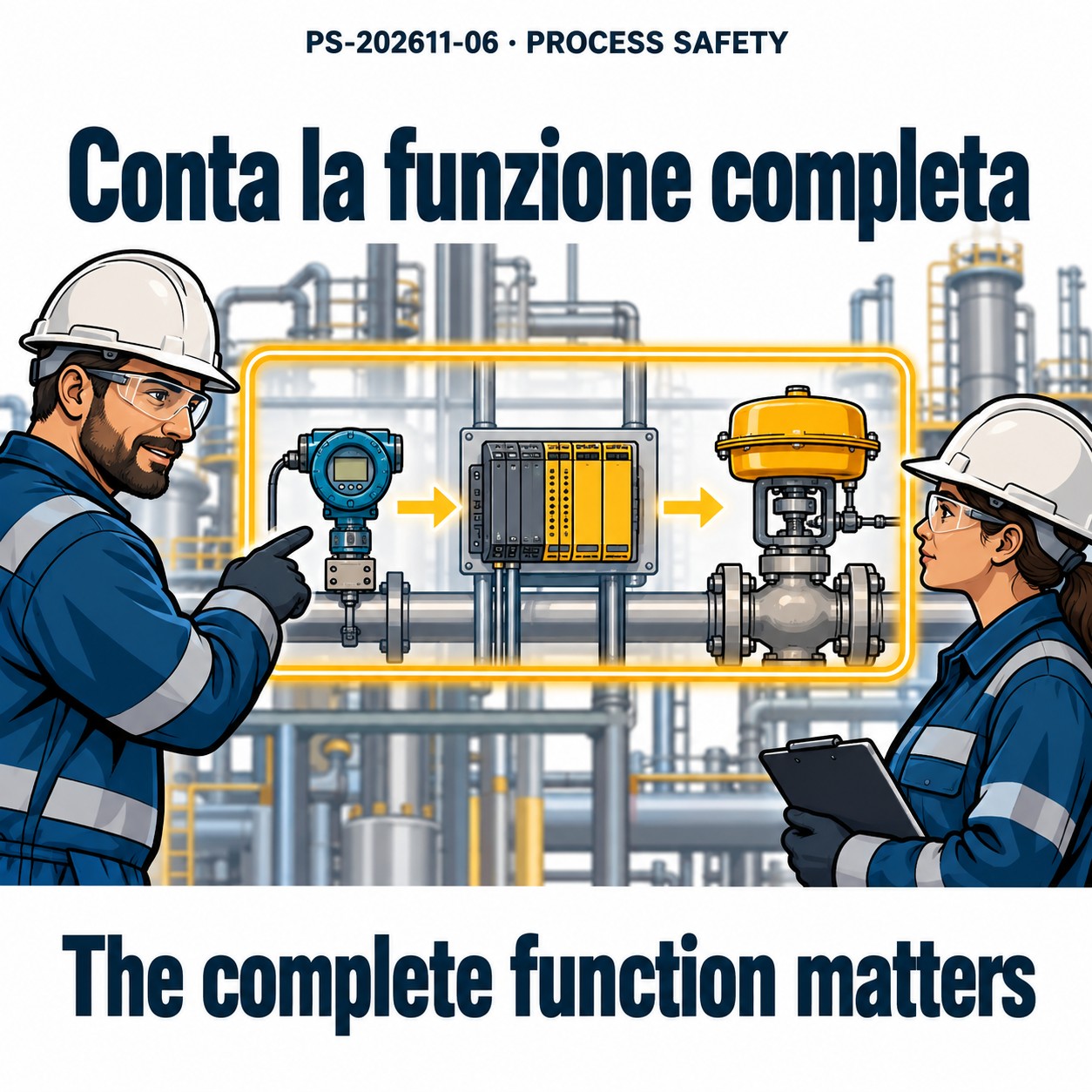
A certified component does not certify the whole protection function. A safety instrumented function brings together sensing, logic and final elements, with the requirements…
Read the insight ↗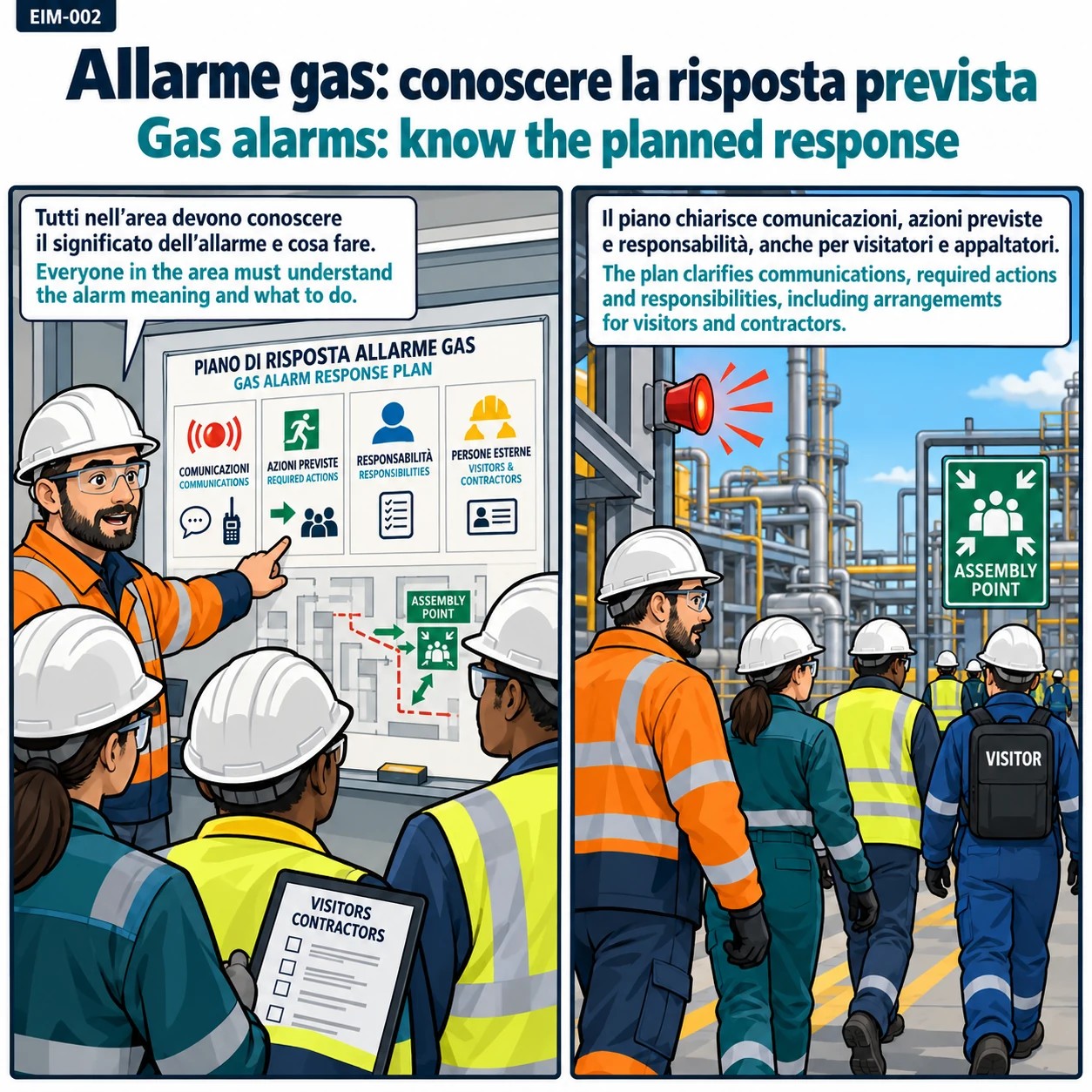
People working in an area should understand its alarms. The plan should clarify communications, required actions and responsibilities, including arrangements for visitors and…
Read the insight ↗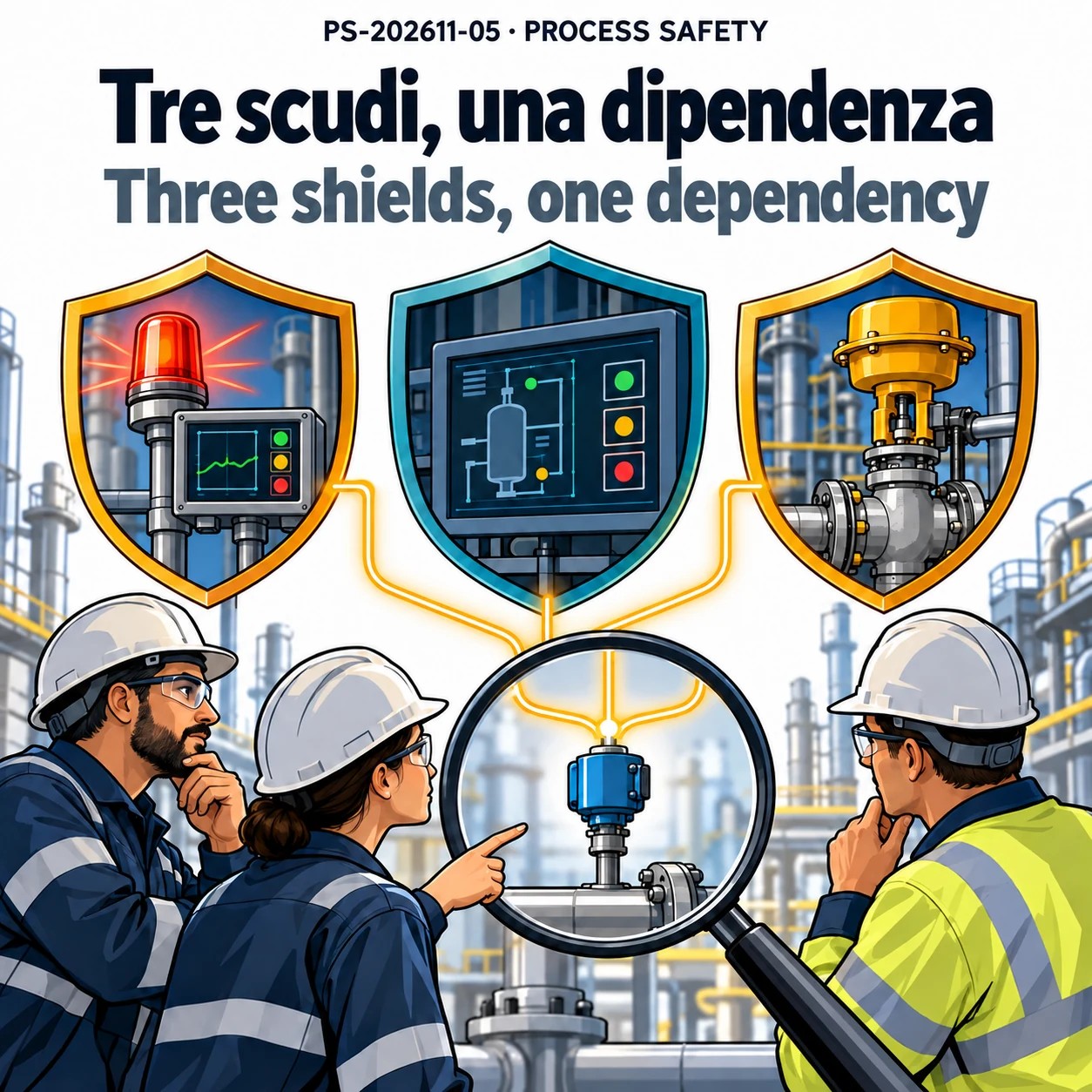
Counting barriers is not enough; their dependencies matter. Imagine two automatic actions and an alarm using the same measurement. If that measurement is involved in the…
Read the insight ↗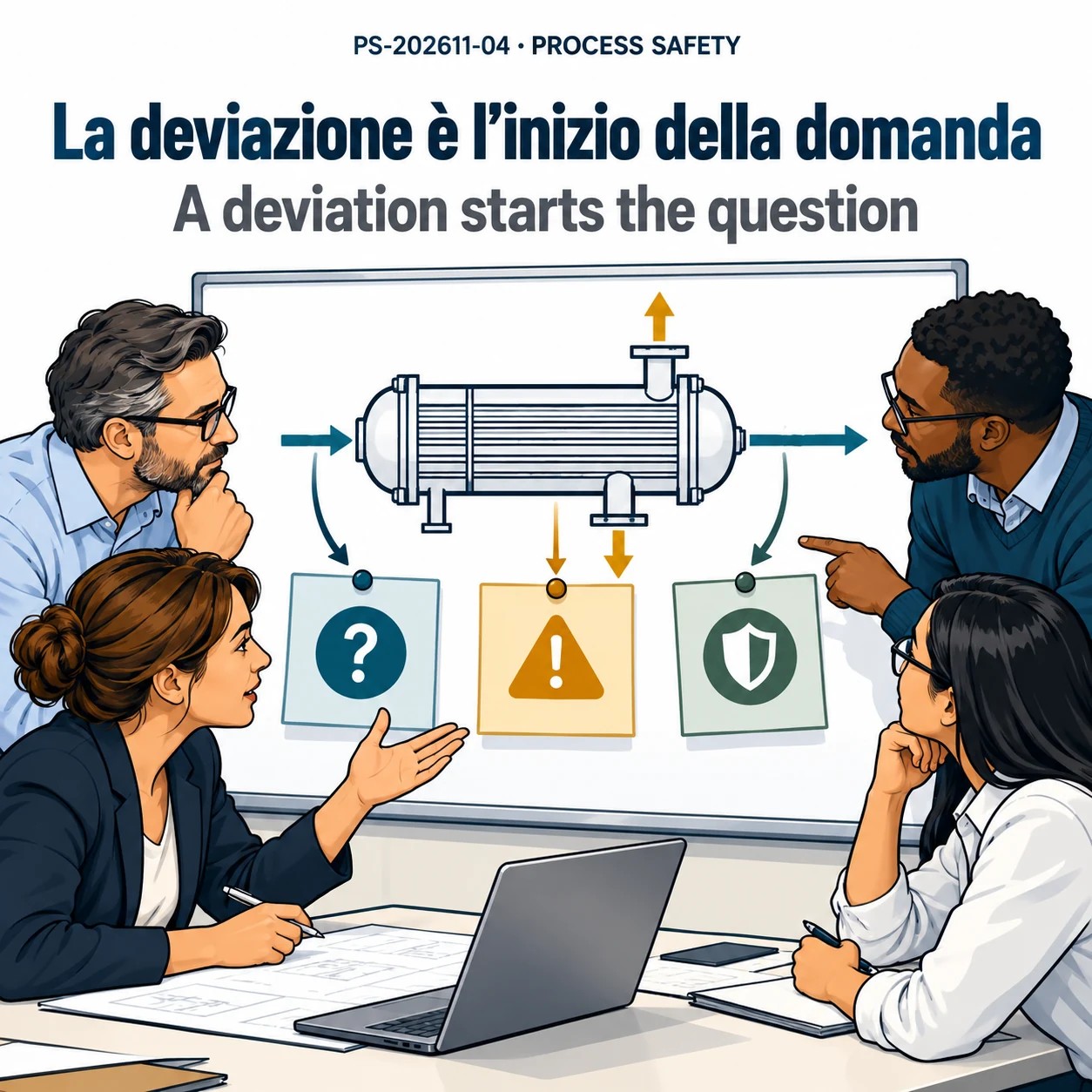
A guide word matters when it opens a precise question. “Less flow” might mean reduced cooling, insufficient feed or inadequate circulation. Consequences depend on the node's…
Read the insight ↗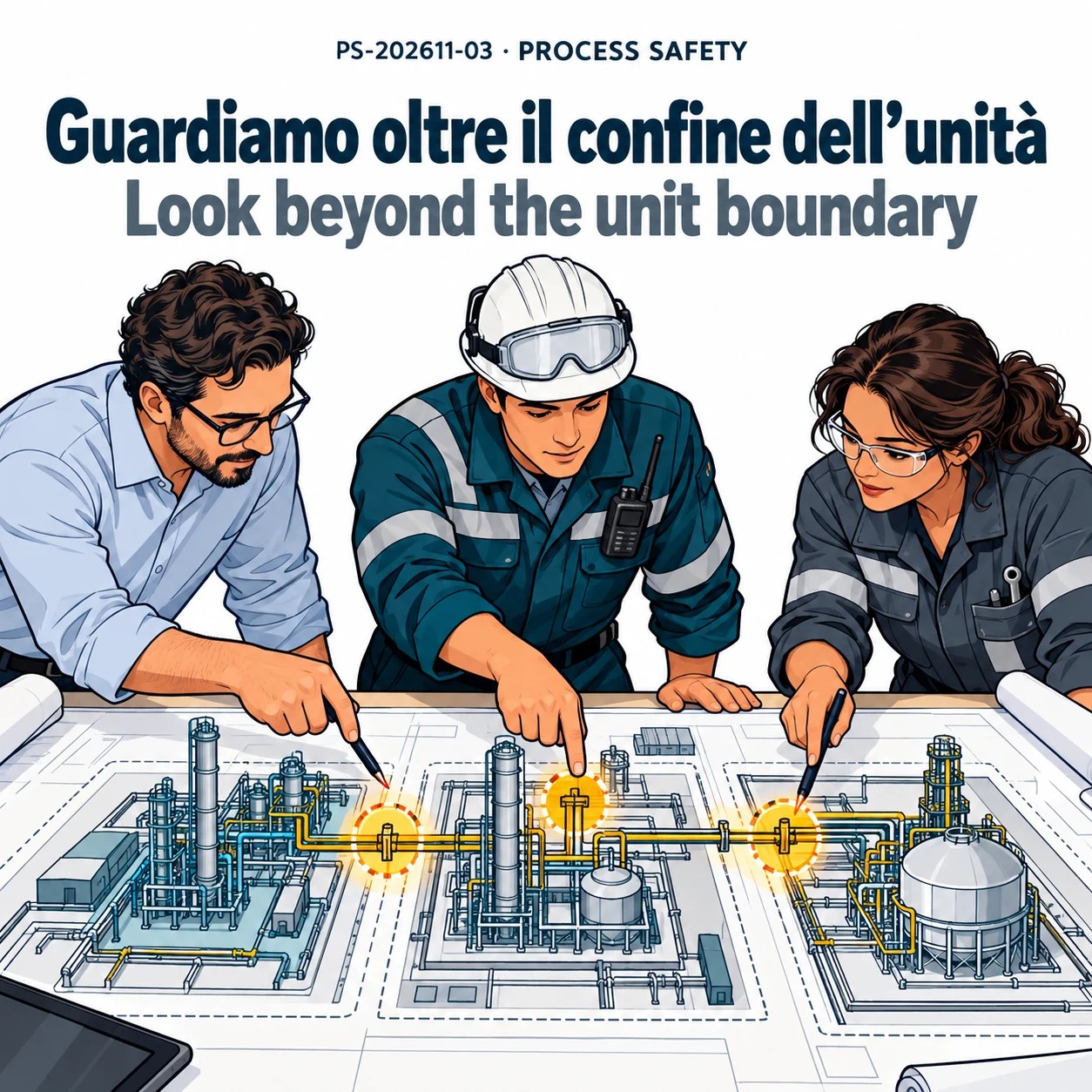
A hazard overlooked early becomes expensive to address later. HAZID helps explore hazards and interfaces while design decisions can still change. For new storage, consider…
Read the insight ↗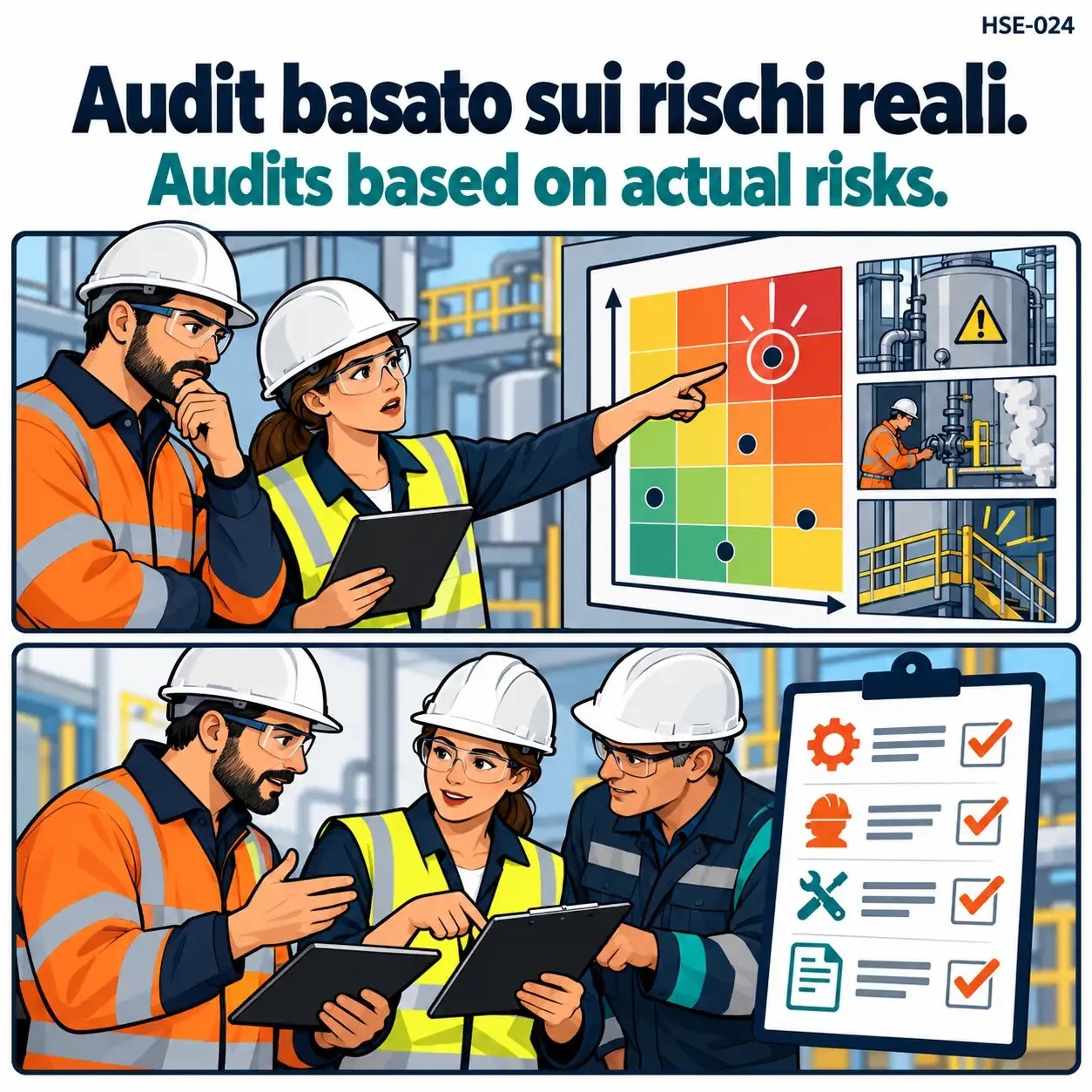
ISO 19011 provides guidance for management system audits. It connects principles, audit programmes, audit activities and competence. A practical starting point is to make the…
Read the insight ↗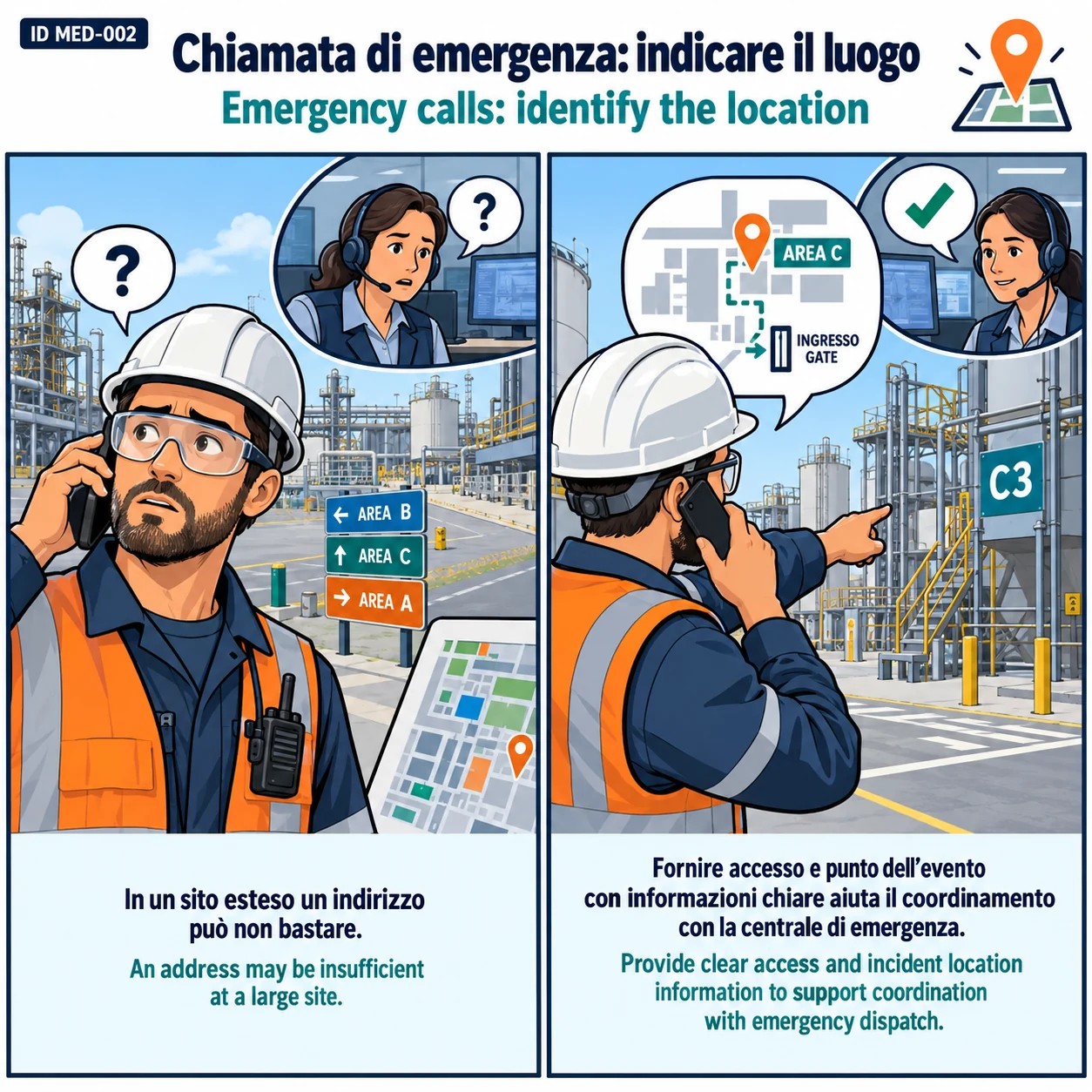
An address may be insufficient at a large site. Preparing understandable access and incident-location information supports coordination with emergency dispatch. Which…
Read the insight ↗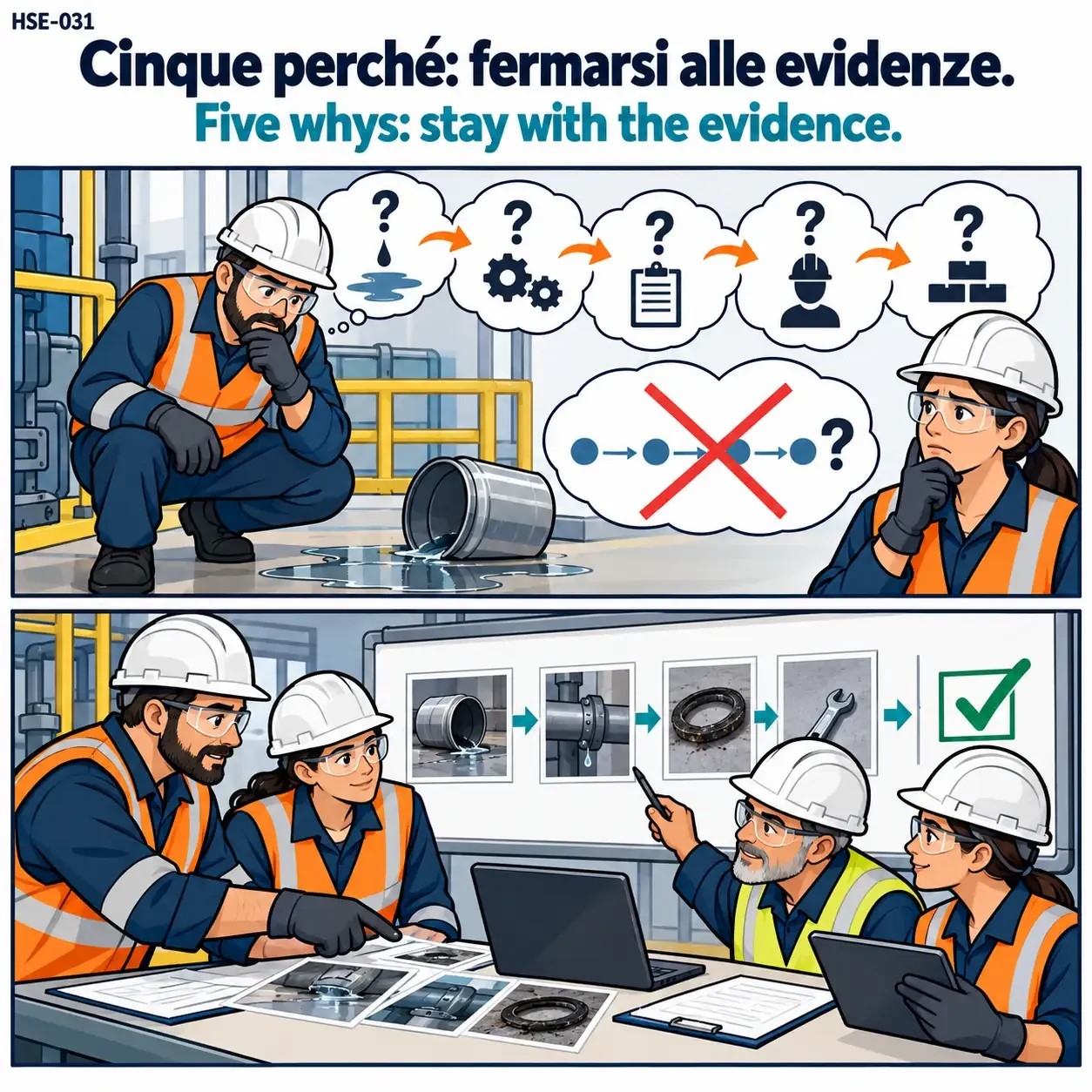
Repeating why can open an investigation, but each step needs support. An elegant chain without evidence can move away from how the process actually works. How do you connect…
Read the insight ↗
The Italian State–Regions Agreement of 17 April 2025 calls for identifying the pathway relevant to the role and activity. Check applicable requirements and delivery arrangements…
Read the insight ↗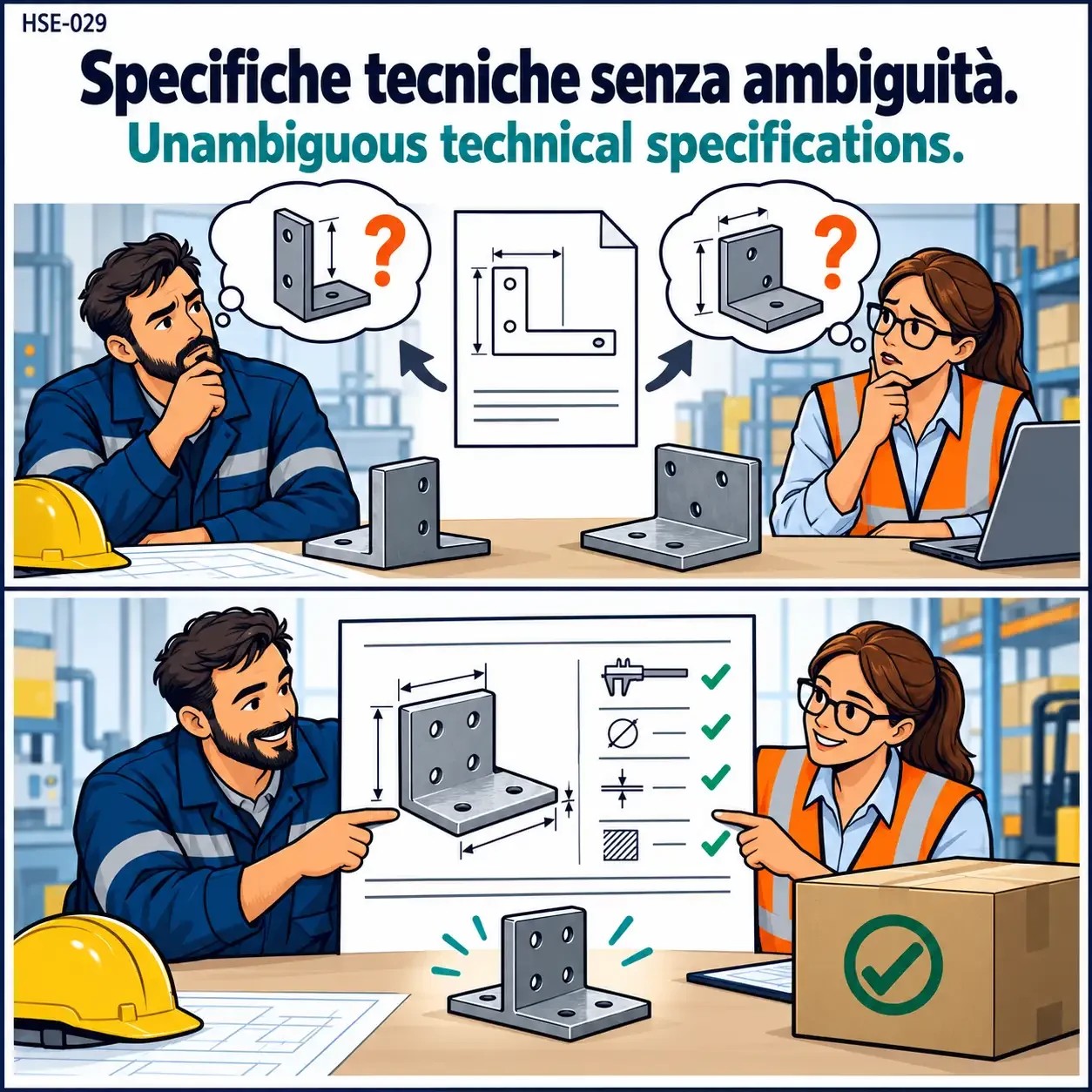
Two departments may interpret the same request differently. Measurable criteria and acceptance conditions simplify verification of purchases and deliveries. How do you turn this…
Read the insight ↗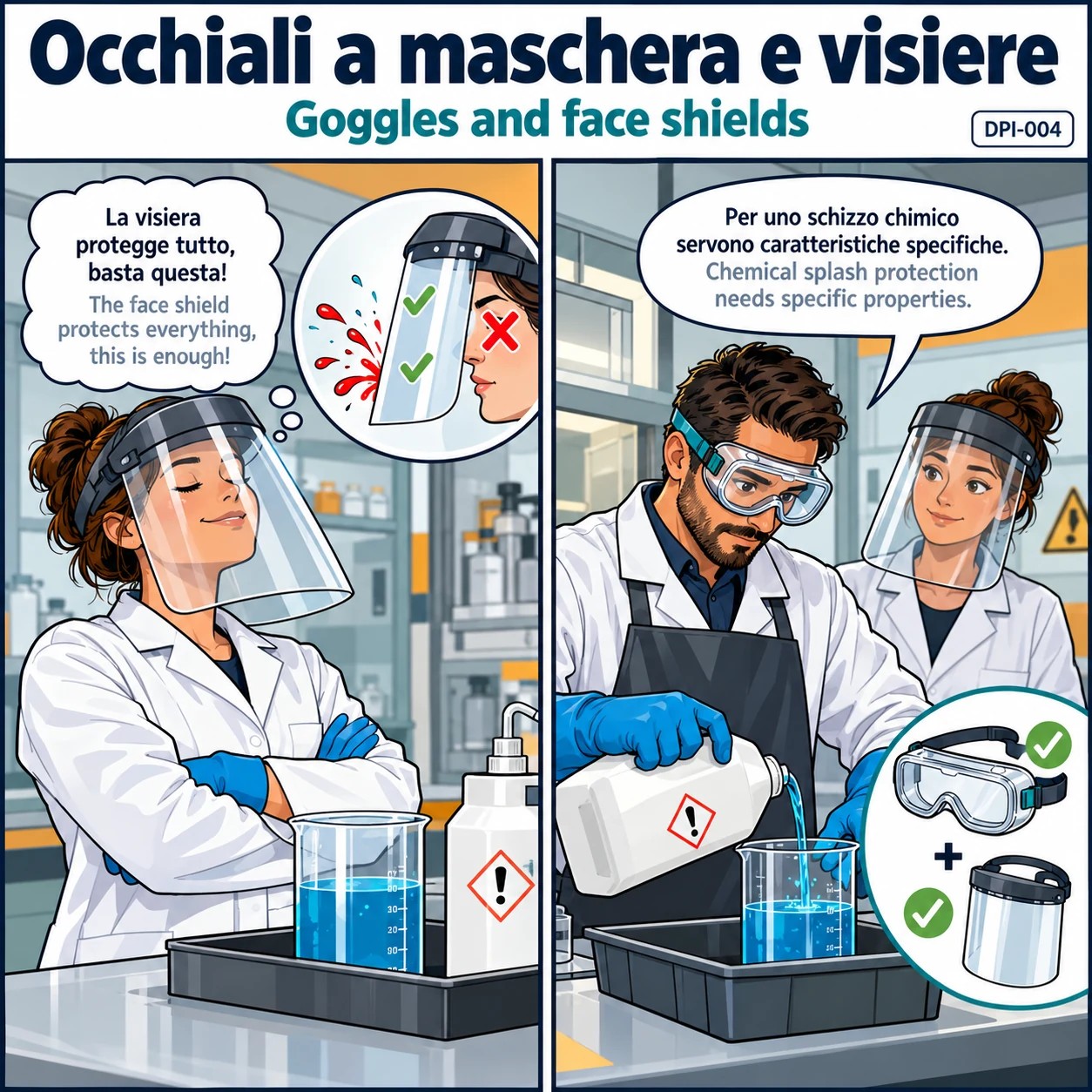
Goggles and face shields have different functions and limits. Chemical splash protection needs specific properties; a face shield should not automatically be treated as a…
Read the insight ↗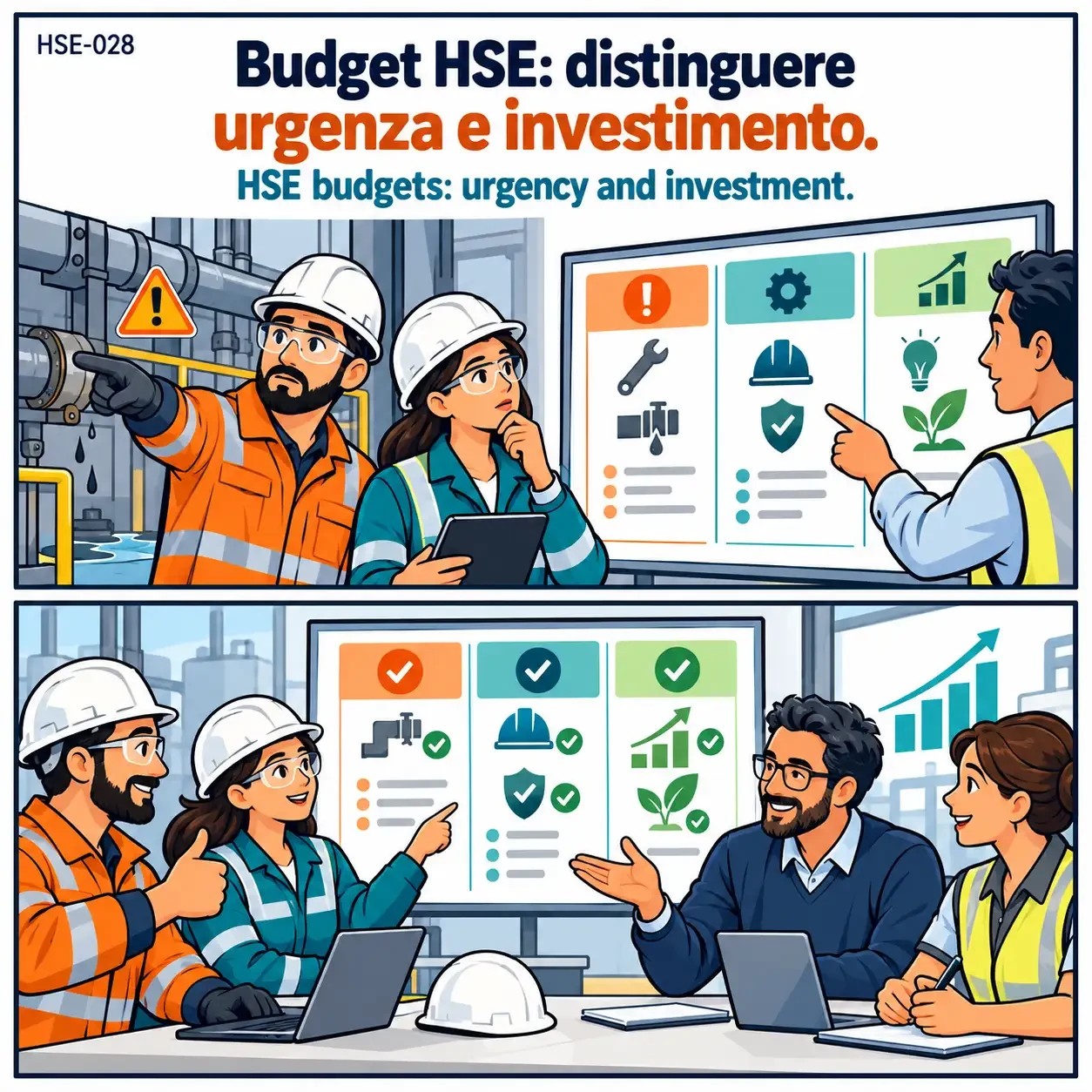
An improvement portfolio should distinguish urgent measures, control maintenance and enhancements. Cost is one decision factor alongside exposure, effectiveness and applicable…
Read the insight ↗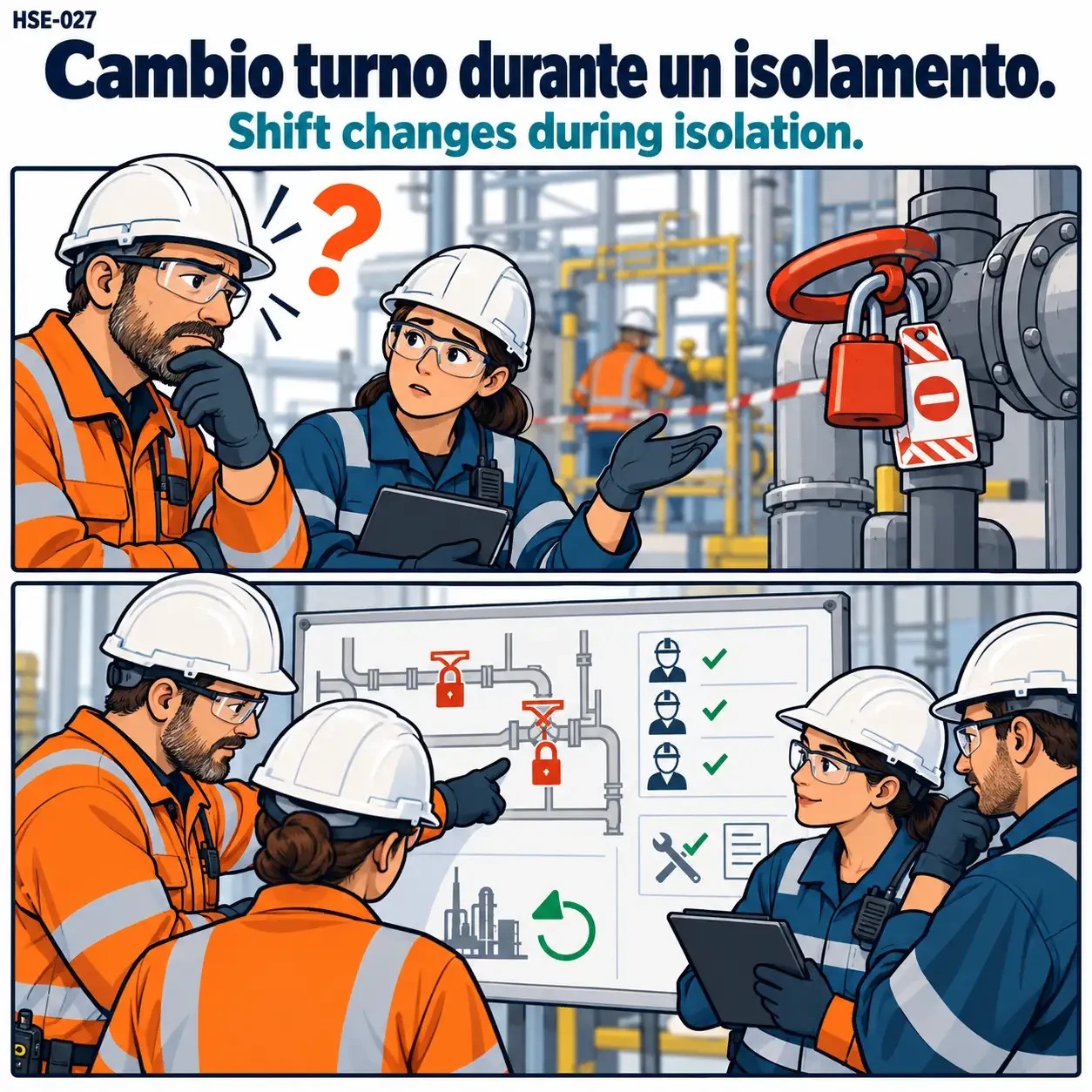
A padlock alone does not explain the job status. Handover should clarify active isolations, people involved and conditions for returning the plant to service. How do you check…
Read the insight ↗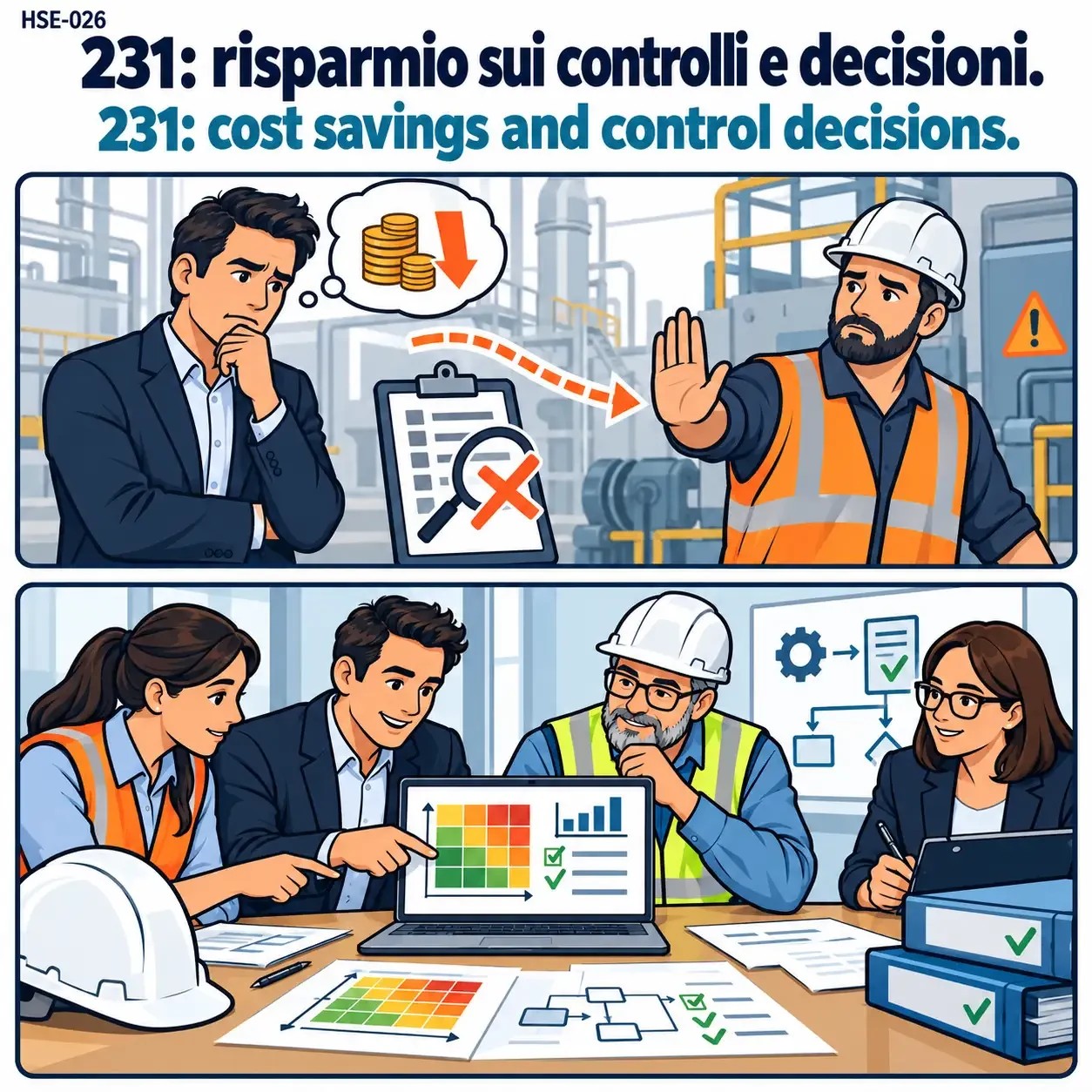
Deferring a check to save money needs a traceable risk assessment. Corporate liability depends on statutory conditions; one indicator cannot support automatic conclusions. What…
Read the insight ↗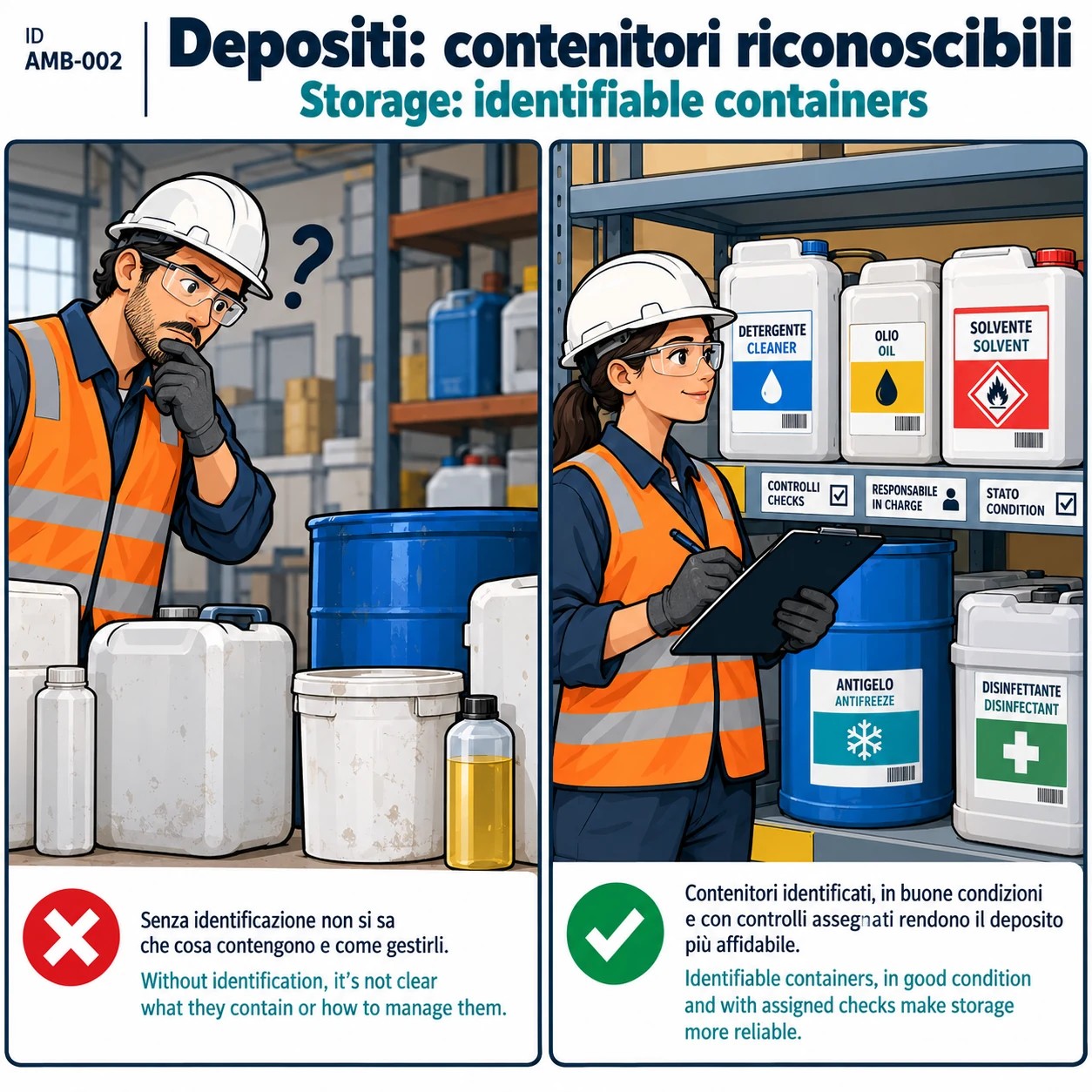
A container should make its contents and management requirements clear. Identification, condition and assigned checks make everyday storage more reliable. How do you check that a…
Read the insight ↗
Ship and terminal may use different procedures for the same event. Pre-operation coordination should clarify communication, responsibilities and stop conditions. Which…
Read the insight ↗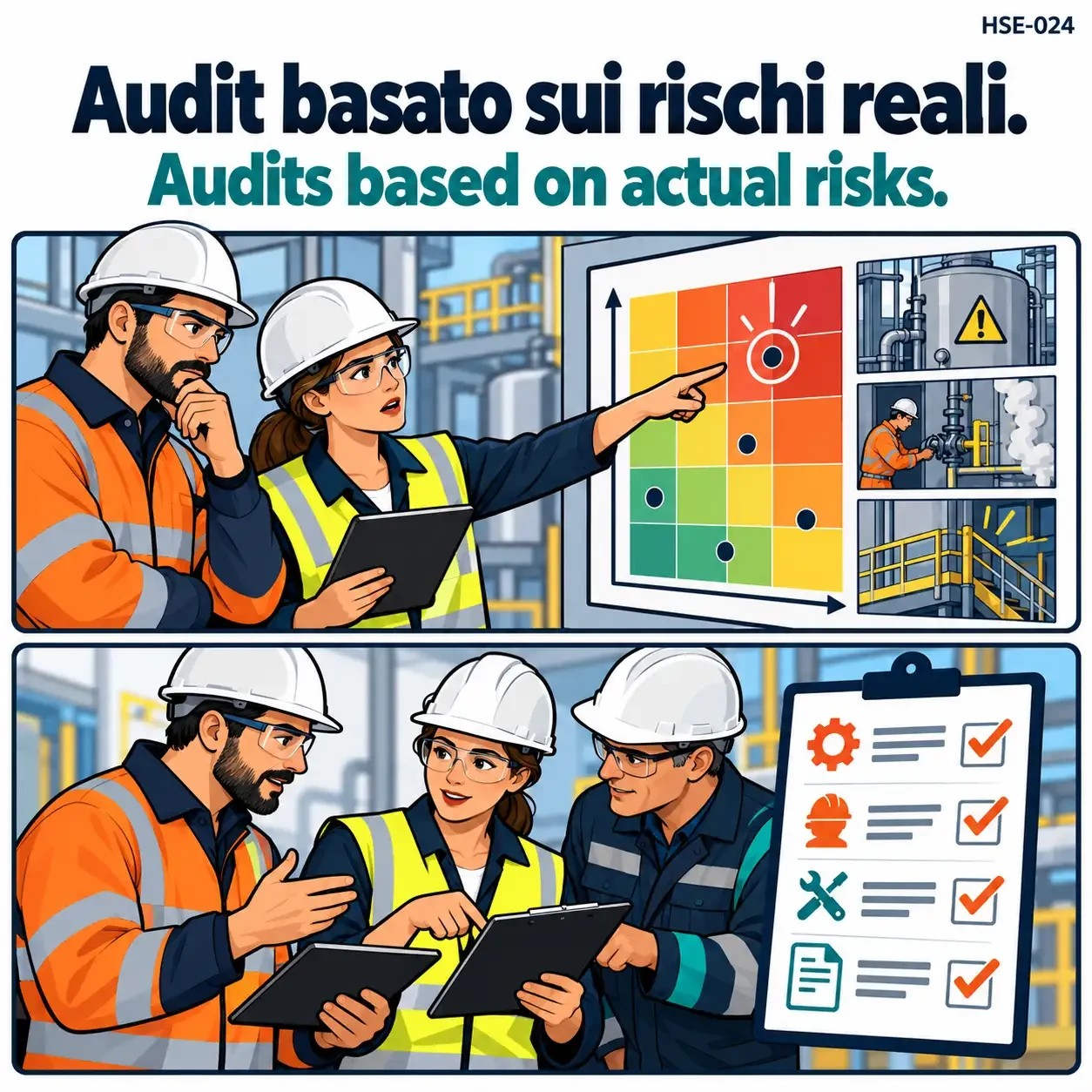
An audit programme should give more attention to processes with significant exposure and change. Repeating the same sample each year can overlook critical areas. What evidence…
Read the insight ↗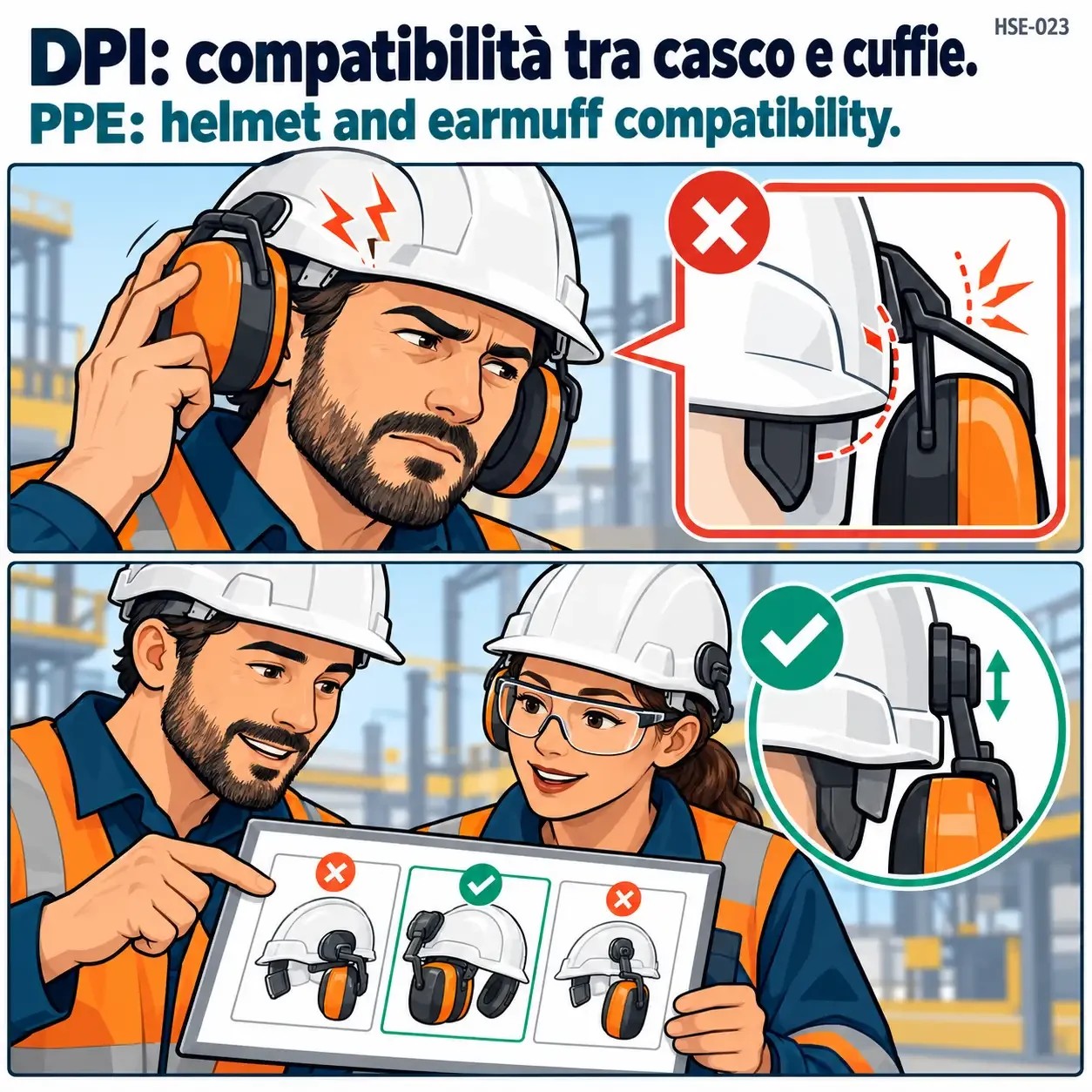
Two individually suitable devices can interfere when combined. Check approved combinations, assembly and fit under the manufacturers’ instructions. Which check do you consider…
Read the insight ↗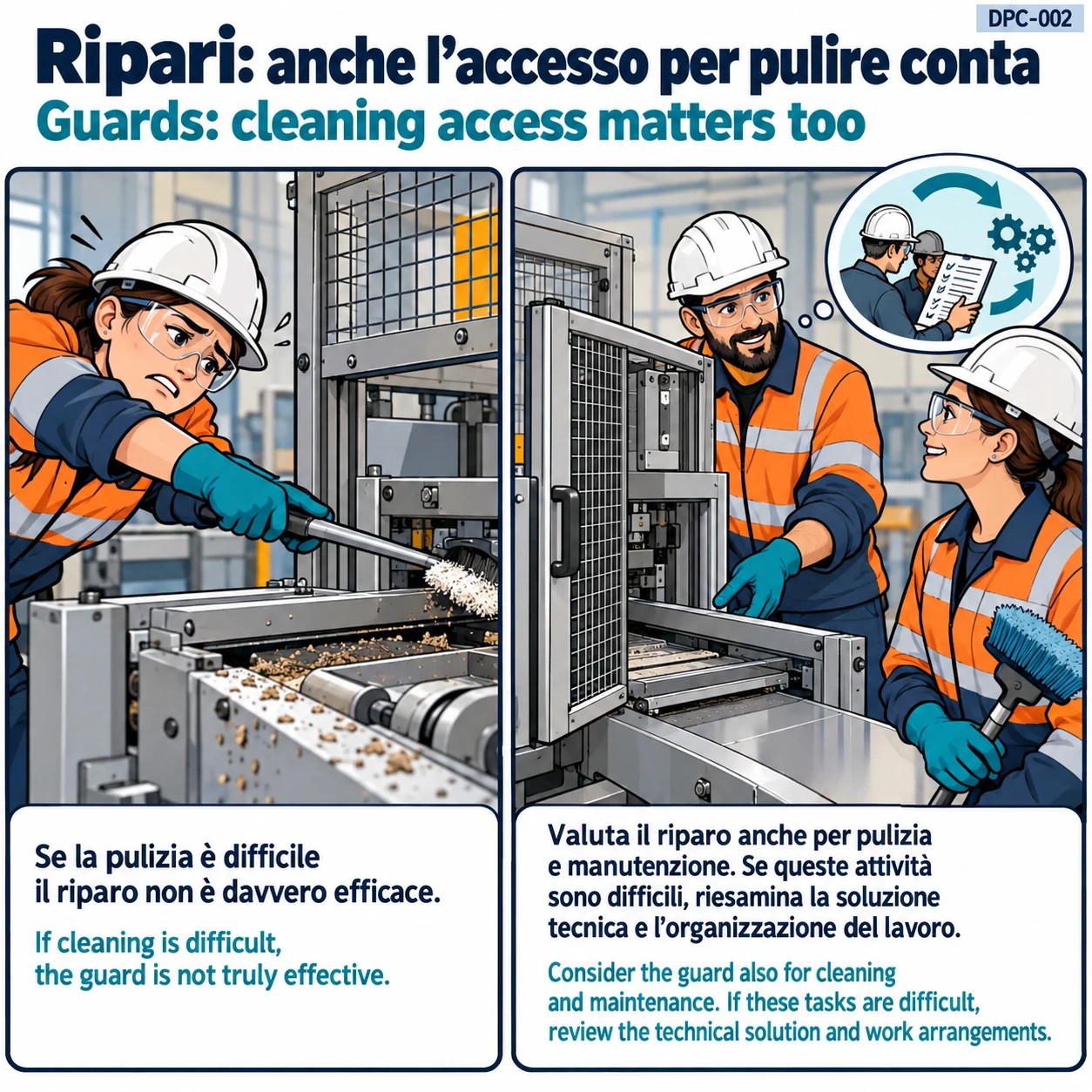
Consider guarding during cleaning and maintenance as well as production. If these tasks become difficult, review the technical solution and work arrangements. Which recent change…
Read the insight ↗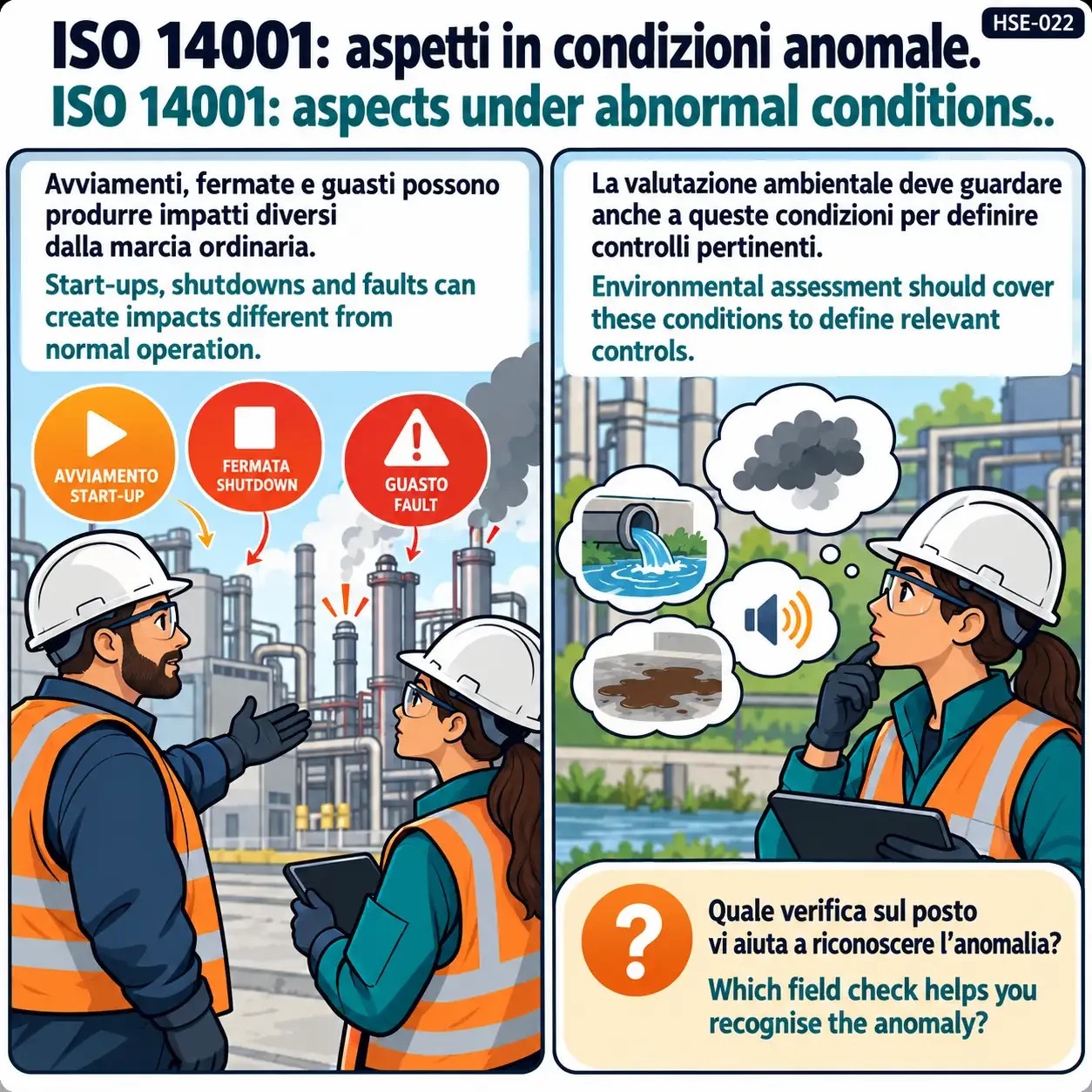
Start-ups, shutdowns and faults can create impacts different from normal operation. Environmental assessment should cover these conditions to define relevant controls. Which…
Read the insight ↗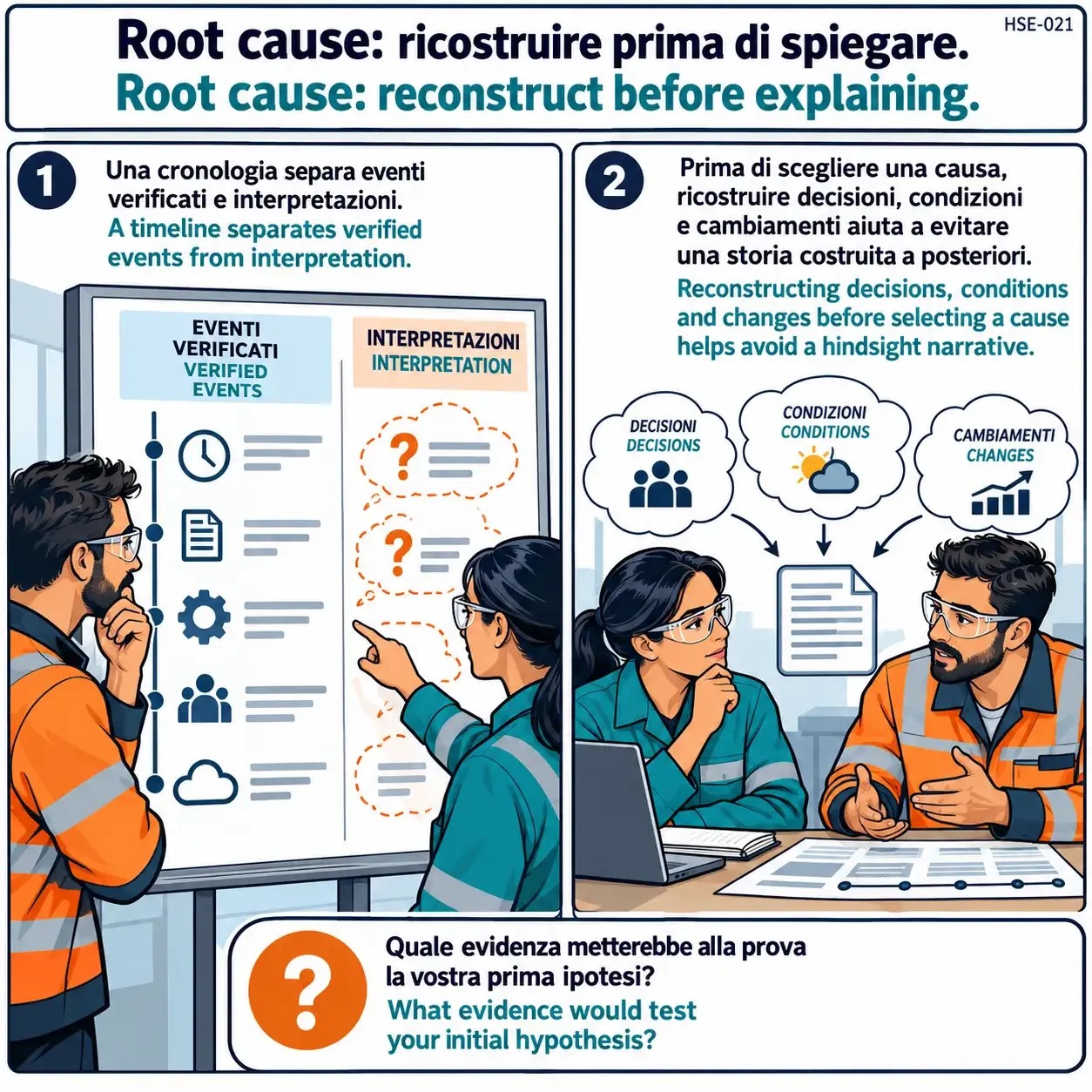
A timeline separates verified events from interpretation. Reconstructing decisions, conditions and changes before selecting a cause helps avoid a hindsight narrative. What…
Read the insight ↗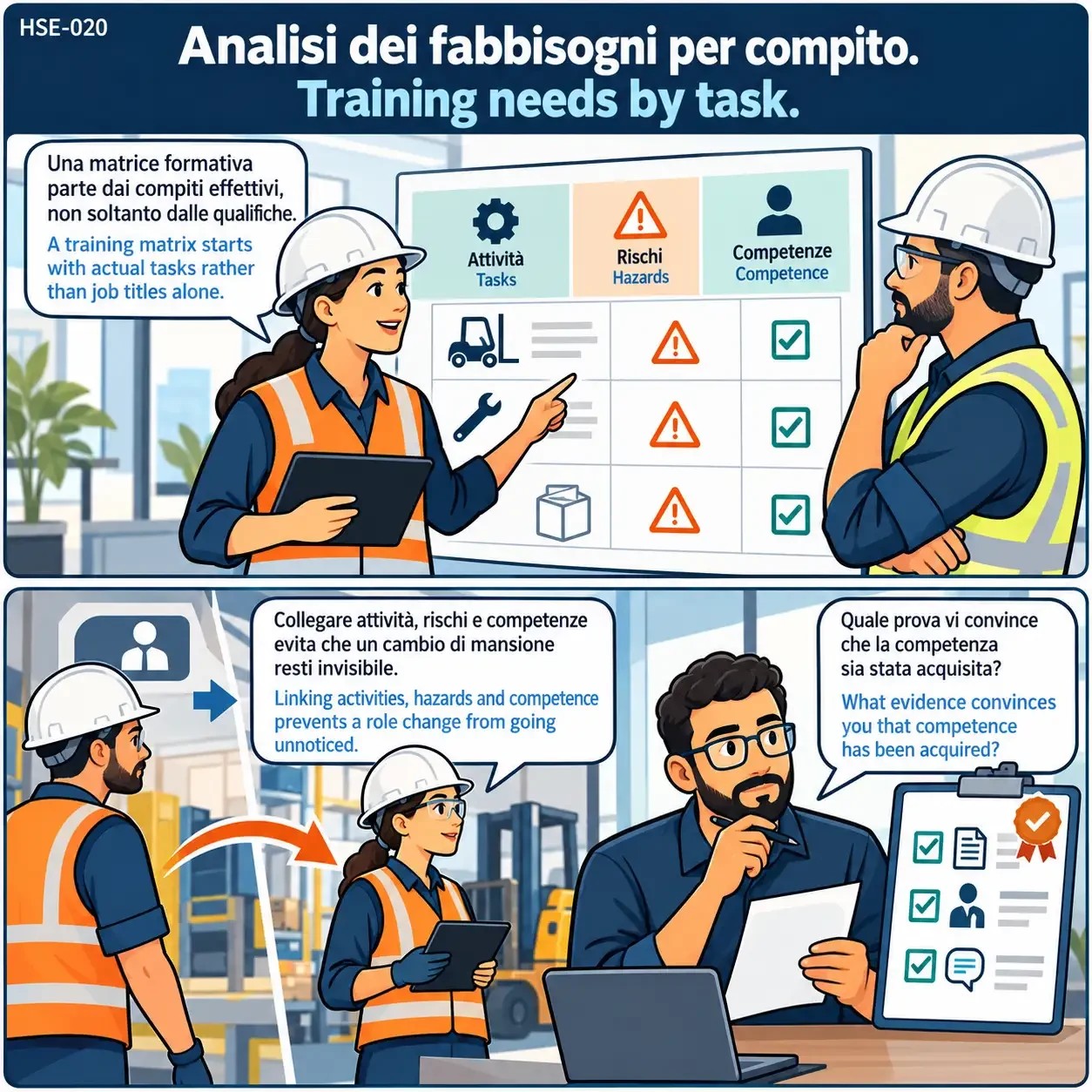
A training matrix starts with actual tasks rather than job titles alone. Linking activities, hazards and competence prevents a role change from going unnoticed. What evidence…
Read the insight ↗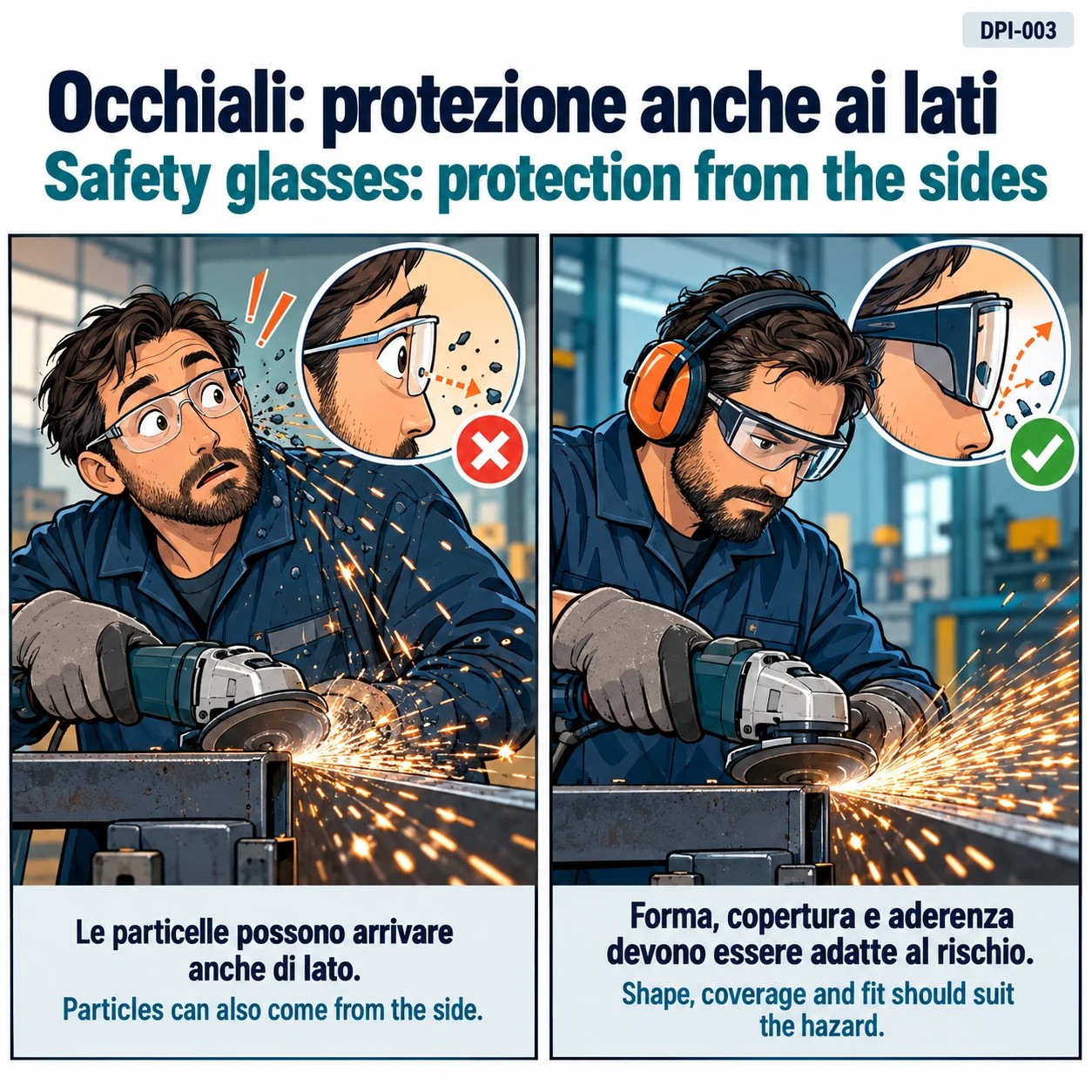
The direction of flying particles matters when selecting eye protection. Shape, coverage and fit should suit the hazard and the other equipment worn. What information do you…
Read the insight ↗
A commercial promise can become an operational constraint. Reviewing requirements, capability and uncertainties before commitment reduces delivery surprises. Which data makes…
Read the insight ↗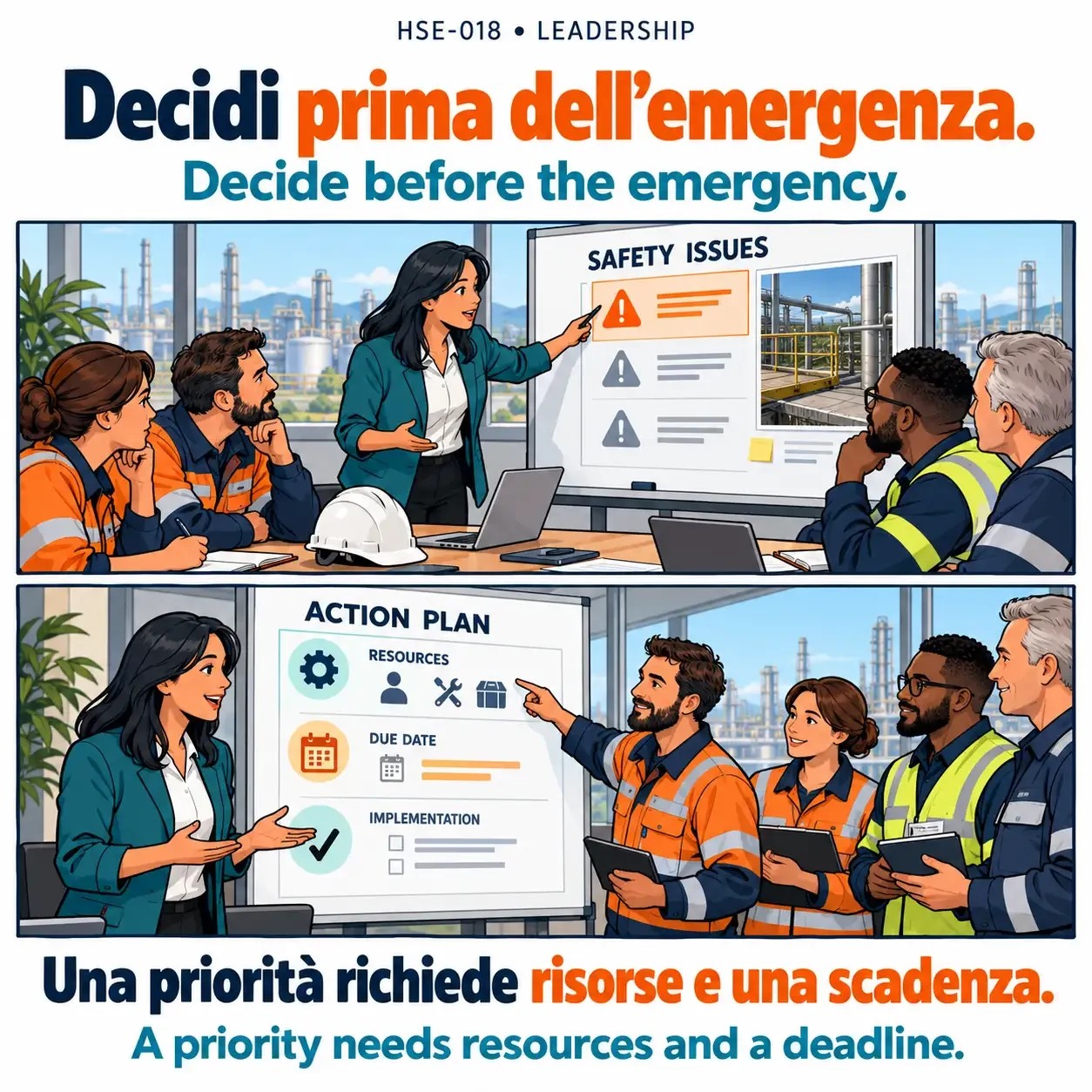
An HSE priority becomes credible when it receives a decision, resources and a deadline. Repeated deferral without explicit assessment leaves risk with those doing the work. Which…
Read the insight ↗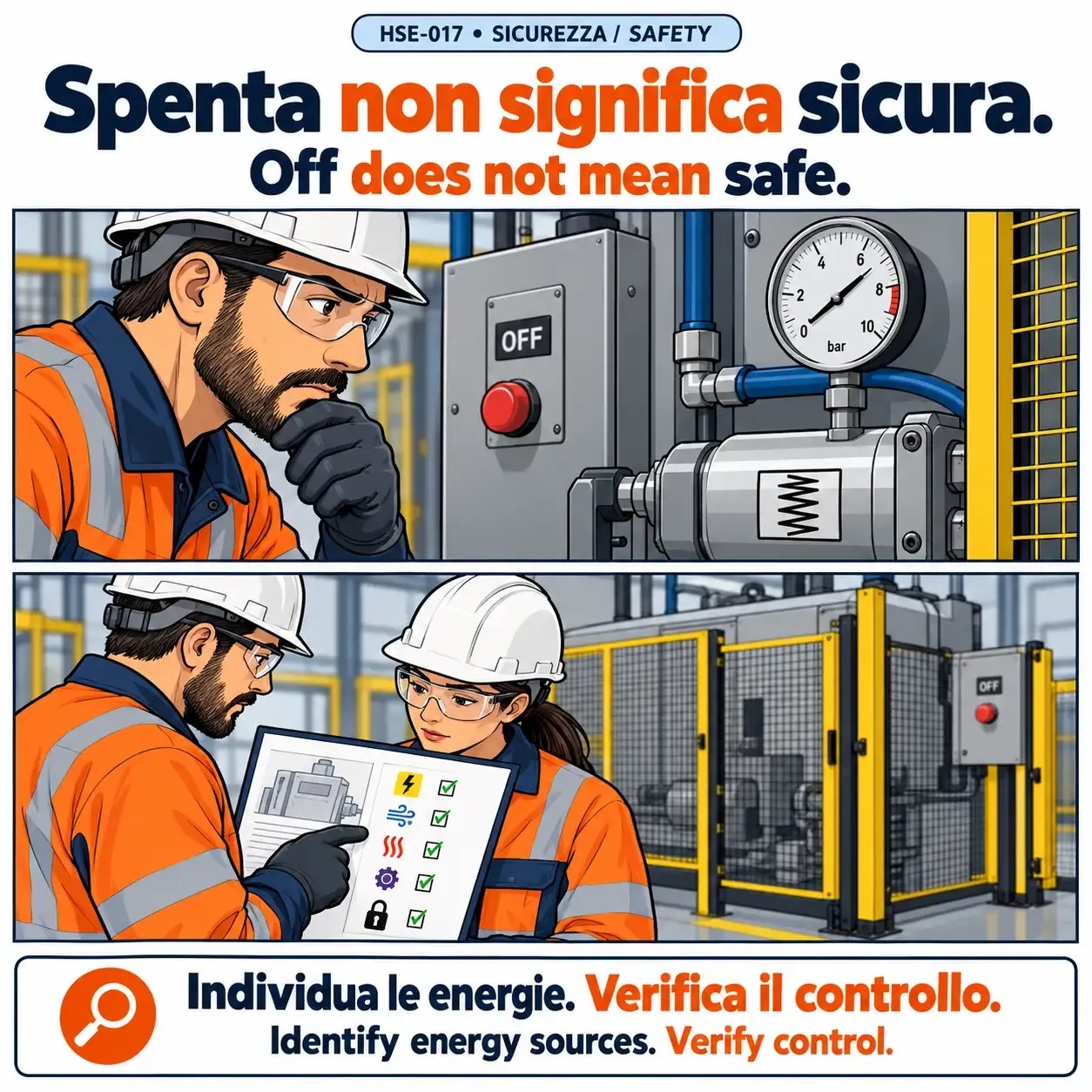
Compressed air, springs and suspended parts may remain hazardous after shutdown. Maintenance needs planned isolation covering every energy source and verification that it is…
Read the insight ↗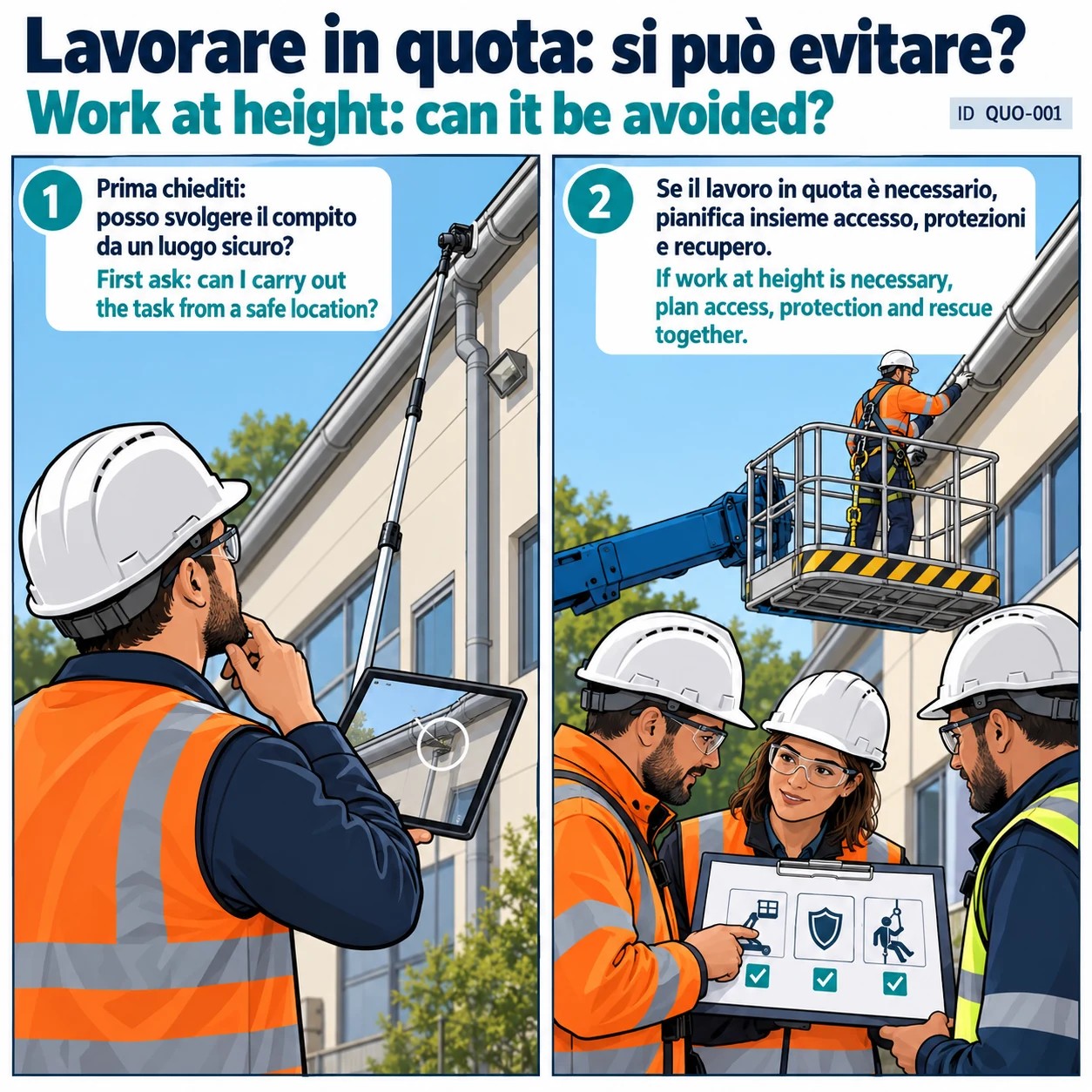
First ask whether the task can be done from a safe location. Where work at height is necessary, plan access, protection and rescue together. Which condition would make you…
Read the insight ↗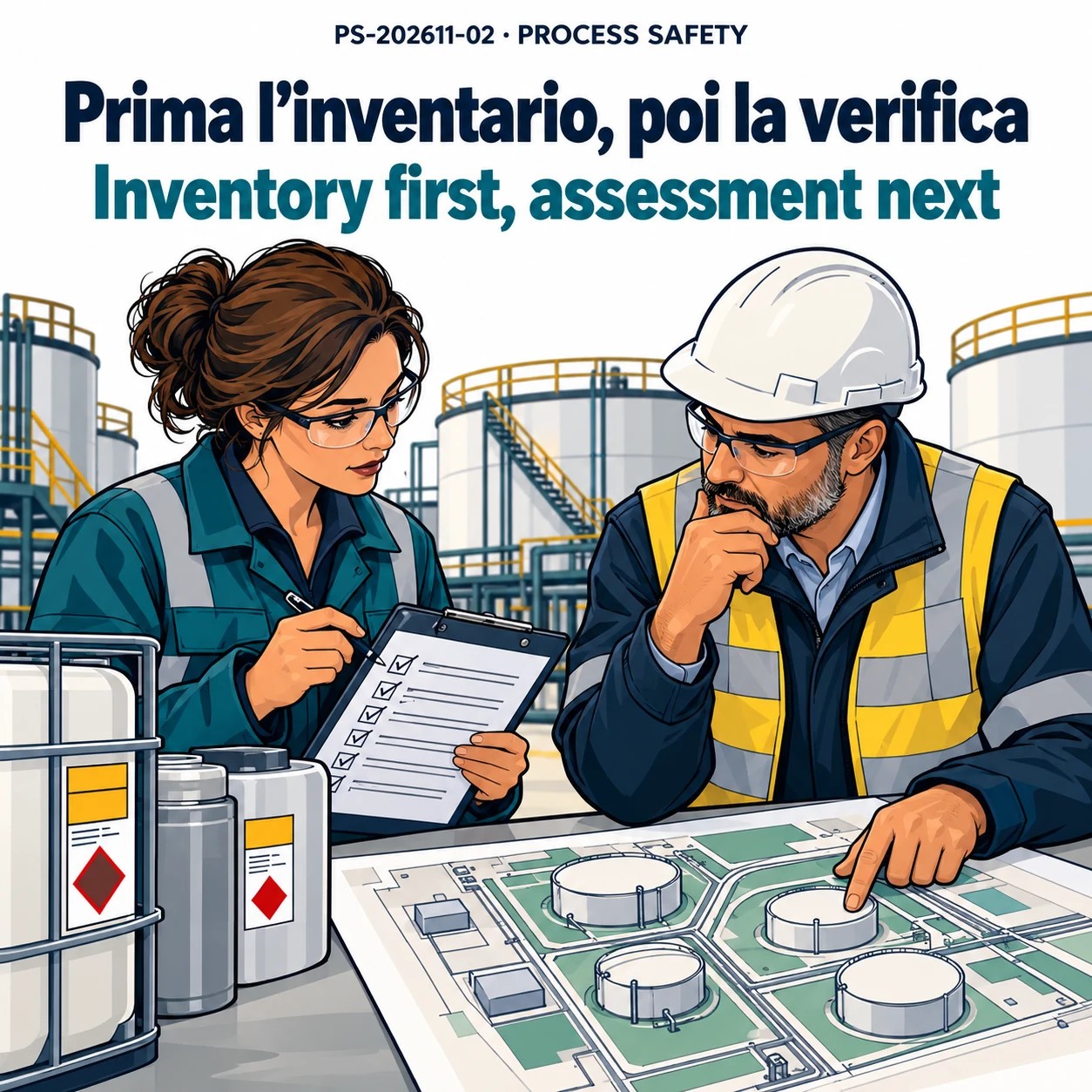
The first Seveso check starts with substances, not the company's name. Italian Legislative Decree 105/2015 implements Seveso III. Applicability requires assessment of…
Read the insight ↗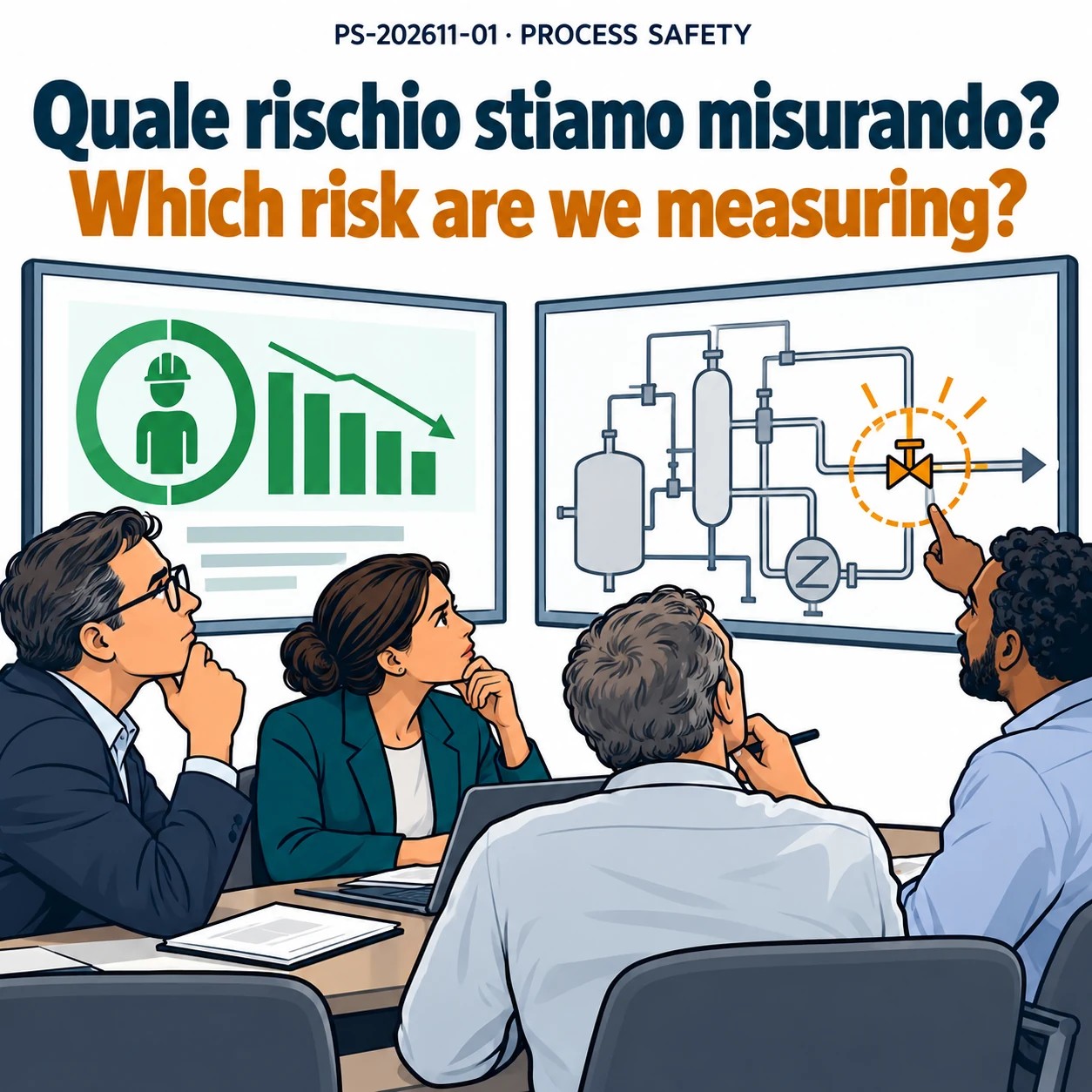
Zero injuries does not mean zero major accident risk. A site can report excellent personal safety results while accumulating overdue tests, containment leaks and forgotten…
Read the insight ↗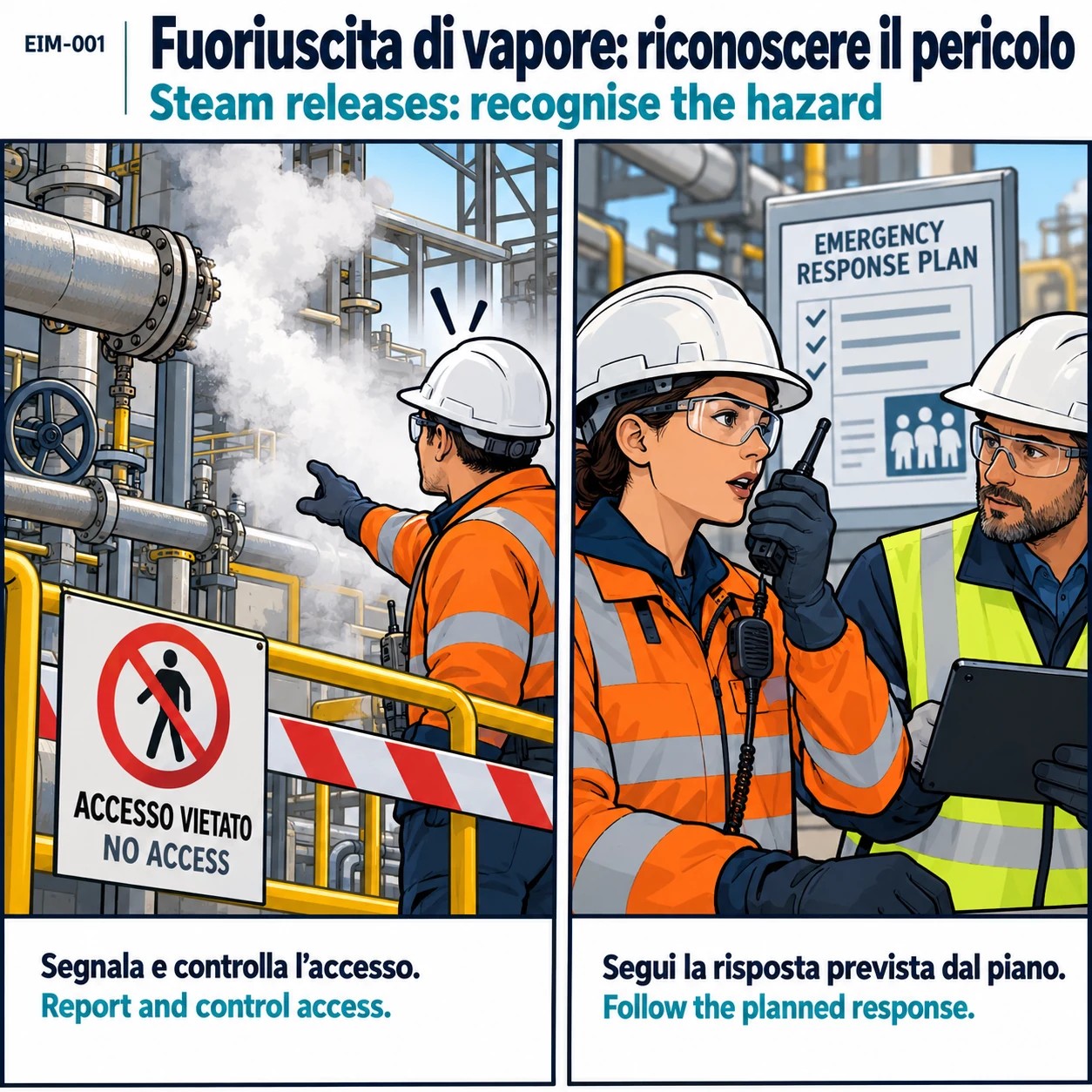
A release from a pressure system needs the planned response. Reporting and access control come before improvised attempts to locate or stop the leak. Which interface deserves a…
Read the insight ↗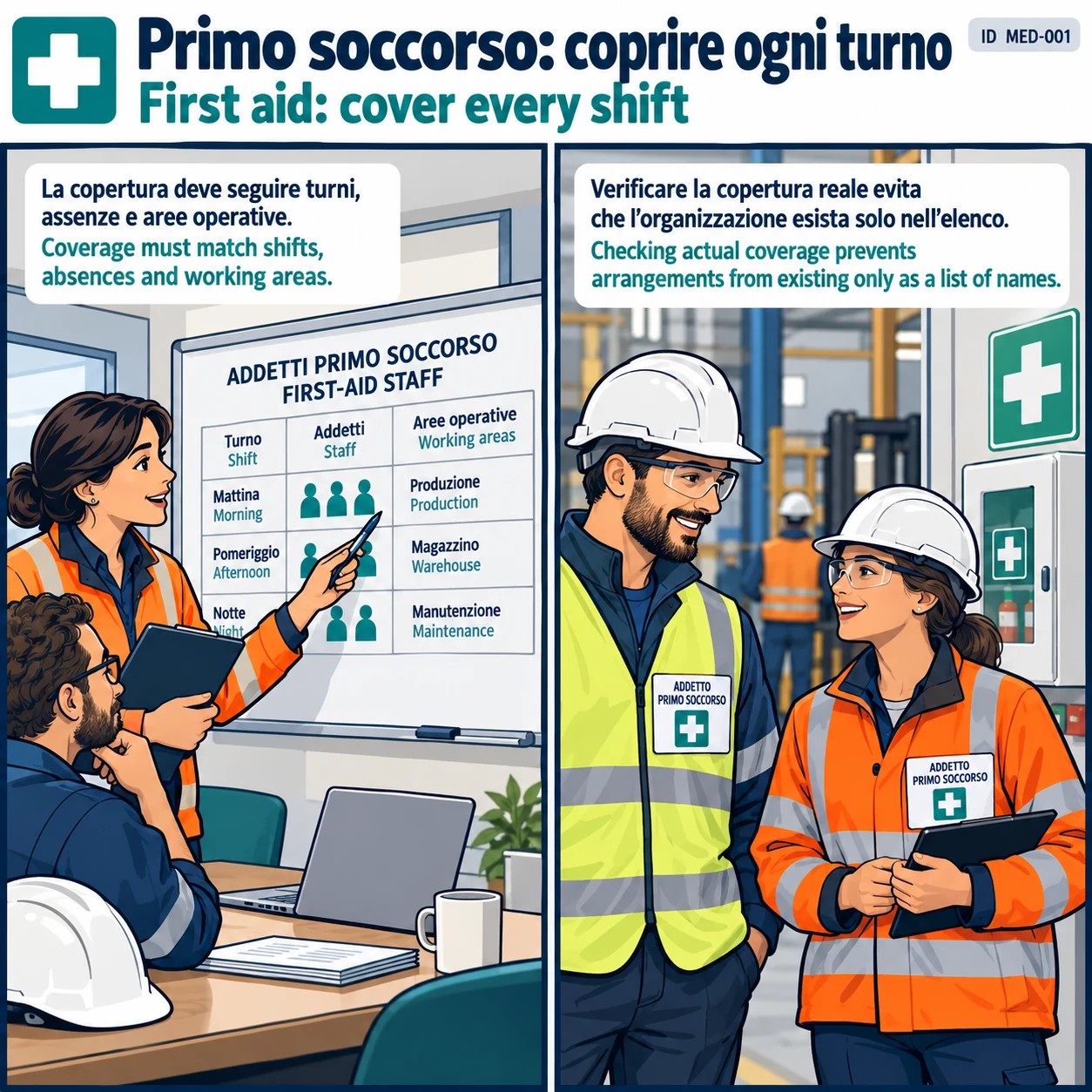
First-aid availability should match shifts, absences and working areas. Checking actual coverage prevents arrangements from existing only as a list of names. Which step did you…
Read the insight ↗
A procedure helps when the correct version is available when needed. Searching through different copies can create uncertainty during work. Define where to find valid documents…
Read the insight ↗
Recognising a container and knowing its contents helps people handle it correctly. Integrity, closure and identification need ongoing attention. Check that applicable labels are…
Read the insight ↗
A workstation should fit the person and the task. Small adjustments can improve comfort and reduce awkward postures. Check seating, foot support, screen and keyboard positions…
Read the insight ↗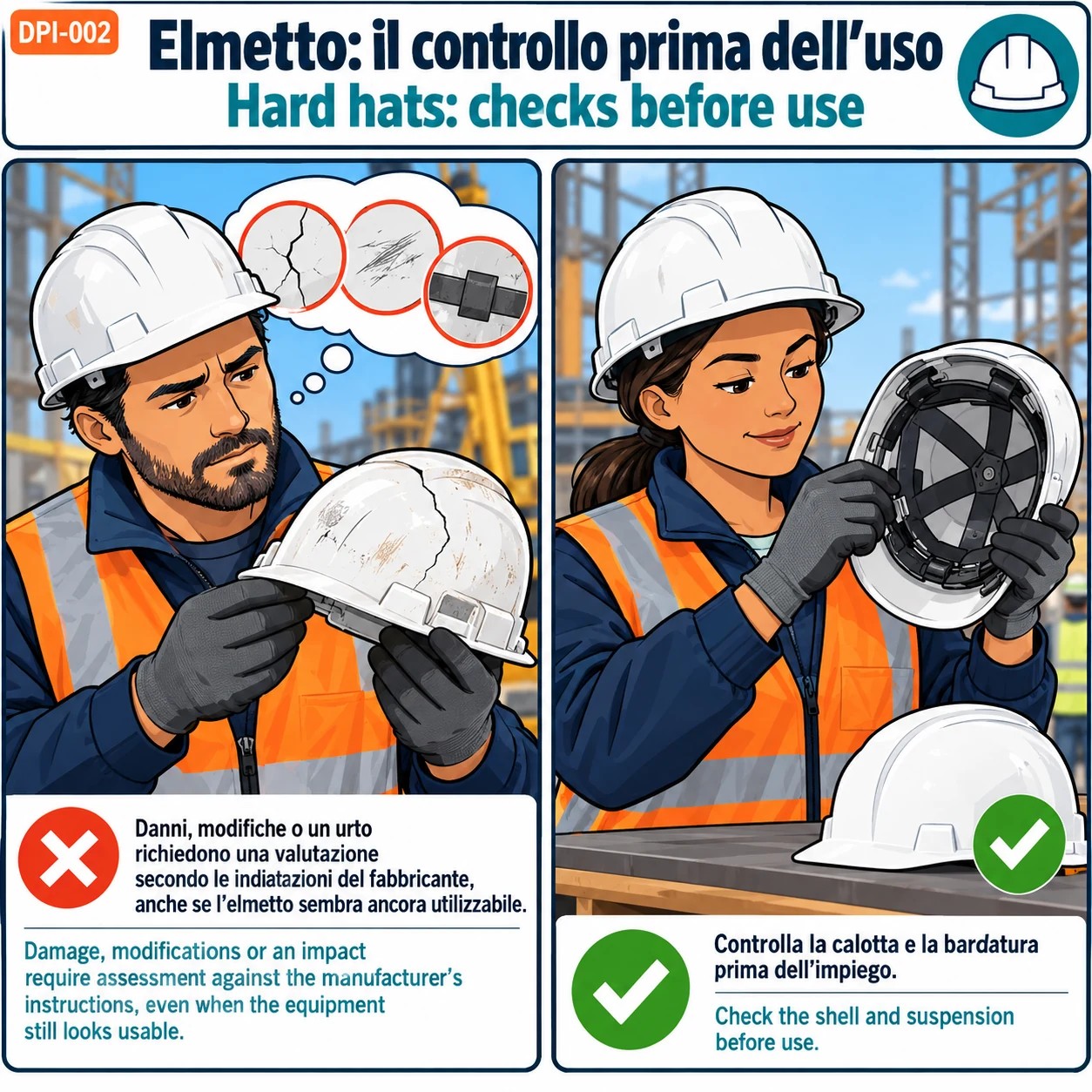
Check the shell and suspension before use. Damage, modifications or an impact require assessment against the manufacturer’s instructions, even when the equipment still looks…
Read the insight ↗
A complaint contains information about an experience that did not meet expectations. Analysing it well can improve the process behind it. Gather the facts, clarify the issue and…
Read the insight ↗
A concern is useful when it reaches the appropriate recipient and receives follow-up. In risk governance, the information route matters too. For information flows linked to a 231…
Read the insight ↗
A toolbox talk is useful when it prepares people for the work ahead. One concrete topic and a few questions can start an important discussion. Discuss the hazards of the planned…
Read the insight ↗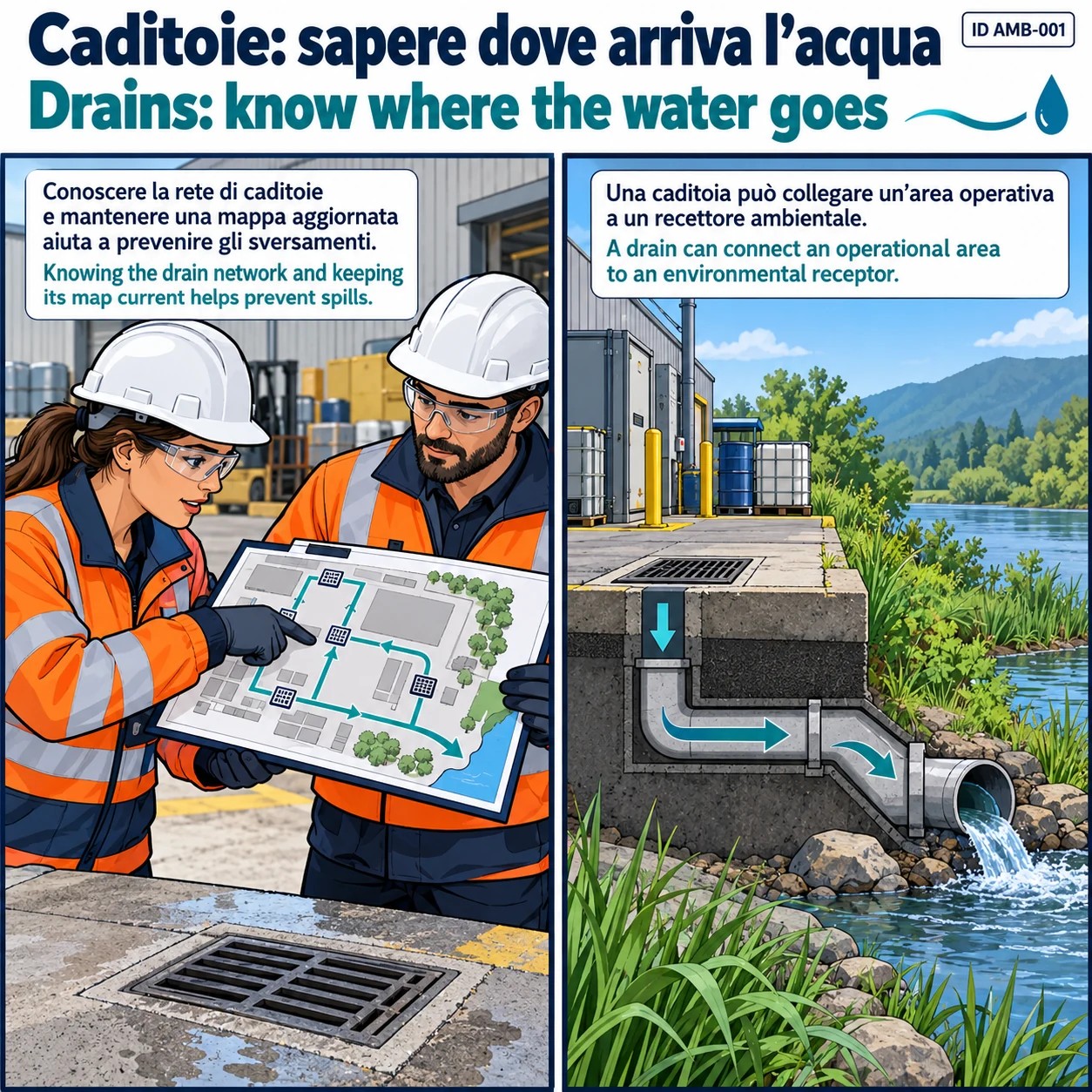
A drain can connect an operational area to an environmental receptor. Knowing the network and keeping its map current supports spill prevention planning. Which field check makes…
Read the insight ↗
Assigning a task requires clarity about outcomes and responsibilities. A name beside a task does not resolve uncertainty about resources and decisions. Clarify who coordinates…
Read the insight ↗
Fatigue deserves attention before it affects work. Pace, task duration, environmental conditions and recovery should be considered together. Encourage people to report…
Read the insight ↗
Waste prevention starts before the collection bin. Purchasing, packaging and working methods influence what will become waste. Consider where to reduce unnecessary materials, use…
Read the insight ↗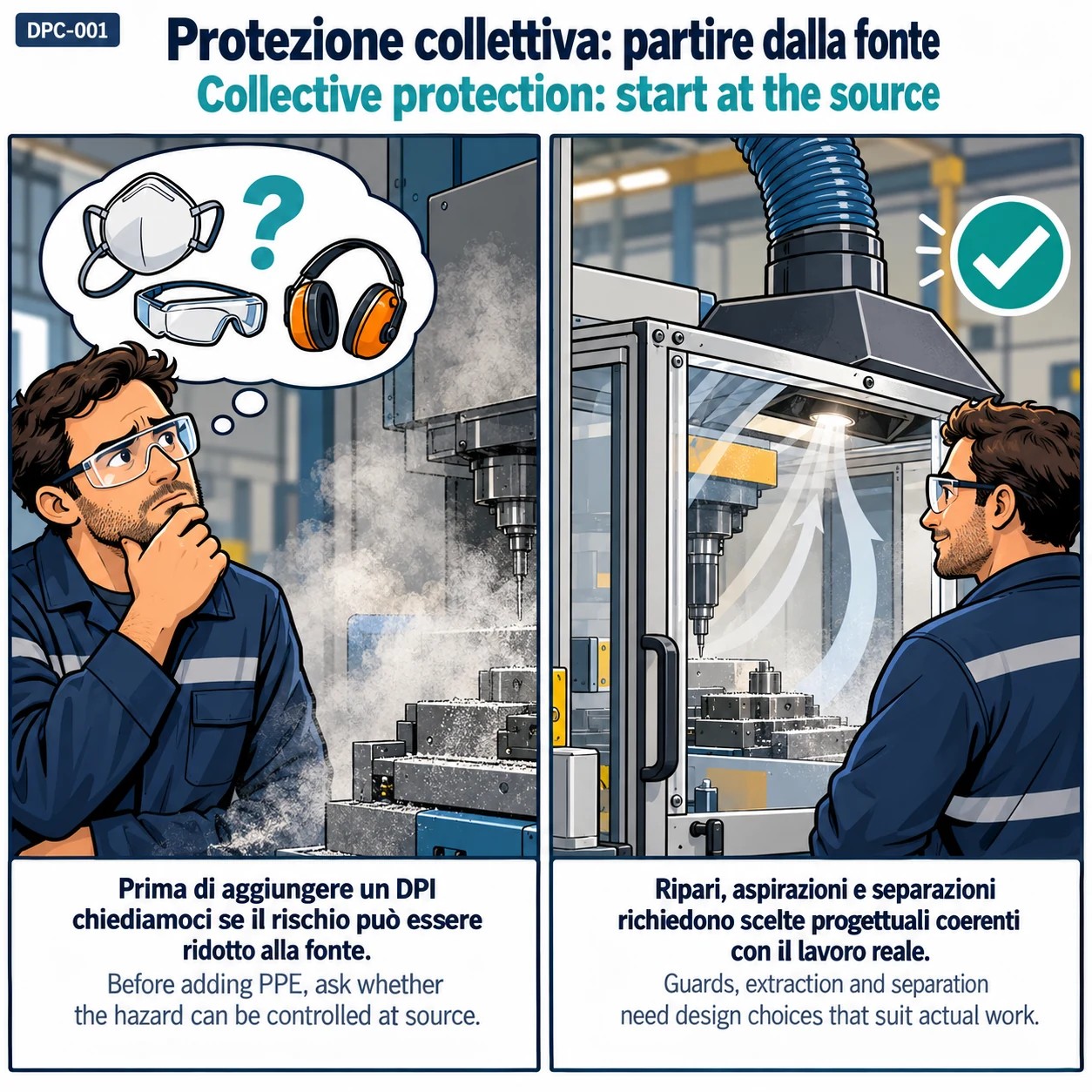
Before adding PPE, ask whether the hazard can be controlled at source. Guards, extraction and separation need design choices that suit actual work. How do you check that the…
Read the insight ↗
An organisational model gains meaning through everyday decisions: who authorises, who checks and what evidence remains of the work performed. In the context of Italian…
Read the insight ↗
A handover works better when the person delivering understands what the recipient needs. An unclear request can lead to rework, delays and misunderstandings. Clarify the expected…
Read the insight ↗
Before starting a task, taking time to observe is already a preventive action. Access routes, obstacles, energy sources and nearby activities can change even when the task feels…
Read the insight ↗
Choose head protection for the impacts, environment and task involved. Instructions, adjustment and compatibility with other PPE matter more than colour alone. What do you check…
Read the insight ↗
A leaking container, an untidy storage area or missing absorbent materials can turn a small issue into a wider problem. Before starting work, ask: are containers intact and…
Read the insight ↗
Installing a safeguard, updating a procedure or issuing PPE is one step. The next is checking on site whether the solution fits the actual work. Is the safeguard being used? Is…
Read the insight ↗
A concern raised is an opportunity to act before a hazard leads to an incident. People working on site notice details that a procedure alone cannot capture. That is why we need…
Read the insight ↗
Simply making equipment available is not enough: it must suit the hazard, work with other protective equipment, remain in good condition and be used correctly. Before starting a…
Read the insight ↗
Supplier and contractor audits
A request described as maintenance may include a change whose technical implications require a different assessment. INAIL's 2026 material on interventions to fixed lifting appliances offers a specific audit question: who classifies the proposed work, and what evidence supports that decision before …
Read the article ↗
Audit UNI 10617
ISPRA’s seminar of 5 October 2026 on transport-related incidents encourages attention to interfaces between establishments. A connection used by different operators may contain points where information, maintenance or operational decisions pass between organisations. For an audit of major-accident safety management, UNI 10617 can frame the discussion without changing the legal scope of Seveso legislation.
Read the article ↗
ISO 45001 audits
An organisation may discuss aggression risk for its employees while overlooking people delivering a service on its behalf. The INAIL 2026 material on health and social-care services offers a specific audit prompt: how are difficult interactions considered across organisational boundaries? The audit …
Read the article ↗
Audit ISO 9001
ISO’s official presentation of ISO 9001:2026 highlights the distinct consideration of risks and opportunities. For a quality audit, the practical question is whether an organisation declaring an opportunity is pursuing an identifiable benefit or has simply renamed the reduction of a problem.
Read the article ↗
ISO 9001 audits
A quality culture is difficult to assess through statements of commitment alone. A more concrete audit question is what happens when a person is unsure that a product should proceed. ISO 9001 provides the management-system reference; the investigation should connect an appropriate criterion with evi…
Read the article ↗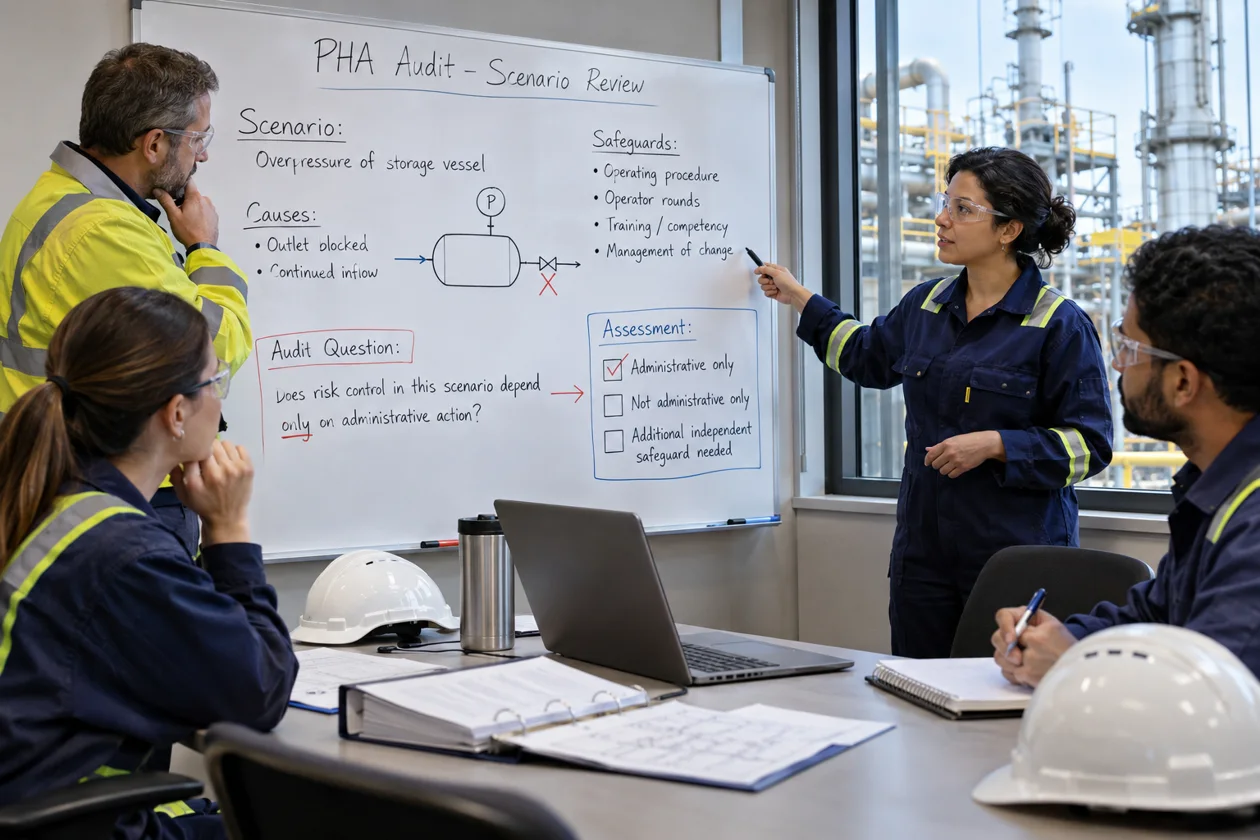
Process safety, CCPS and PSM audits
A process hazard analysis can record a safeguard without explaining how much depends on a person interpreting and acting on a condition. The CSB furnace investigation published in 2026 offers a specific audit prompt: which sampled scenarios rely solely on administrative measures, and how is the adeq…
Read the article ↗
UNI 11226 audits
Remote technical support can connect digital access decisions with industrial functions. The ISPRA 2026 seminar on cybersecurity and industrial safety offers a focused audit question: can the organisation trace who authorised a particular type of access and who understood its operational implication…
Read the article ↗
Audit Process Safety · CCPS · PSM
The CSB’s final report on the Conyers fire and chemical release, published on 21 July 2026, concerns an incident from 2024. Recommendations include independent audits of programme implementation and storage standards, including third-party facilities. Report and incident dates must not be confused: the new 2026 contribution is the investigation evidence made available.
Read the article ↗Audit ISO 45001
ISO’s June 2026 announcement of the DIS ballot for the ISO 45001 revision provides a reason to review how audit criteria are defined. A draft can support preparation for change, but does not thereby become a current certification requirement. Confusing those levels can produce unsupported findings and distract attention from actual working conditions.
Read the article ↗Audit ISO 19011
Publication of UNI CEI EN ISO 19011:2026 offers a reason to reflect on the tools used during audits. An artificial-intelligence summary may help navigate many documents, but remains a derivative account. It is not the original record and cannot by itself demonstrate that a check was performed or a decision approved.
Read the article ↗
ISO 19011 audits
An interview can appear to provide clear evidence while a translated word changes the meaning of the answer. The 2026 edition of ISO 19011 offers an opportunity to examine the quality of the communication supporting an audit. A misunderstanding should not become a nonconformity merely because it has…
Read the article ↗
Process safety, CCPS and PSM audits
A reactivity assessment can cite test data without showing how they relate to the mixture and conditions actually considered. The CSB investigation of the Sense Colour explosion offers a focused audit prompt concerning representative recipes, thermal data and gas generation. Event facts and recommen…
Read the article ↗Audit ISO 45001
A loss of containment can affect people working beside a plant, the environment and the surrounding community. INAIL’s guidance for occupational health and safety management in the chemical industry, published on its portal on 26 May 2026, prompts a specific audit question: where do occupational health and major-accident prevention meet, and who manages that interface?
Read the article ↗
ISO 9001 audits
A supplier statement about chain of custody can be misunderstood as proof of physical traceability in every circumstance. The relevant technical reference identified in the 2026 UNI bulletin offers a focused audit question: which model is actually claimed, and what evidence supports the statement ma…
Read the article ↗Audit UNI 11226
ISPRA’s seminar on NaTech risks of 15 May 2026 draws attention to the relationship between natural hazards and industrial safety. For a major-accident safety-management audit, I would propose a specific sample: follow a weather-warning threshold through to an operational site decision. UNI 11226 provides a methodological reference, but should not be presented as a new 2026 edition.
Read the article ↗
UNI 11226 audits
A clear aerial image can make an inspection appear more comprehensive than the method actually supports. INAIL's 2026 material on remotely piloted systems offers a specific major-accident management audit prompt: what can the chosen observation show, and which integrity questions remain outside it?…
Read the article ↗Integrated audits
ISPRA’s seminar of 20 March 2026 on possible integration between Seveso and IED controls offers an opportunity to improve inspection organisation. Coordinating a visit can reduce duplication and support information sharing, but does not make the two scopes identical. Major-accident prevention and environmental permit conditions retain their own references and conclusions.
Read the article ↗Legal compliance audit
ECHA’s announcement of 11 February 2026 about poison-centre notification checks highlights a step that can be missed when an audit focuses only on labels. Visible product identification matters, but does not by itself demonstrate that the responsible operator has correctly submitted the information needed for emergency health response.
Read the article ↗
ISO 14001 audits
A vegetation-management decision can be recorded as a routine maintenance task while its environmental interfaces receive little attention. INAIL's 2026 material on plant-protection products in non-agricultural areas offers an audit prompt: how is the decision connected to the place, product and peo…
Read the article ↗
Supplier and contractor audits
UNI EN 1761:2026, listed in UNI’s January bulletin, concerns hoses and hose assemblies for road-tanker fuel service. It prompts a specific procurement-audit question: does the designation in the order match the product transferred and intended service? The standard should not be presented as covering LNG hoses generally or every hazardous fluid.
Read the article ↗
Process safety, CCPS and PSM audits
Risk-based inspection and a process safety management audit answer related but different questions. The ISPRA training event beginning on 24 November 2025 addresses inspections in chemical and petrochemical plants with reference to the API 580 and API 581 approach. It offers a useful opportunity to …
Read the article ↗
Integrated audits
A new information system changes more than the place where records are stored. The INAIL publication of 29 October 2025 on organisational models and digital transformation provides material for considering how technology affects responsibilities, coordination and the management of work. For an integ…
Read the article ↗
ISO 9001 audits
A draft standard is an opportunity to prepare, not a new basis for declaring nonconformity. The ISO committee update of 10 September 2025 announced the ISO 9001 draft international standard ballot. At that stage, the revision remained subject to consultation and the final text could still change.…
Read the article ↗
ISO 45001 audits
The revision of a management system standard develops through several stages. ISO's project record shows a committee-draft consultation for the ISO 45001 revision beginning on 22 July 2025. This was a consultation stage, not publication of a new final edition or a basis for replacing applicable audi…
Read the article ↗
Legal compliance audits
A compliance system can contain policies and records without demonstrating that it works. ISO 37302:2025, published on 18 July 2025, concerns evaluating the effectiveness of compliance management systems. It offers a useful perspective for moving an audit beyond the presence of documentation.…
Read the article ↗
ISO 14001 audits
Monitoring a revision is different from changing the criteria of an environmental audit. The ISO project history records a significant ISO 14001 revision step on 19 June 2025, when the draft progressed towards the final-draft stage. The final revised edition was not yet published at that point.…
Read the article ↗
Energy audits
An energy audit needs an agreed question before it needs a large spreadsheet. ISO 50002-1:2025, published on 2 June 2025, provides general requirements for energy audits and replaces the earlier general standard. Its relevance lies in organising the work from scope and data needs through analysis an…
Read the article ↗
Energy audits
An industrial process does not consume energy in the same way during production, start-up and waiting. ISO 50002-3:2025, published on 2 June 2025, addresses energy audits of processes. It complements the general requirements by focusing attention on how operations and energy use interact.…
Read the article ↗
Energy audits
A building's energy performance depends on its use as well as its equipment. ISO 50002-2:2025, published in June 2025, addresses energy audits of buildings in connection with the general framework of the series. It provides a distinct perspective from an audit focused on industrial production.…
Read the article ↗
UNI 10617 audits
An energy transition project can introduce a different accident scenario into an established organisation. The ISPRA seminar of 24 March 2025 addresses battery energy storage systems and industrial accident prevention. It provides material for considering the management of change within a major-acci…
Read the article ↗
ISO 19011 audits
Guidance on auditing also changes through a formal development process. ISO's record for the ISO 19011 revision identifies the draft international standard ballot beginning on 17 March 2025. That milestone belongs to the revision history and must not be described as publication of a final 2025 editi…
Read the article ↗
UNI 11226 audits
A simple process can still produce a severe accident. The ISPRA seminar of 5 March 2025 examines events in establishments whose apparent simplicity did not prevent serious consequences. It is a useful starting point for an audit discussion using the applicable major-accident safety management criter…
Read the article ↗
Supplier and contractor audits
A declaration of ethical conduct does not explain how a purchasing decision is controlled. The second edition of ISO 37001, published in February 2025, provides an anti-bribery management system reference. For organisations managing suppliers and contractors, the useful audit question concerns the i…
Read the article ↗No articles match your search.
Legislation, publications and institutional guidance from 2025: a collection organised by topic. The historical source date is distinct from the online publication of the commentary.
Explore the 2025 articles ↗