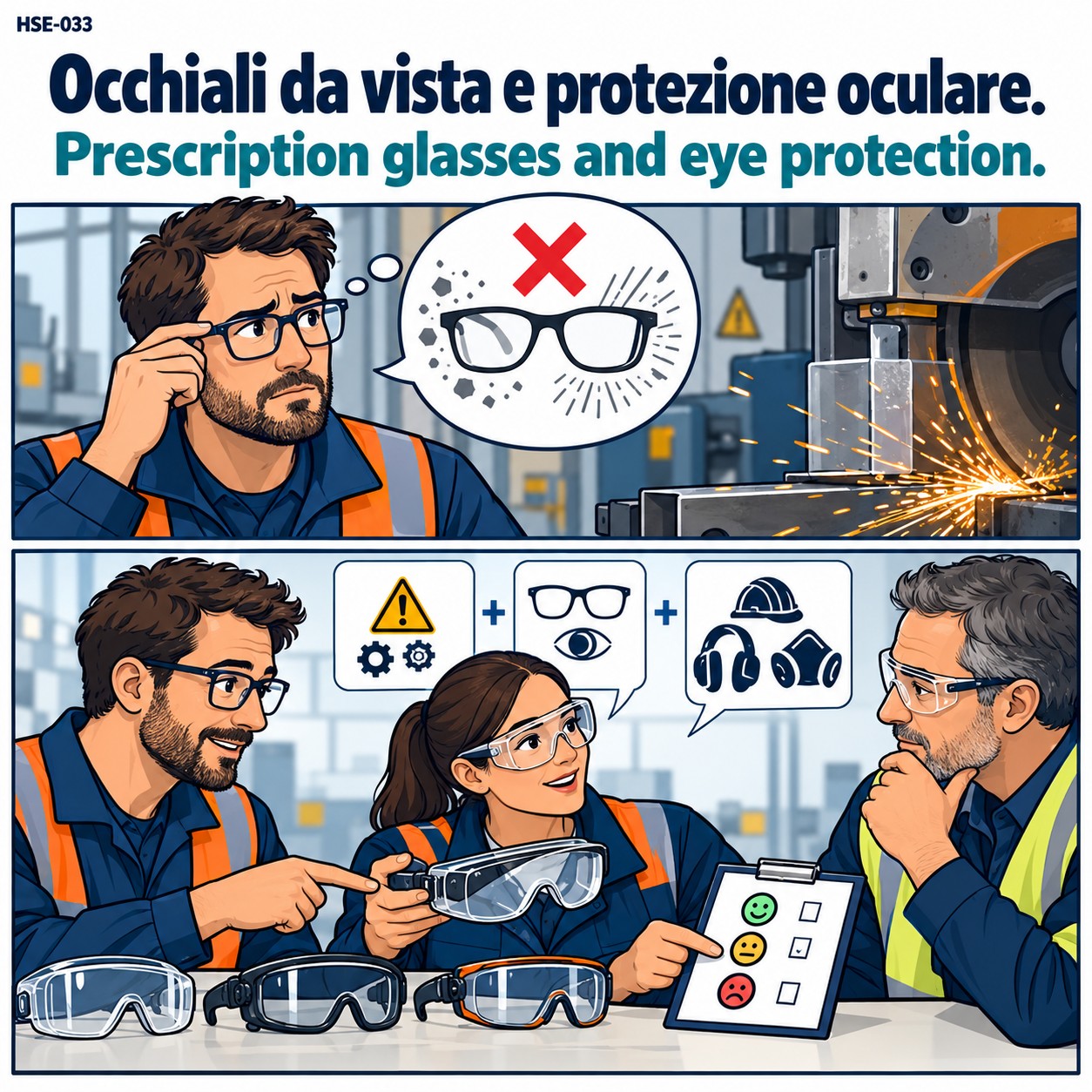
Prescription glasses and eye protection
Ordinary prescription glasses do not automatically replace eye protection. Selection should consider the hazard, vision correction and compatibility with other PPE. How do you…
Read the insight ↗ SAFETY FIRSTPASQUALE MAGLIULO
HSE INSIGHTS
Ideas, questions and practical perspectives to bring prevention from documents into everyday work.
Ordinary prescription glasses do not automatically replace eye protection. Selection should consider the hazard, vision correction and compatibility with other PPE. How do you…
Read the insight ↗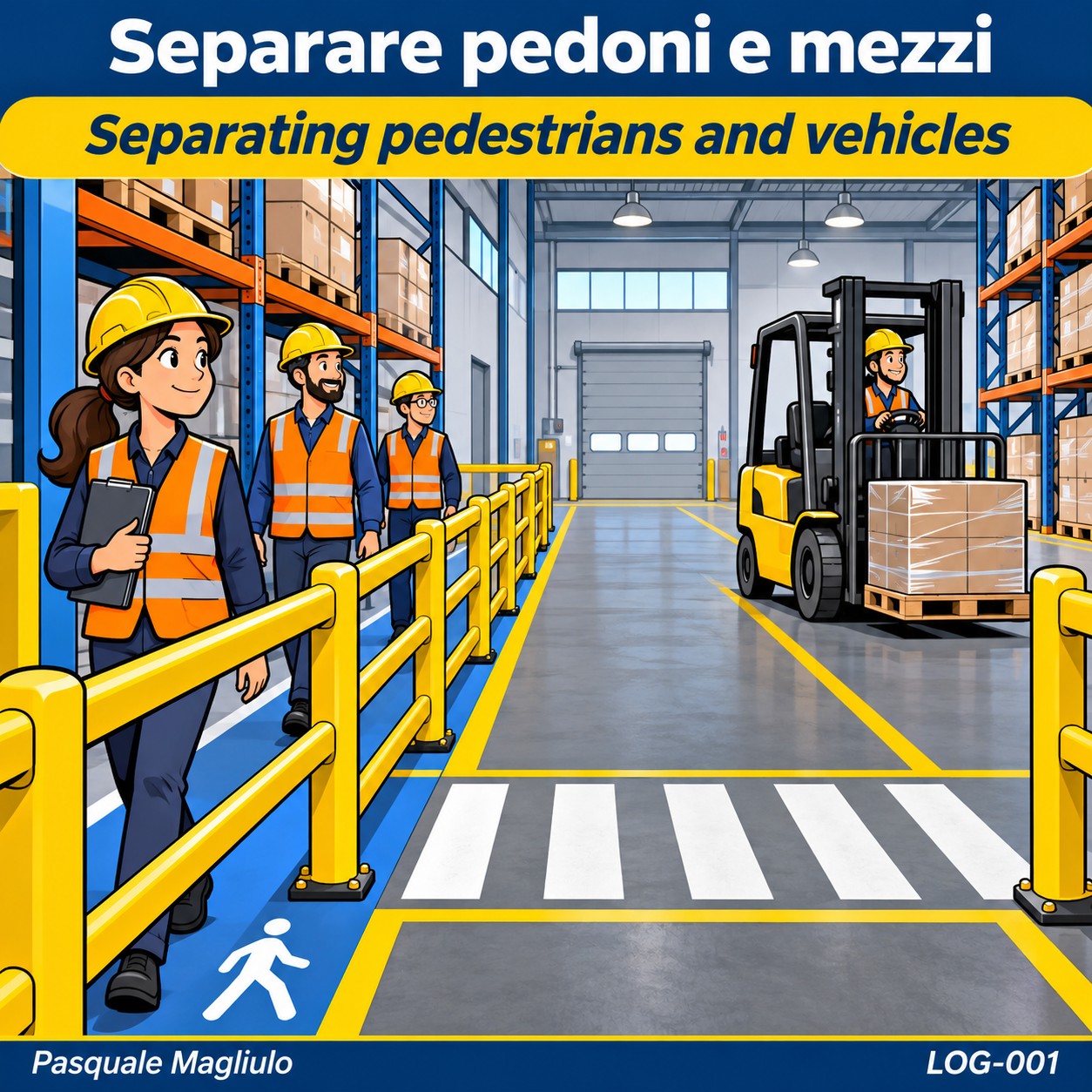
Use pedestrian routes and designated crossings: painted lines need segregation measures suited to the risk. Before your next shift, check how this risk is managed in your work. A…
Read the insight ↗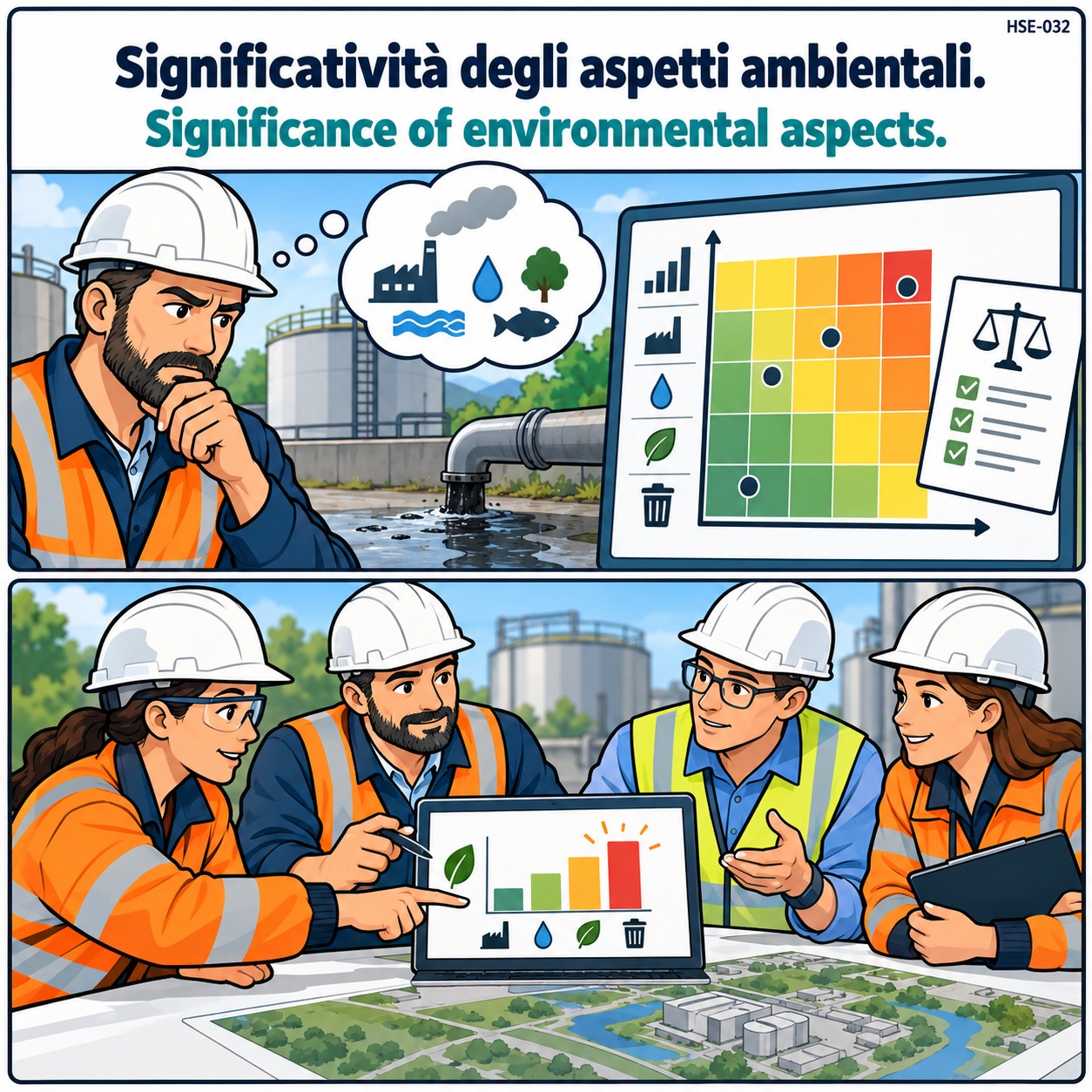
A useful score needs understandable criteria and consistent data. Frequency, impact and relevant obligations should not obscure infrequent but significant cases. Who needs this…
Read the insight ↗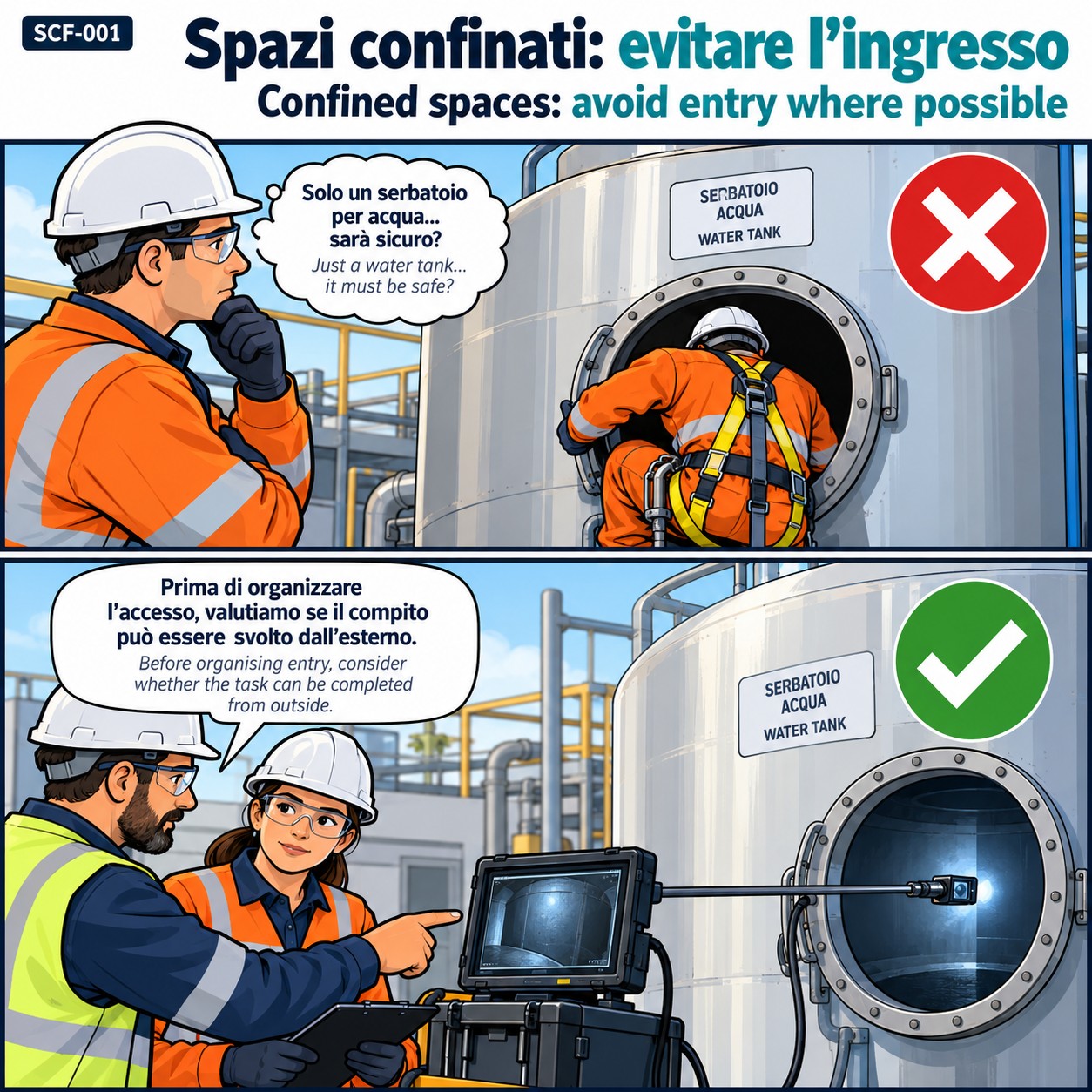
Before organising entry, consider whether the task can be completed from outside. A location’s name cannot replace assessment of its hazards and actual conditions. What evidence…
Read the insight ↗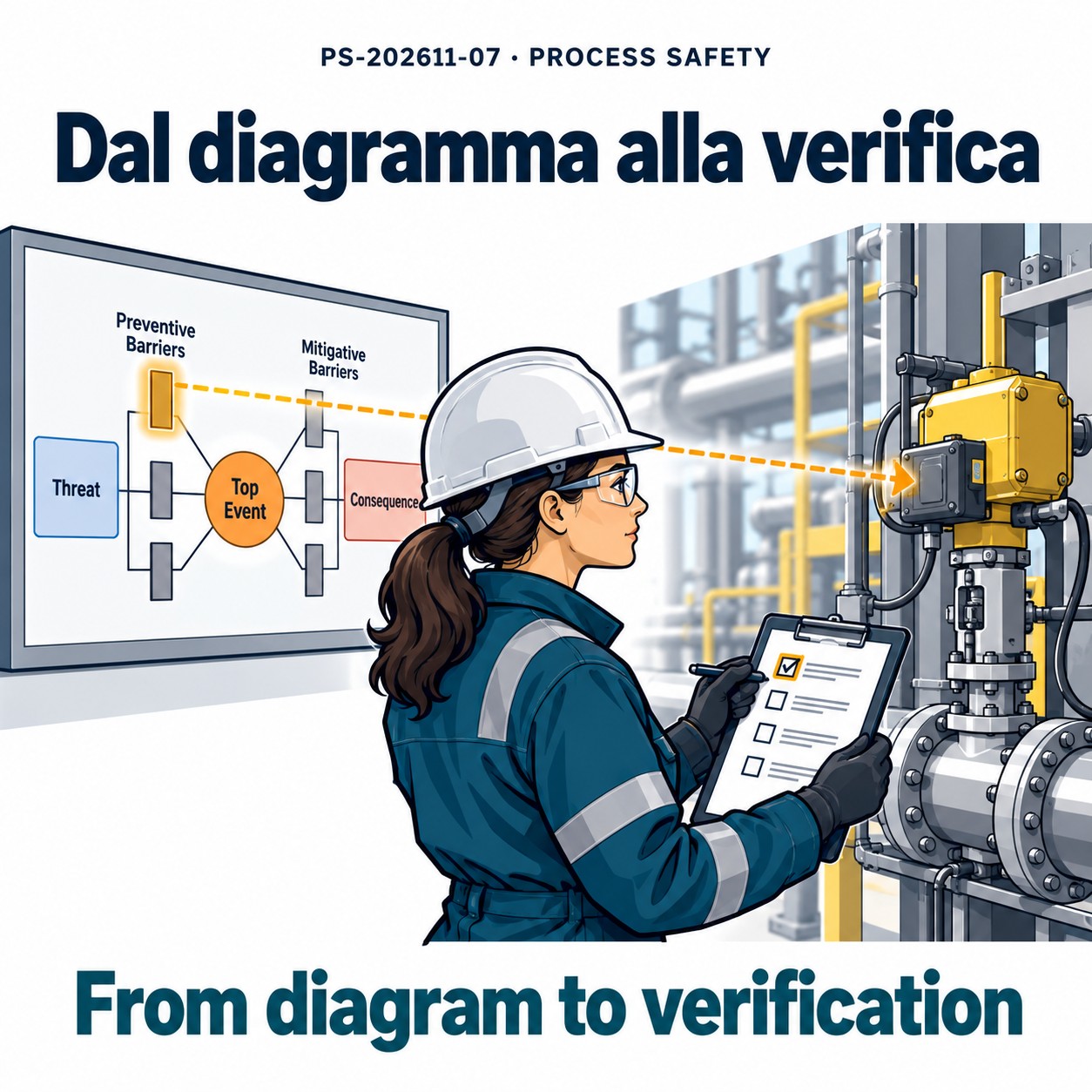
A barrier on a diagram needs an operational life. A bow-tie connects threats, loss of control and consequences. It becomes useful when each barrier has a defined role, an owner…
Read the insight ↗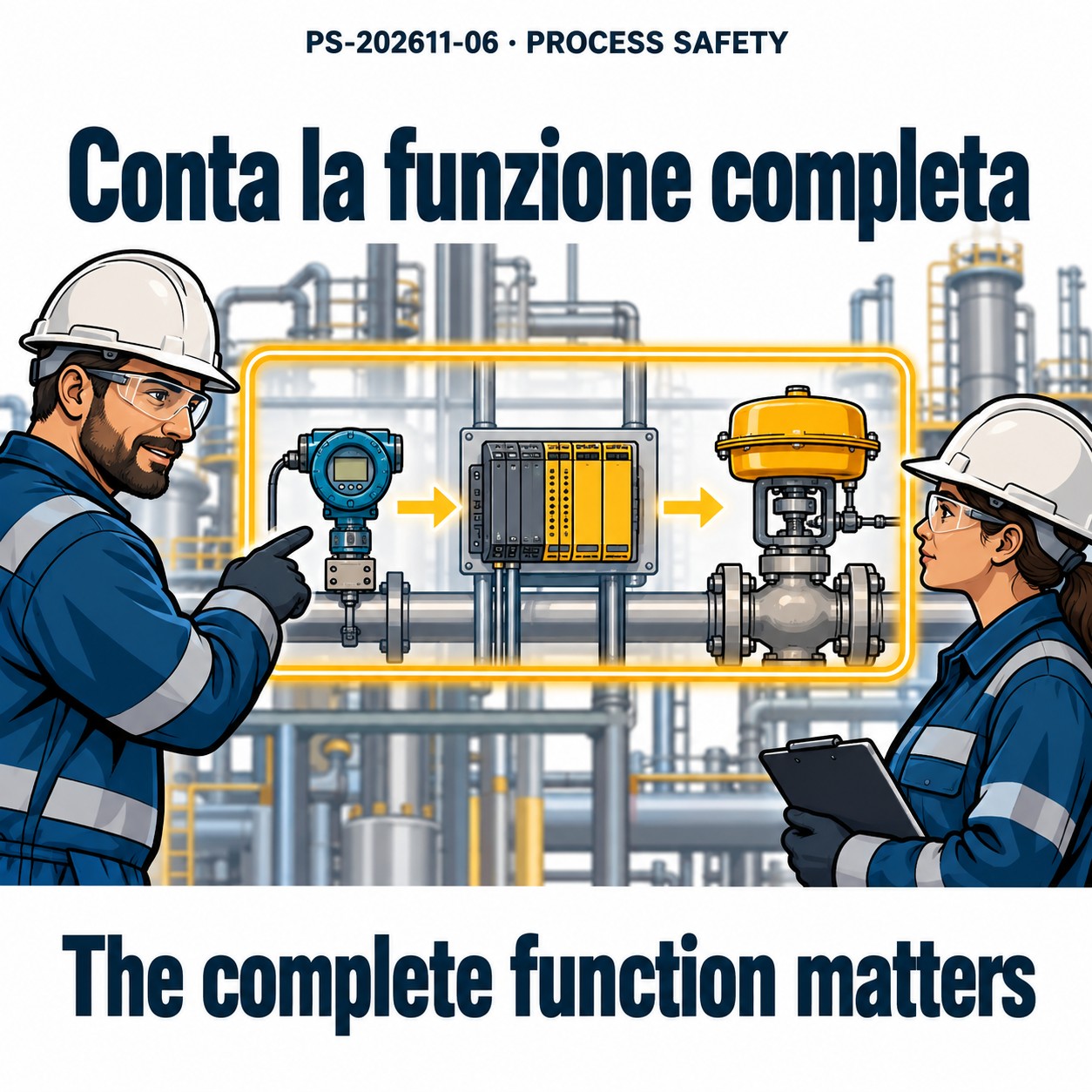
A certified component does not certify the whole protection function. A safety instrumented function brings together sensing, logic and final elements, with the requirements…
Read the insight ↗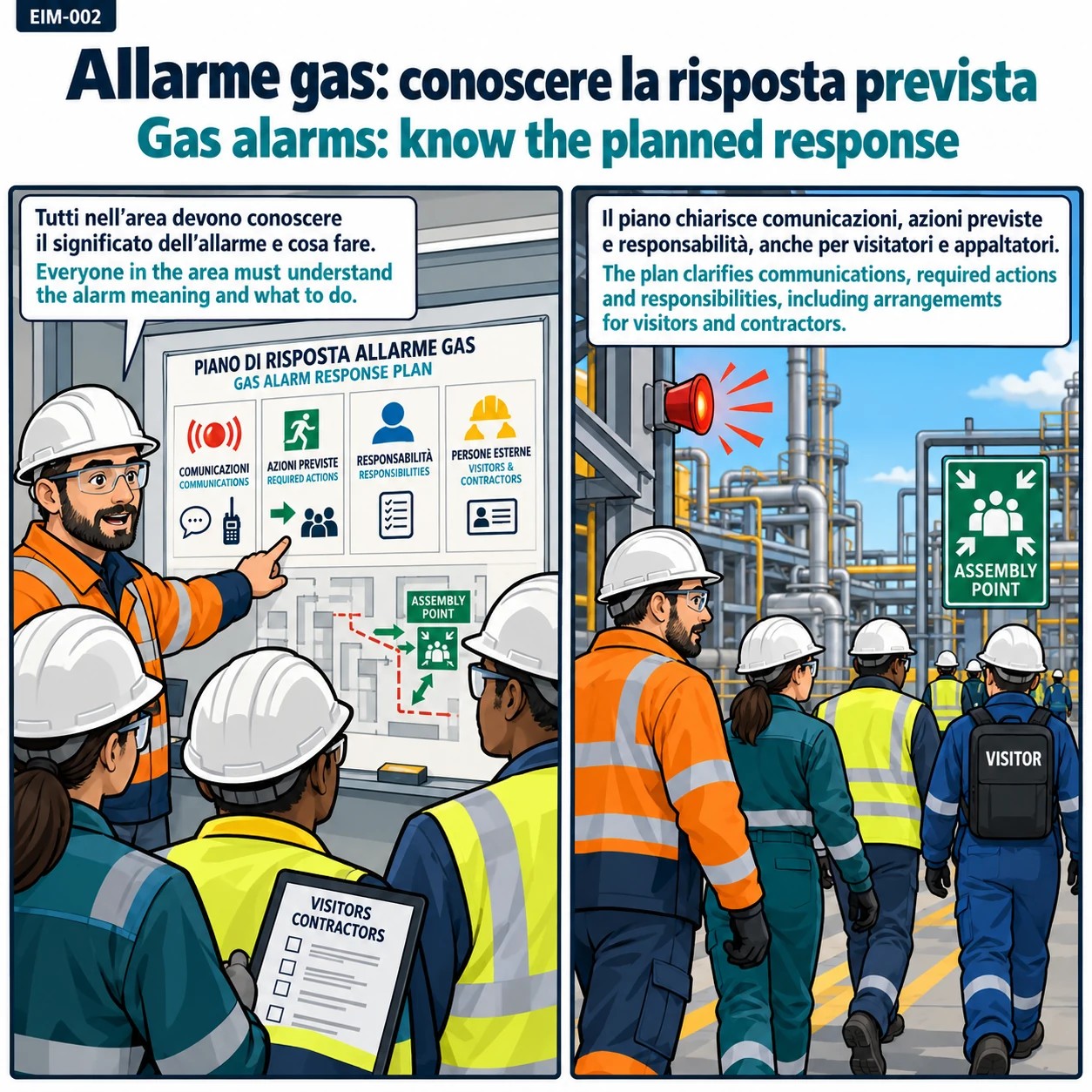
People working in an area should understand its alarms. The plan should clarify communications, required actions and responsibilities, including arrangements for visitors and…
Read the insight ↗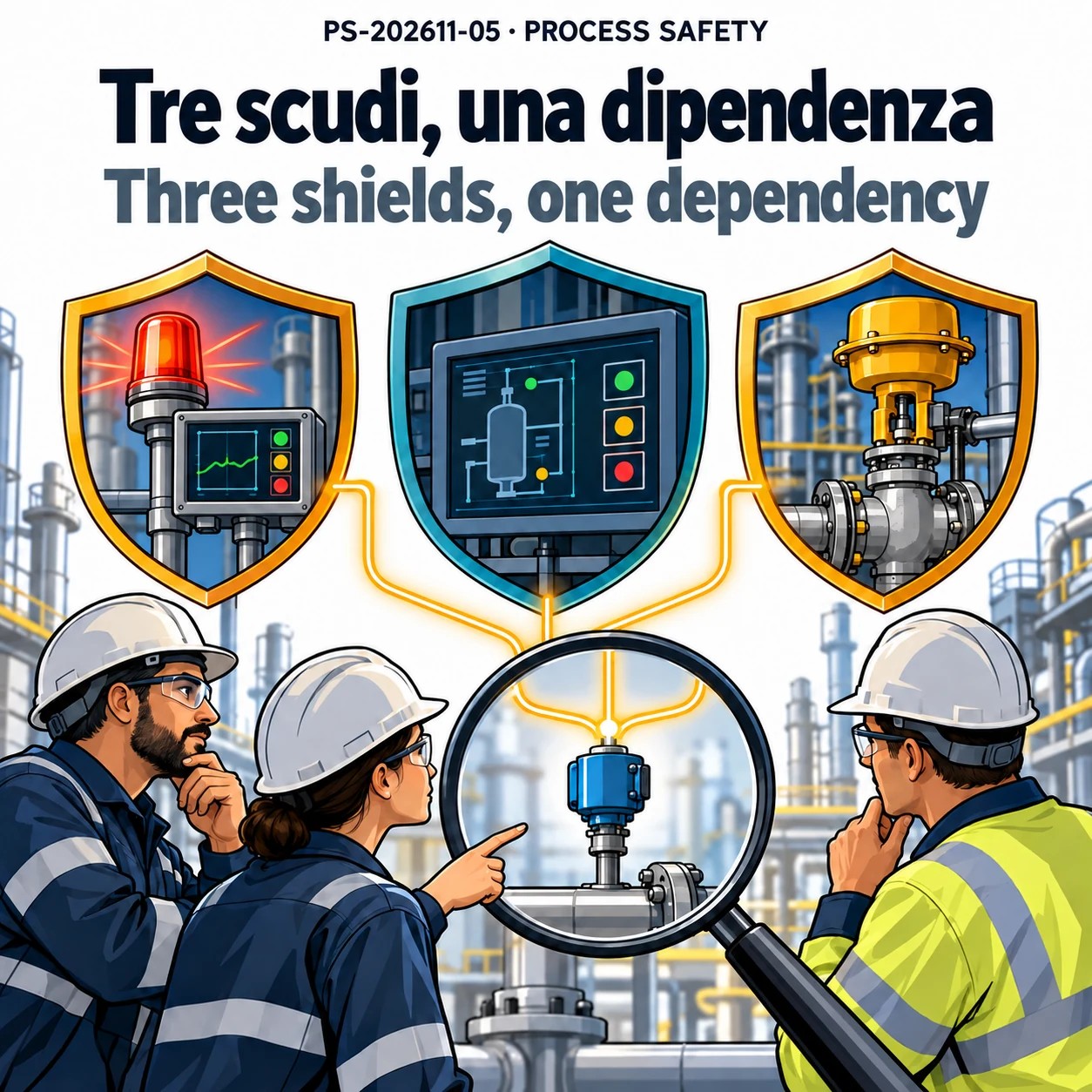
Counting barriers is not enough; their dependencies matter. Imagine two automatic actions and an alarm using the same measurement. If that measurement is involved in the…
Read the insight ↗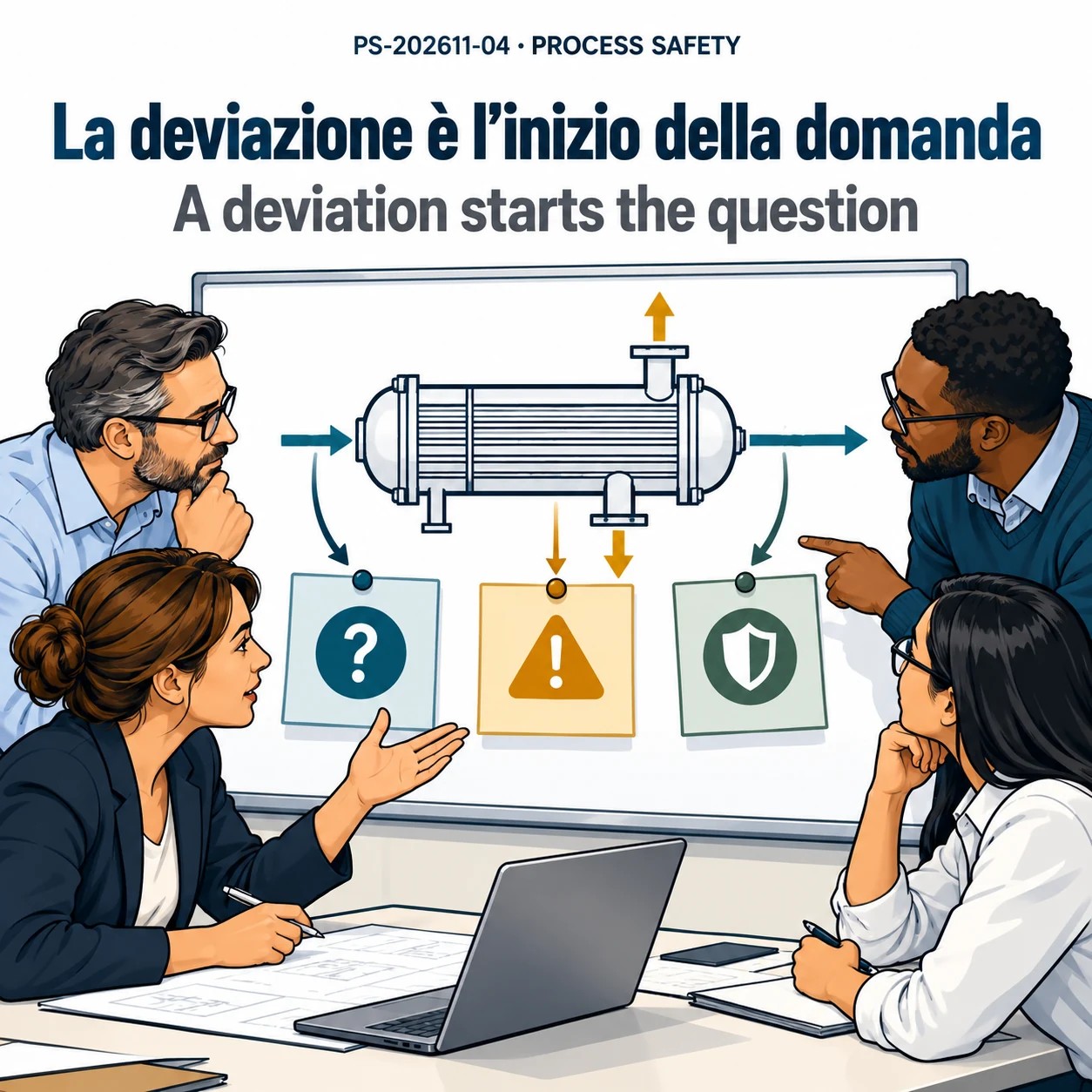
A guide word matters when it opens a precise question. “Less flow” might mean reduced cooling, insufficient feed or inadequate circulation. Consequences depend on the node's…
Read the insight ↗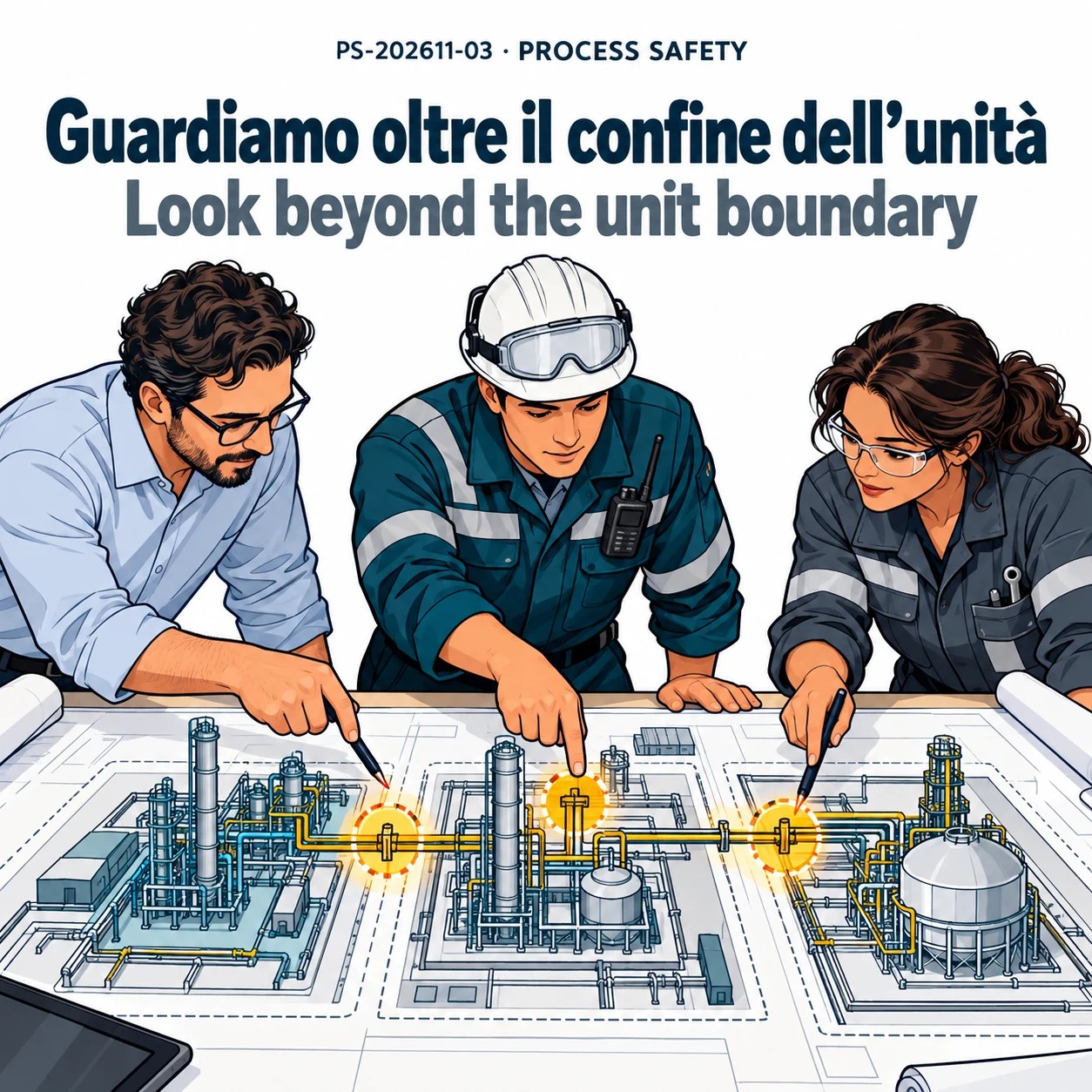
A hazard overlooked early becomes expensive to address later. HAZID helps explore hazards and interfaces while design decisions can still change. For new storage, consider…
Read the insight ↗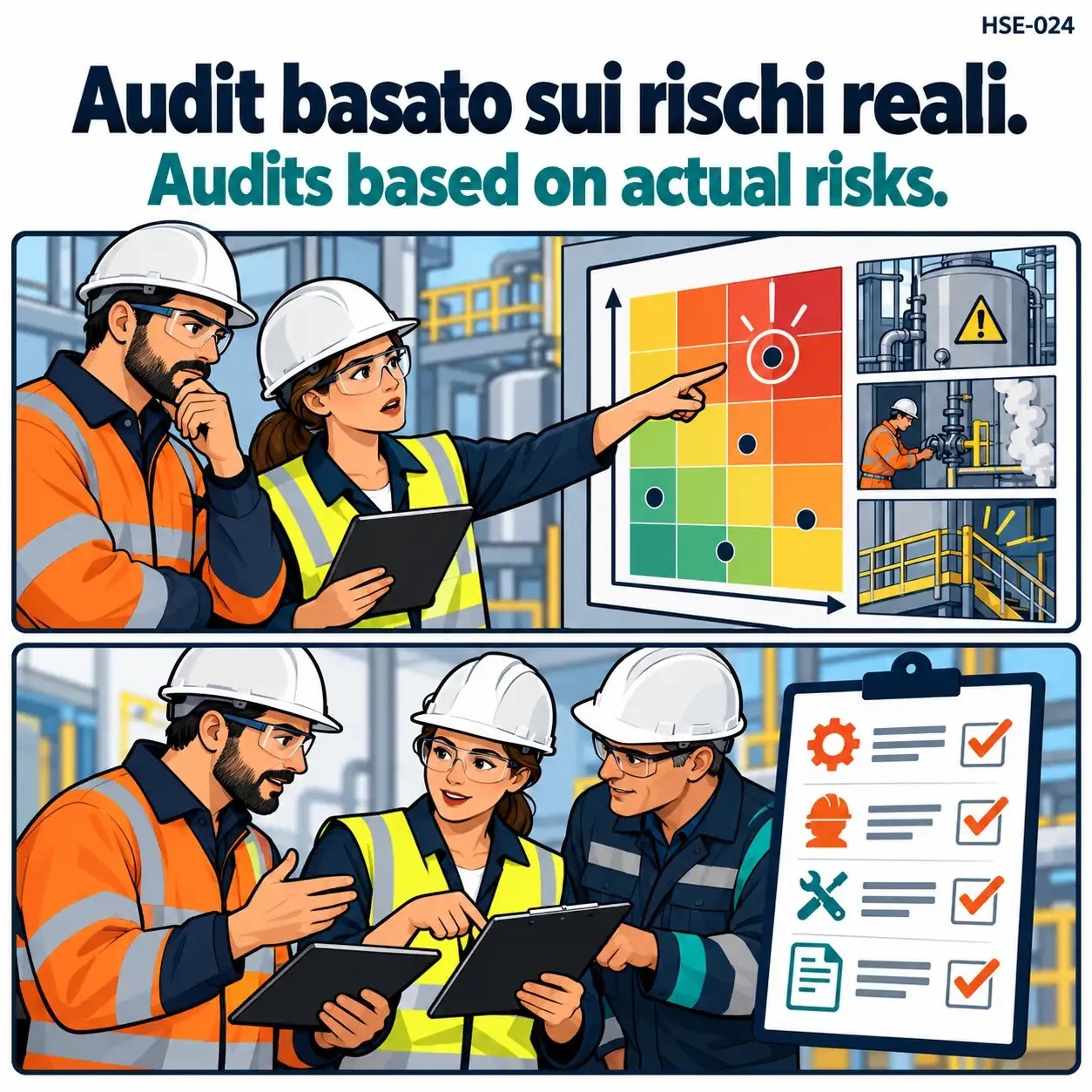
ISO 19011 provides guidance for management system audits. It connects principles, audit programmes, audit activities and competence. A practical starting point is to make the…
Read the insight ↗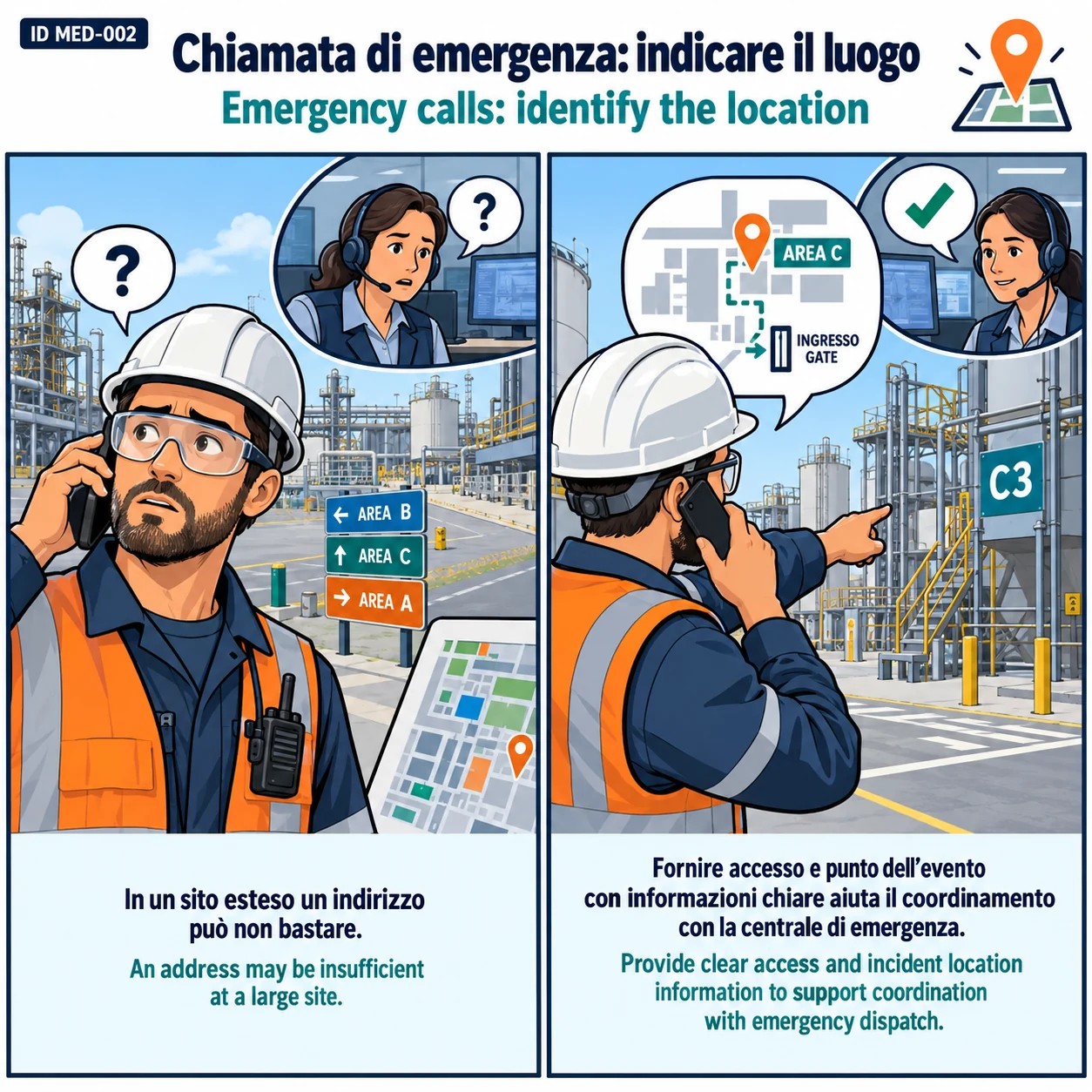
An address may be insufficient at a large site. Preparing understandable access and incident-location information supports coordination with emergency dispatch. Which…
Read the insight ↗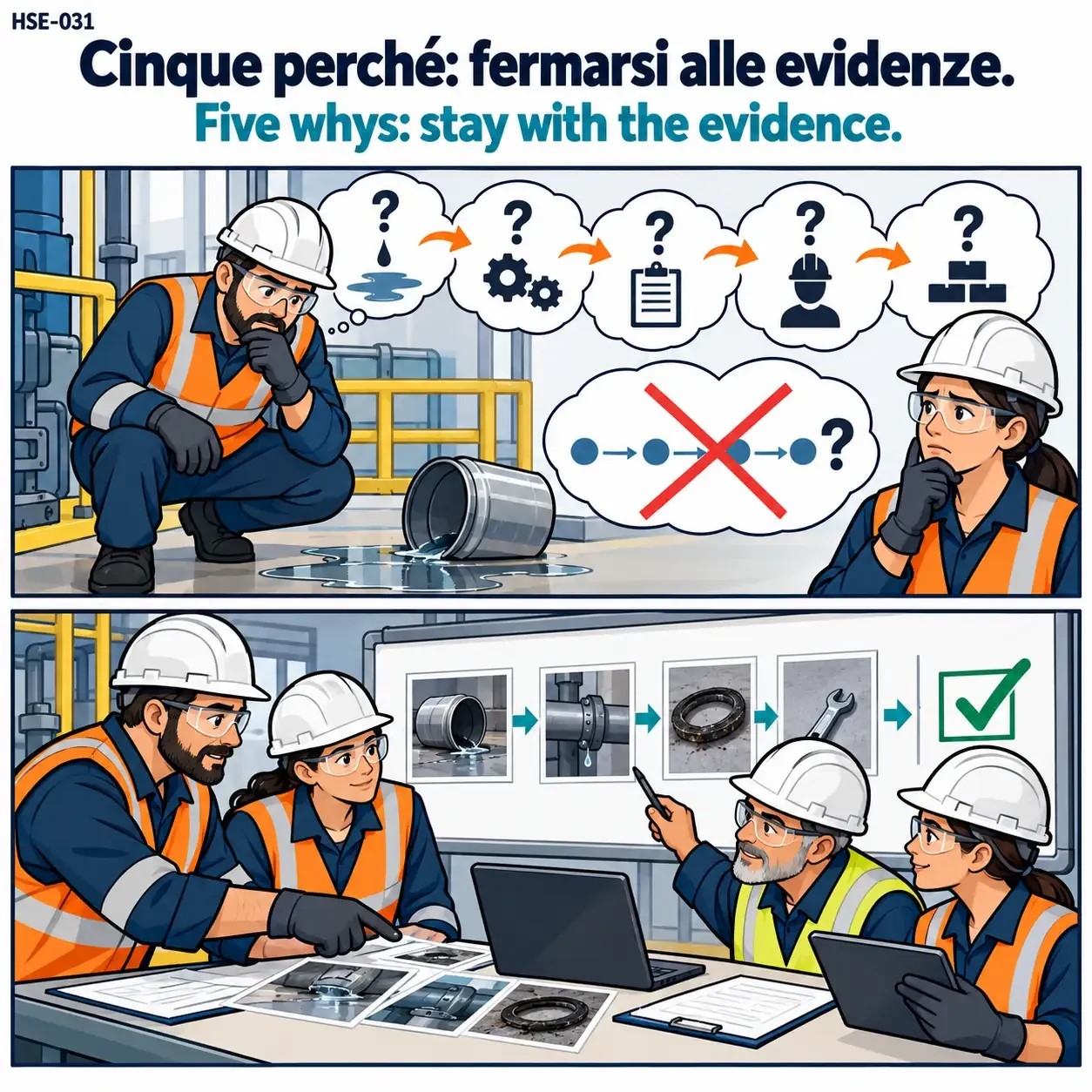
Repeating why can open an investigation, but each step needs support. An elegant chain without evidence can move away from how the process actually works. How do you connect…
Read the insight ↗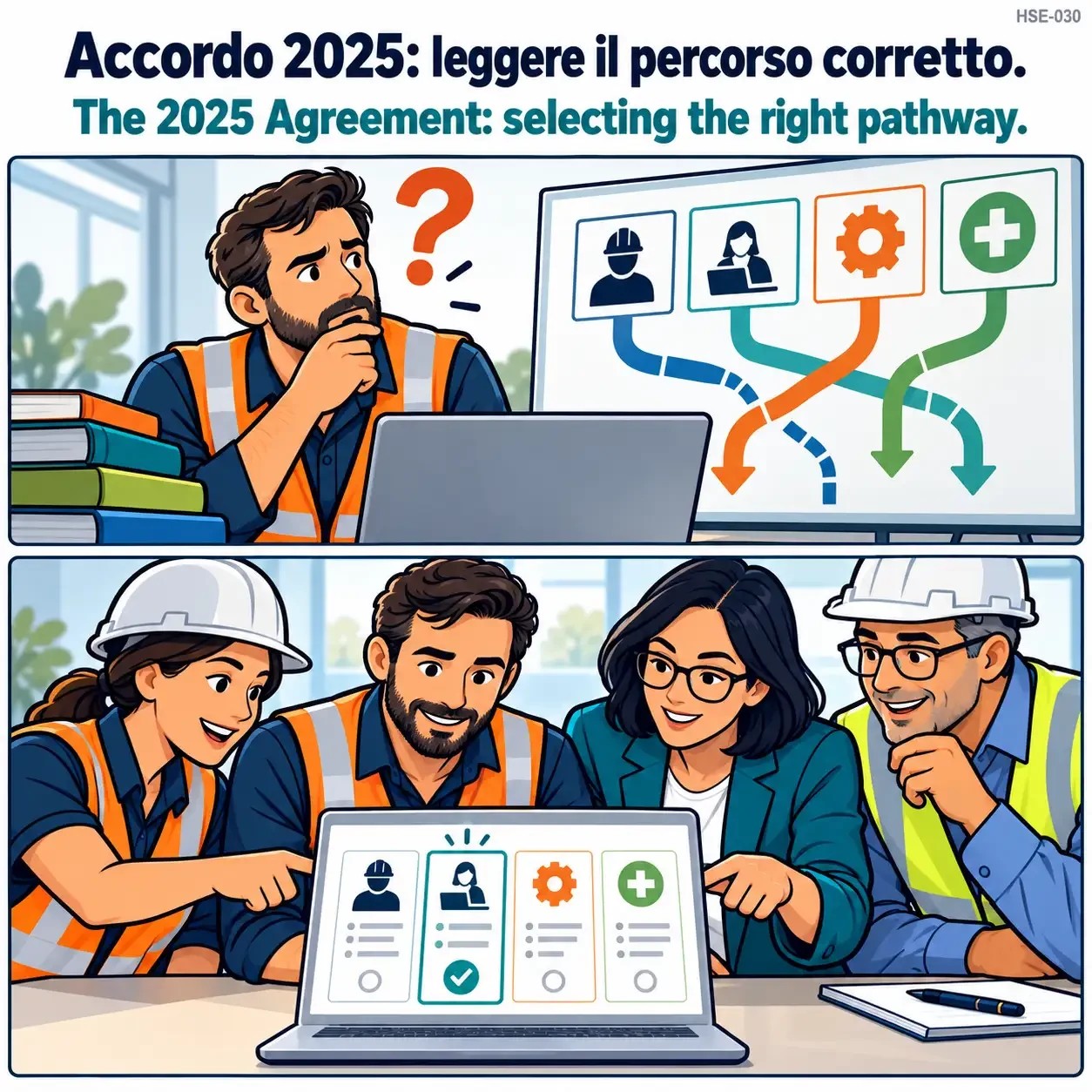
The Italian State–Regions Agreement of 17 April 2025 calls for identifying the pathway relevant to the role and activity. Check applicable requirements and delivery arrangements…
Read the insight ↗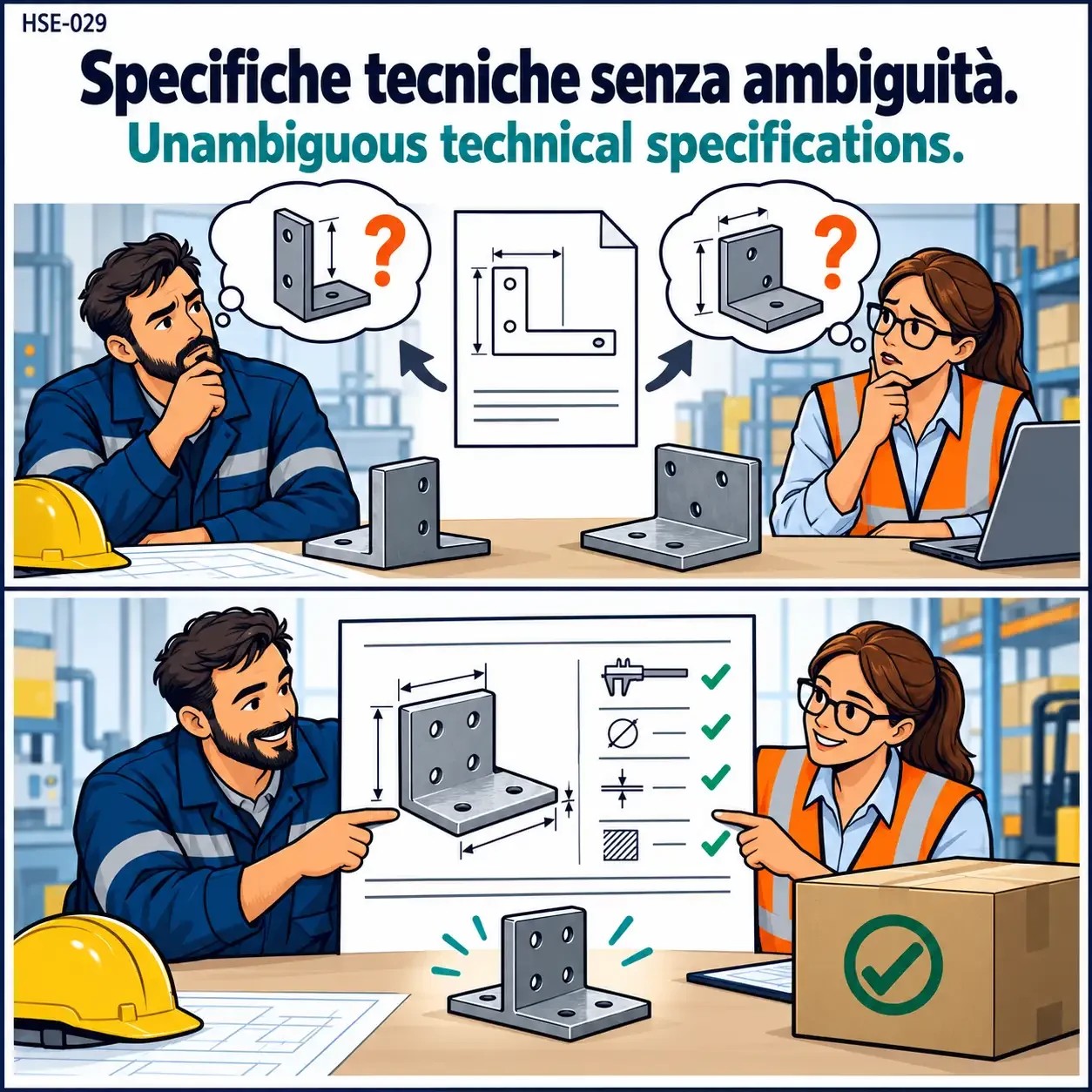
Two departments may interpret the same request differently. Measurable criteria and acceptance conditions simplify verification of purchases and deliveries. How do you turn this…
Read the insight ↗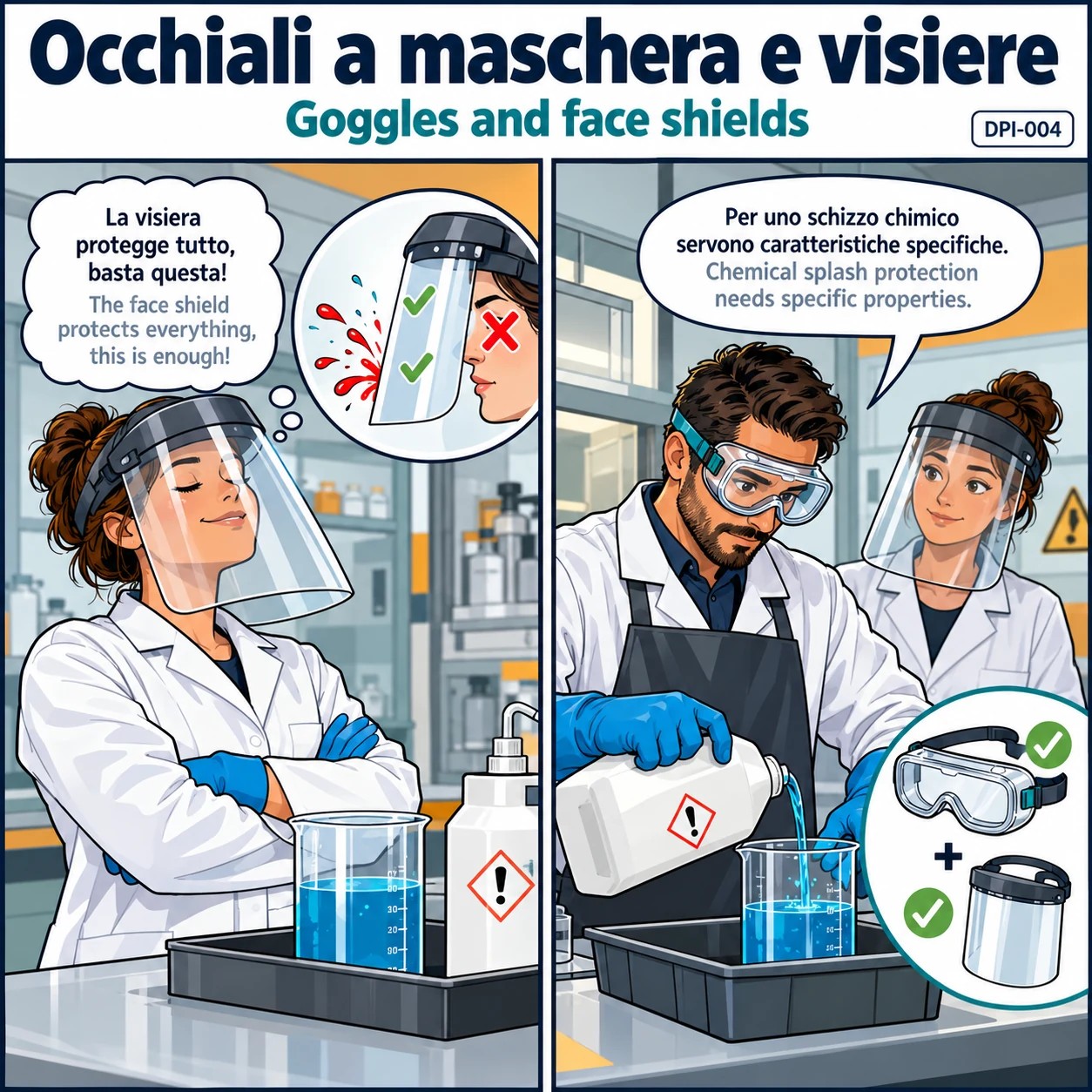
Goggles and face shields have different functions and limits. Chemical splash protection needs specific properties; a face shield should not automatically be treated as a…
Read the insight ↗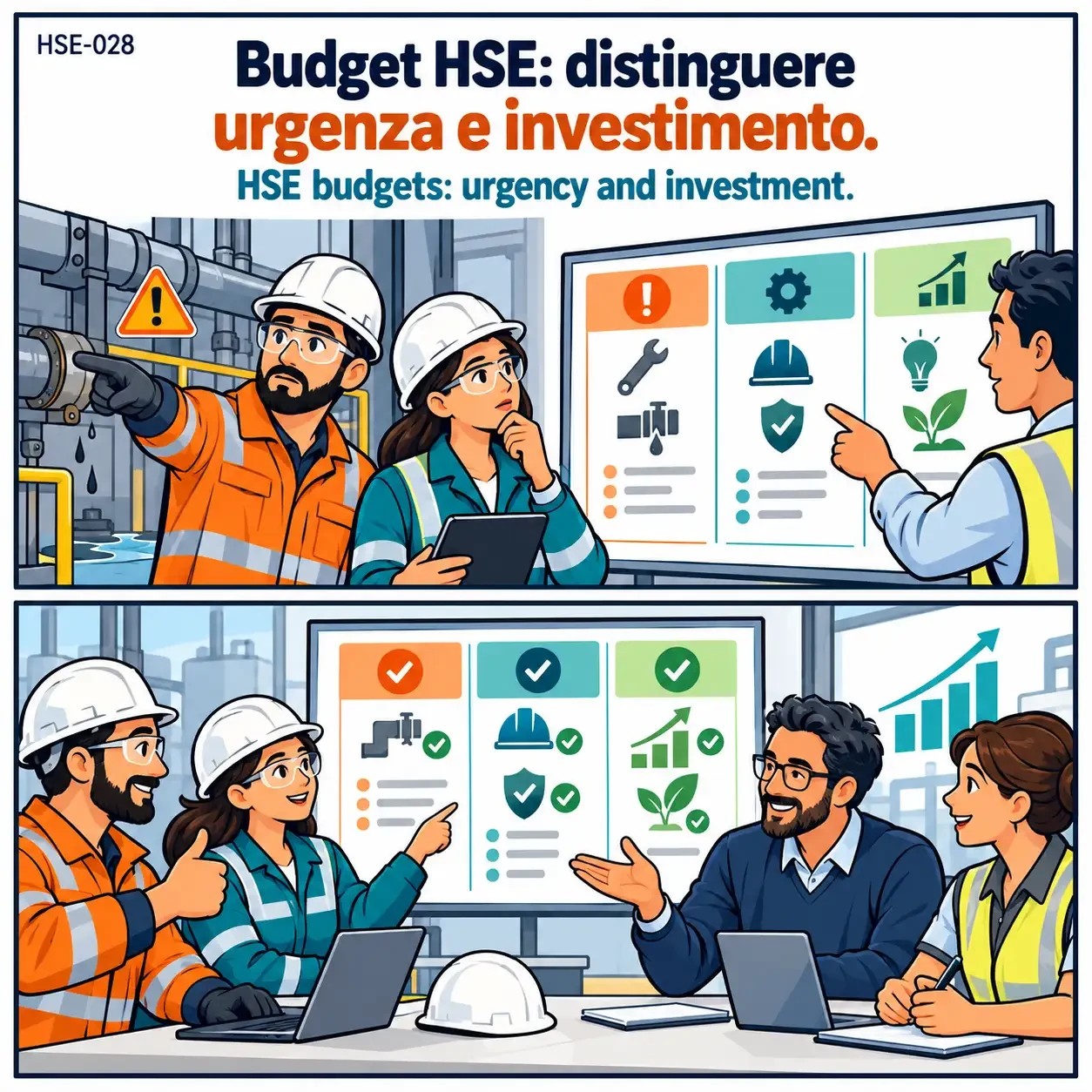
An improvement portfolio should distinguish urgent measures, control maintenance and enhancements. Cost is one decision factor alongside exposure, effectiveness and applicable…
Read the insight ↗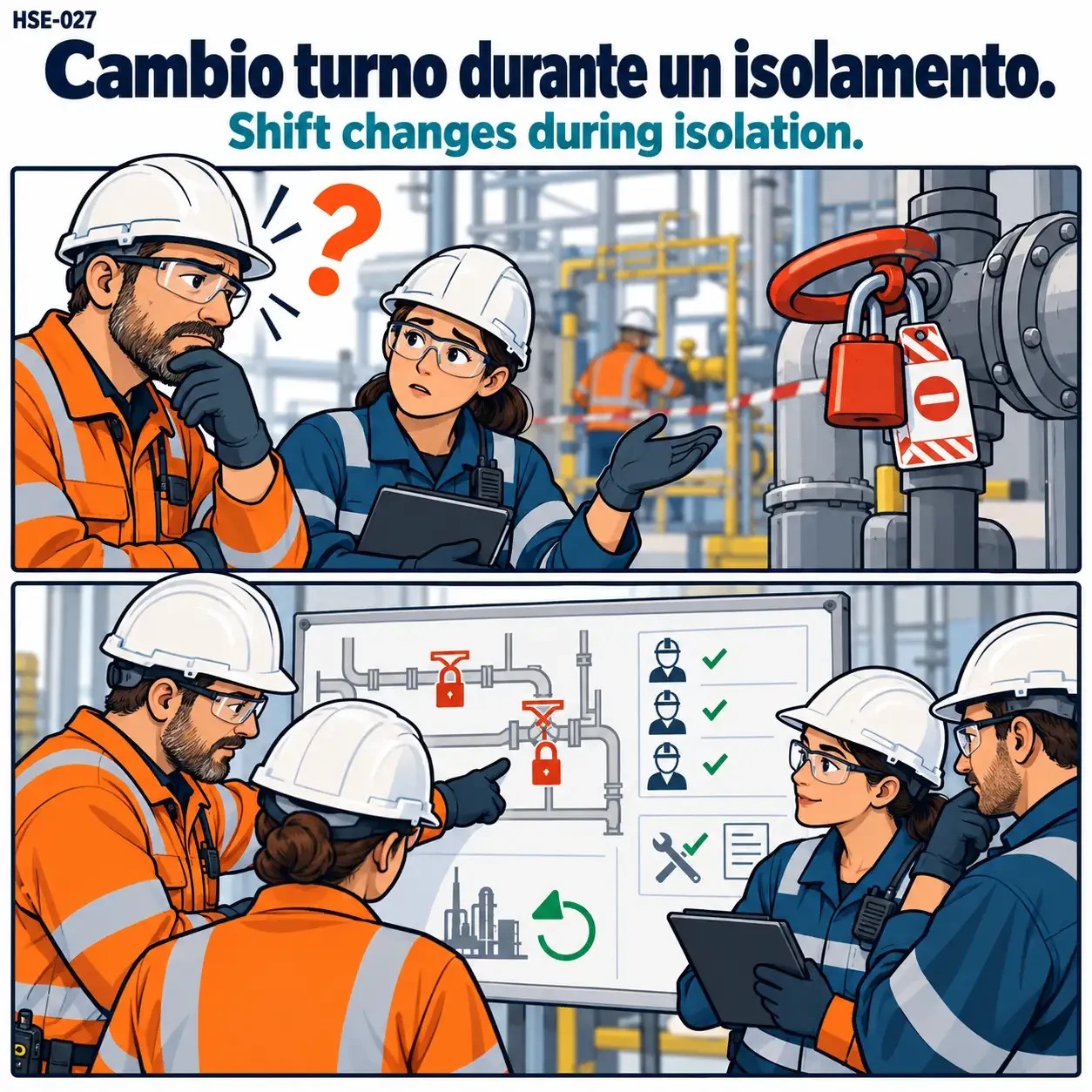
A padlock alone does not explain the job status. Handover should clarify active isolations, people involved and conditions for returning the plant to service. How do you check…
Read the insight ↗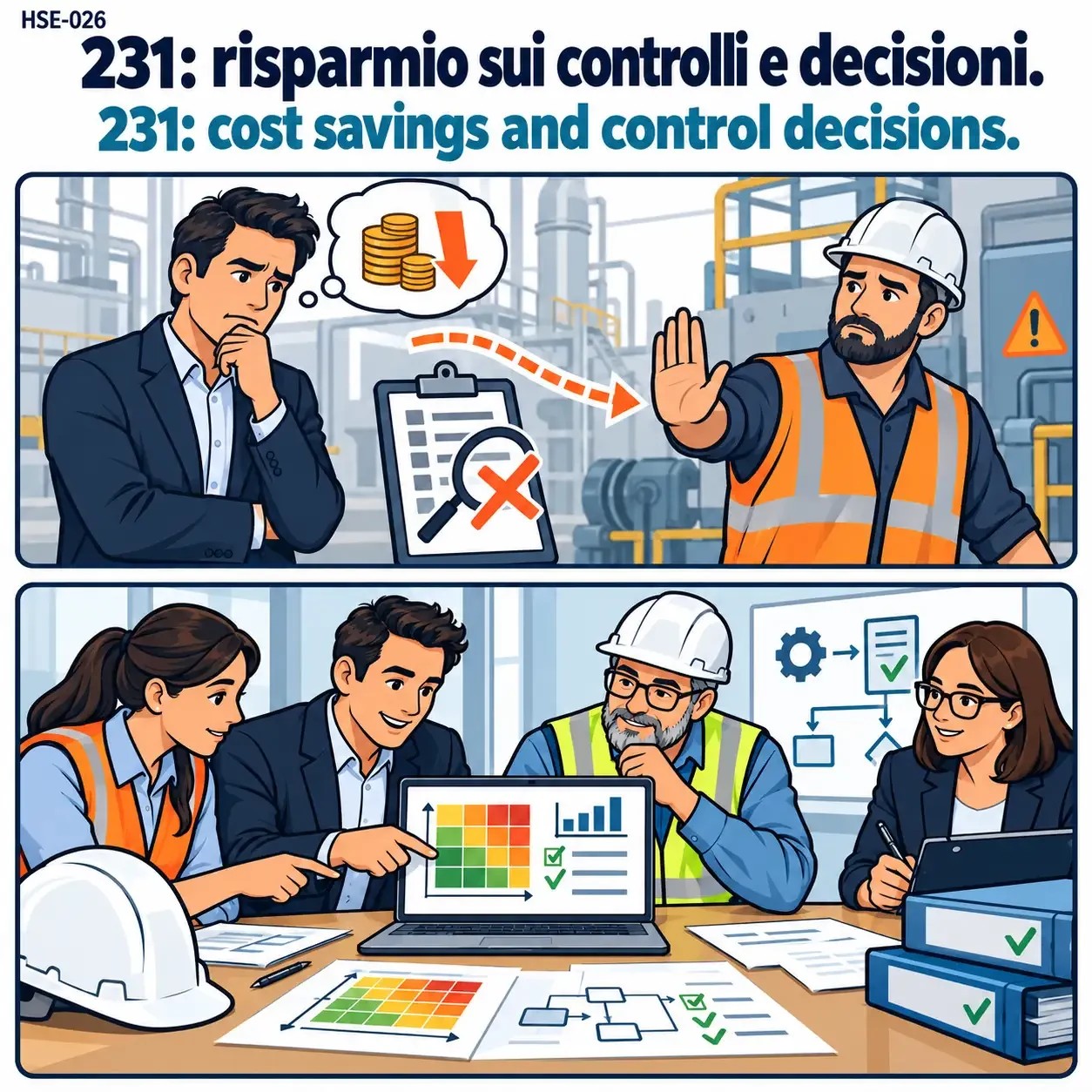
Deferring a check to save money needs a traceable risk assessment. Corporate liability depends on statutory conditions; one indicator cannot support automatic conclusions. What…
Read the insight ↗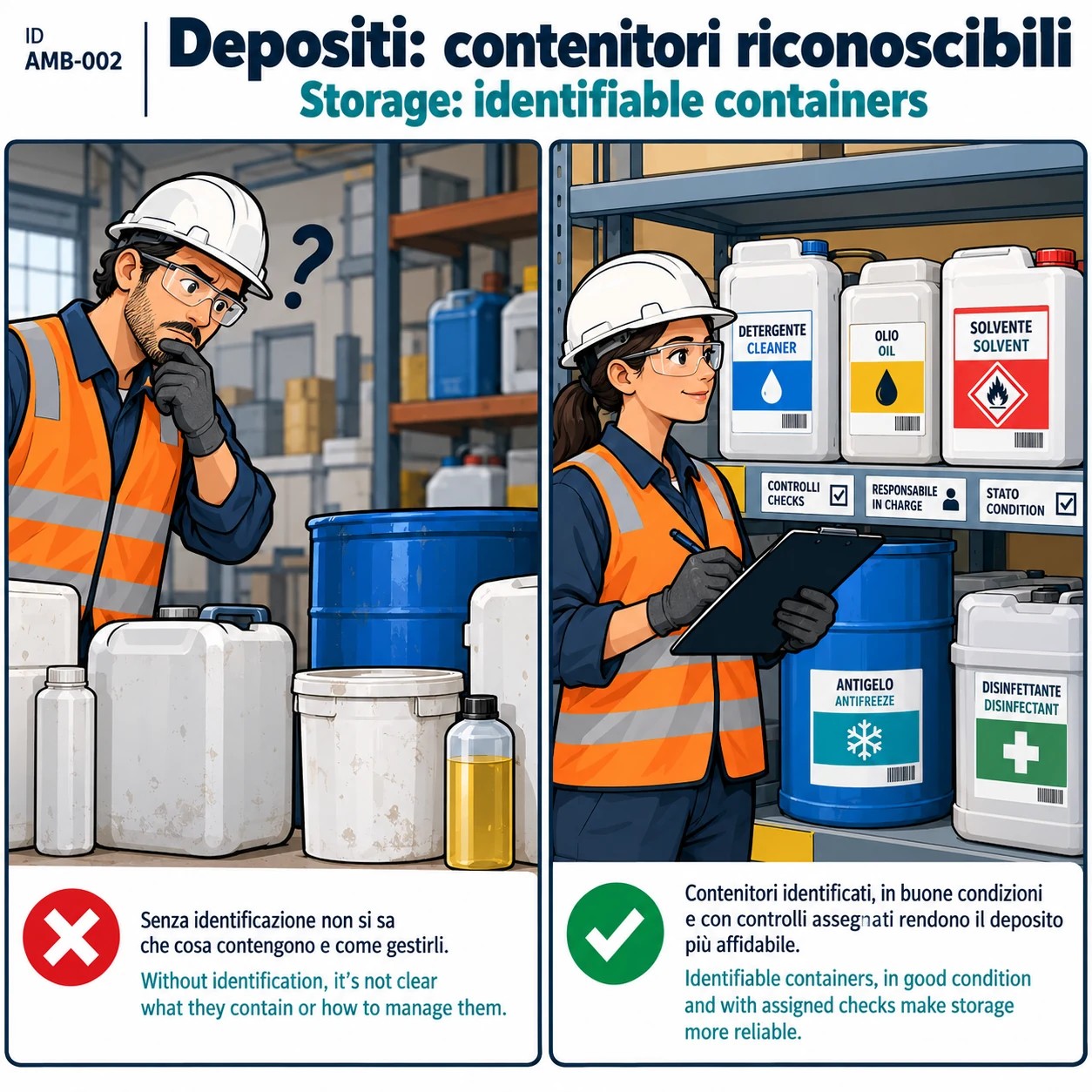
A container should make its contents and management requirements clear. Identification, condition and assigned checks make everyday storage more reliable. How do you check that a…
Read the insight ↗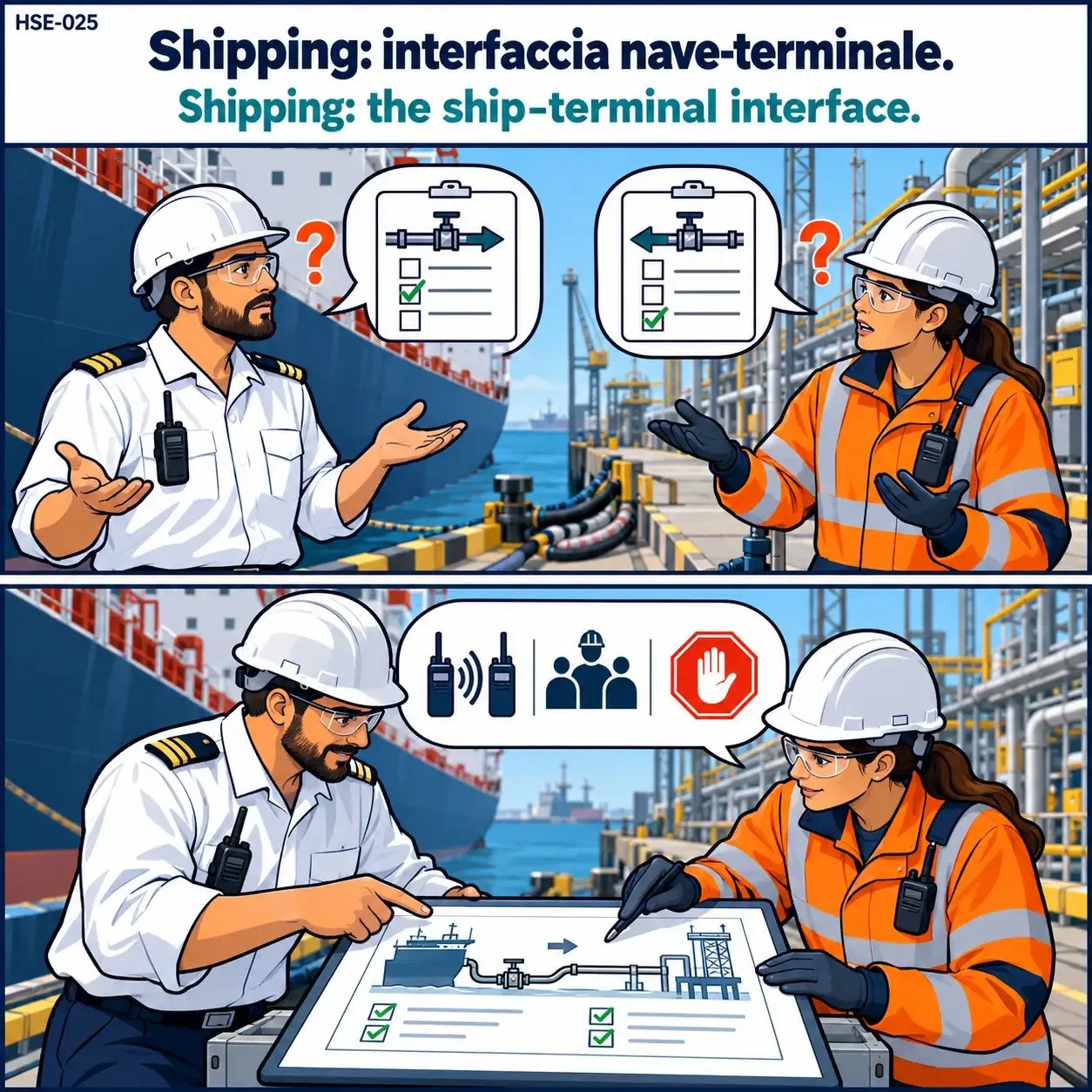
Ship and terminal may use different procedures for the same event. Pre-operation coordination should clarify communication, responsibilities and stop conditions. Which…
Read the insight ↗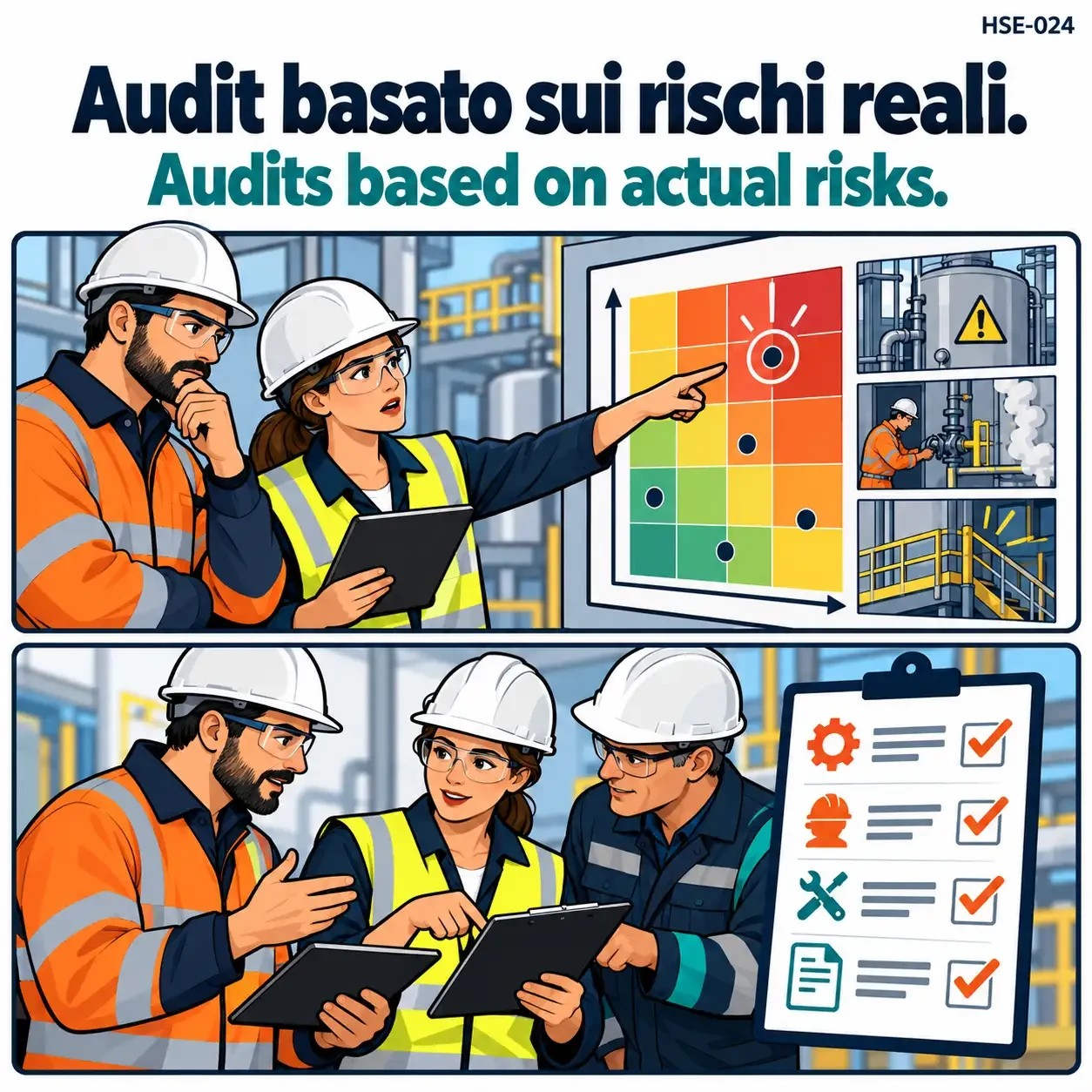
An audit programme should give more attention to processes with significant exposure and change. Repeating the same sample each year can overlook critical areas. What evidence…
Read the insight ↗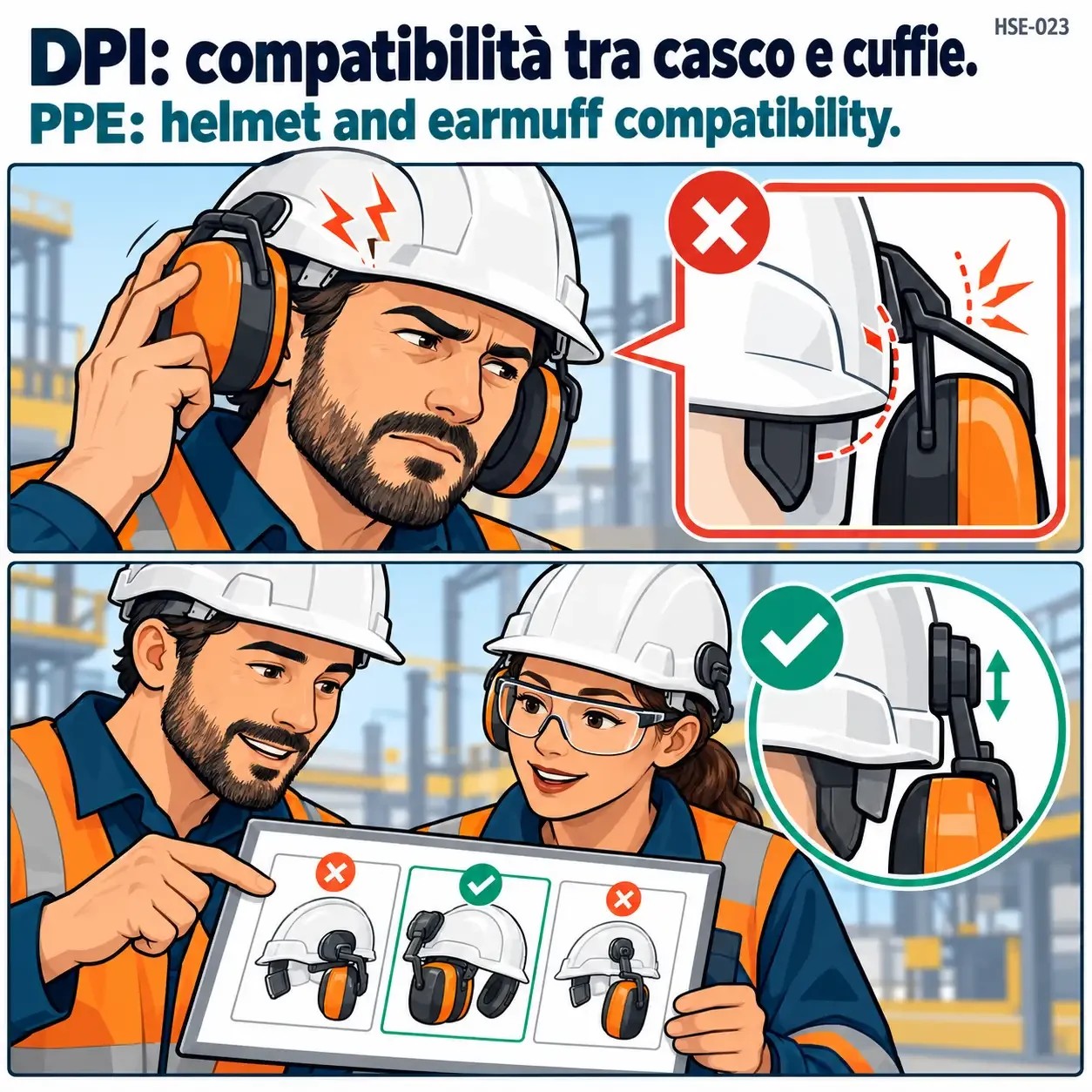
Two individually suitable devices can interfere when combined. Check approved combinations, assembly and fit under the manufacturers’ instructions. Which check do you consider…
Read the insight ↗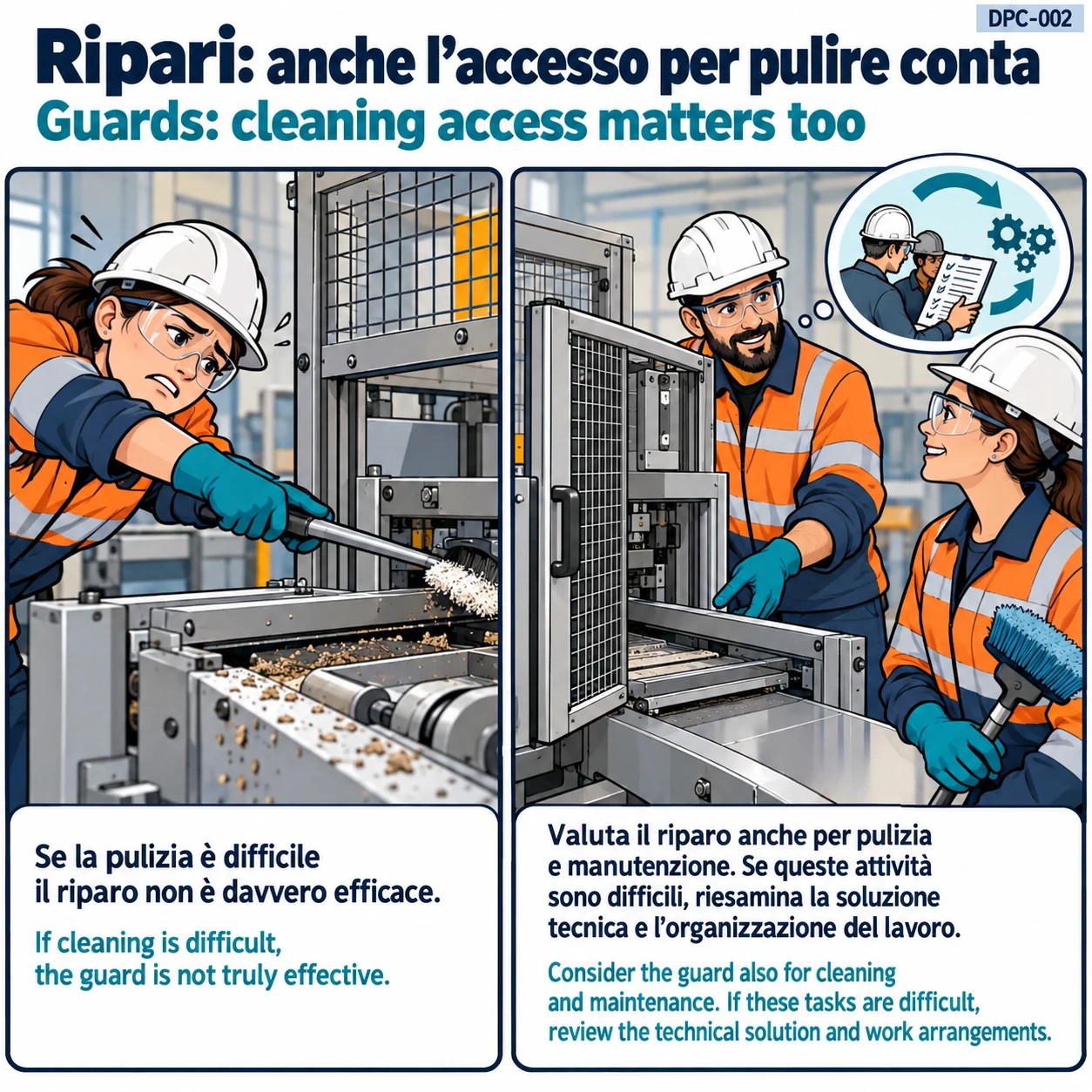
Consider guarding during cleaning and maintenance as well as production. If these tasks become difficult, review the technical solution and work arrangements. Which recent change…
Read the insight ↗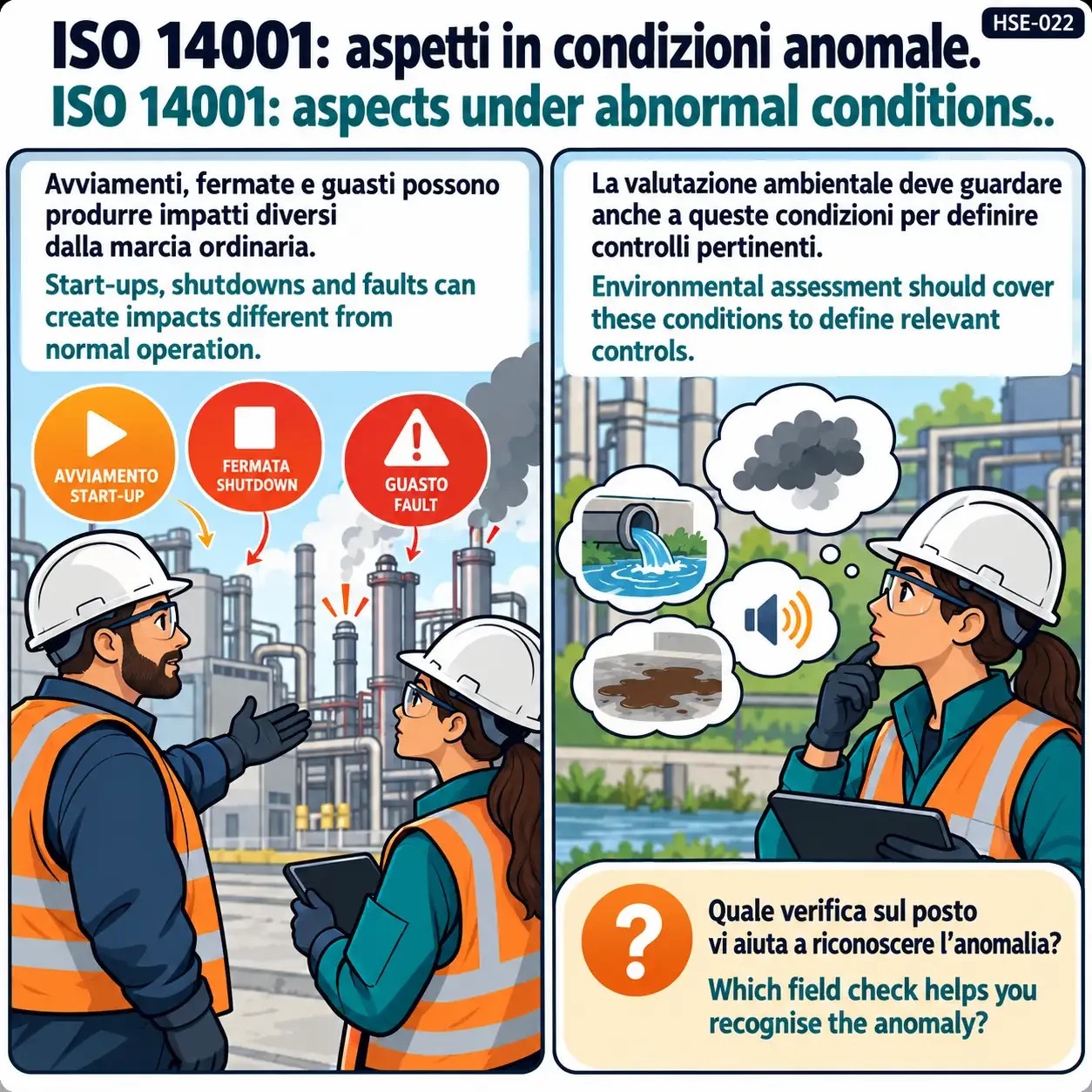
Start-ups, shutdowns and faults can create impacts different from normal operation. Environmental assessment should cover these conditions to define relevant controls. Which…
Read the insight ↗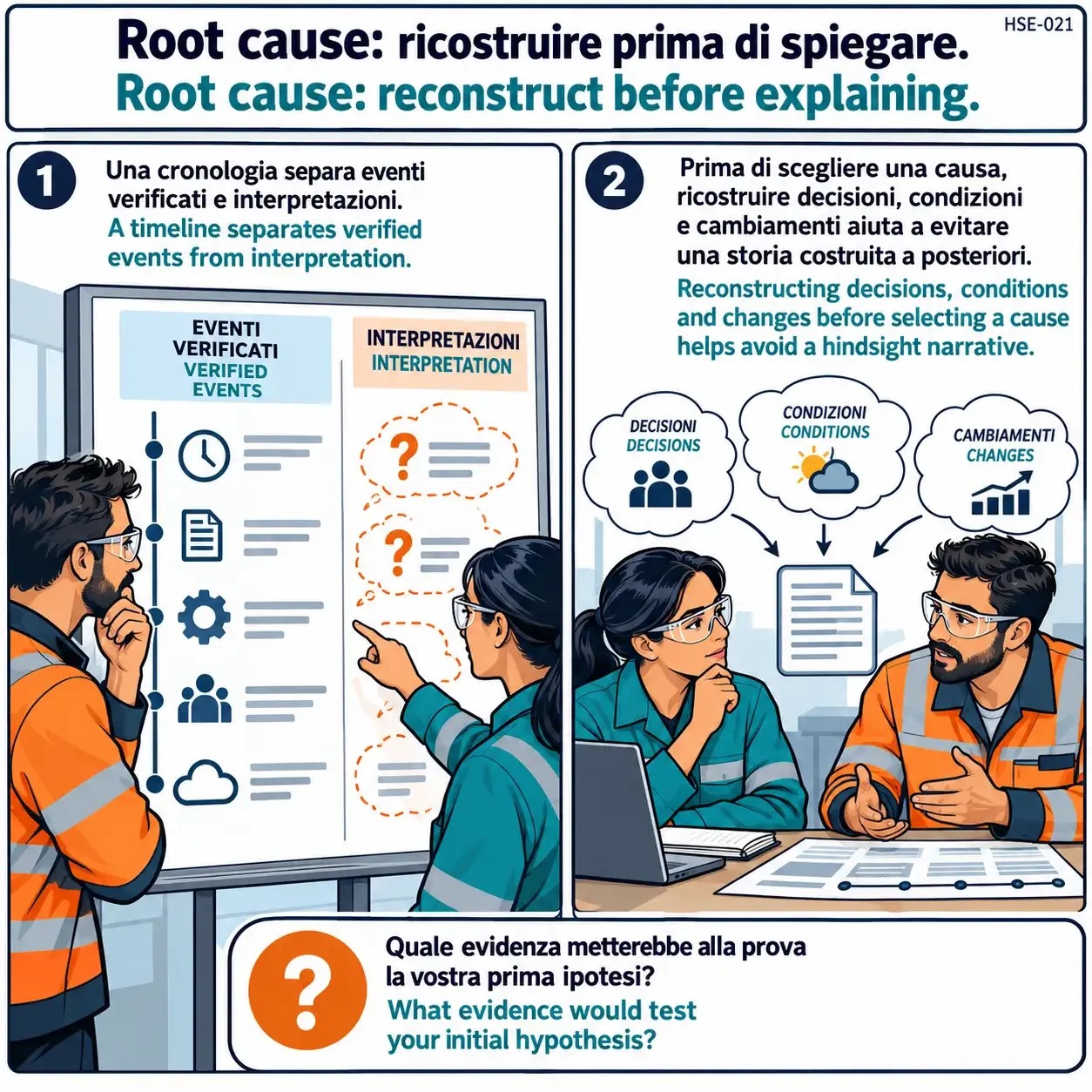
A timeline separates verified events from interpretation. Reconstructing decisions, conditions and changes before selecting a cause helps avoid a hindsight narrative. What…
Read the insight ↗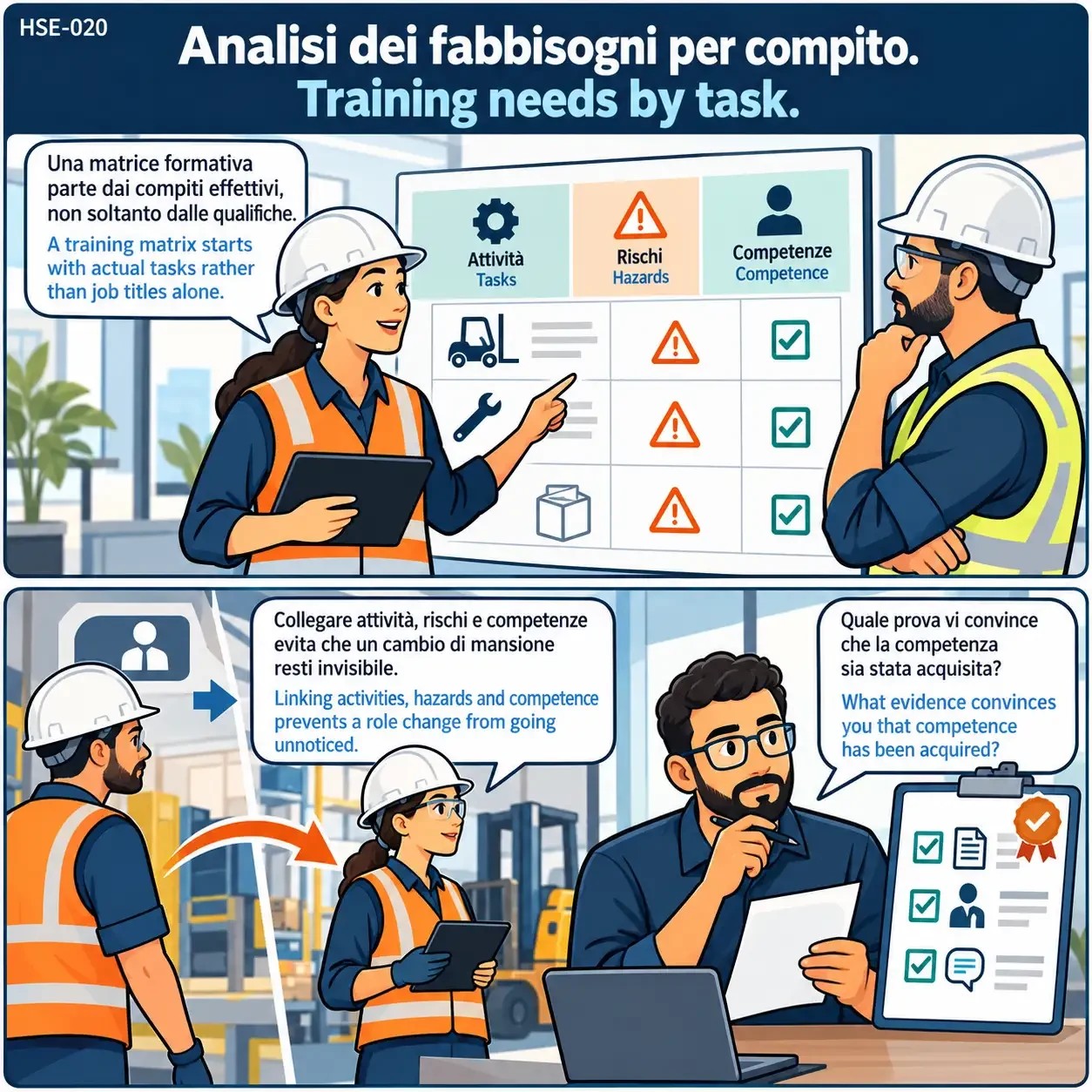
A training matrix starts with actual tasks rather than job titles alone. Linking activities, hazards and competence prevents a role change from going unnoticed. What evidence…
Read the insight ↗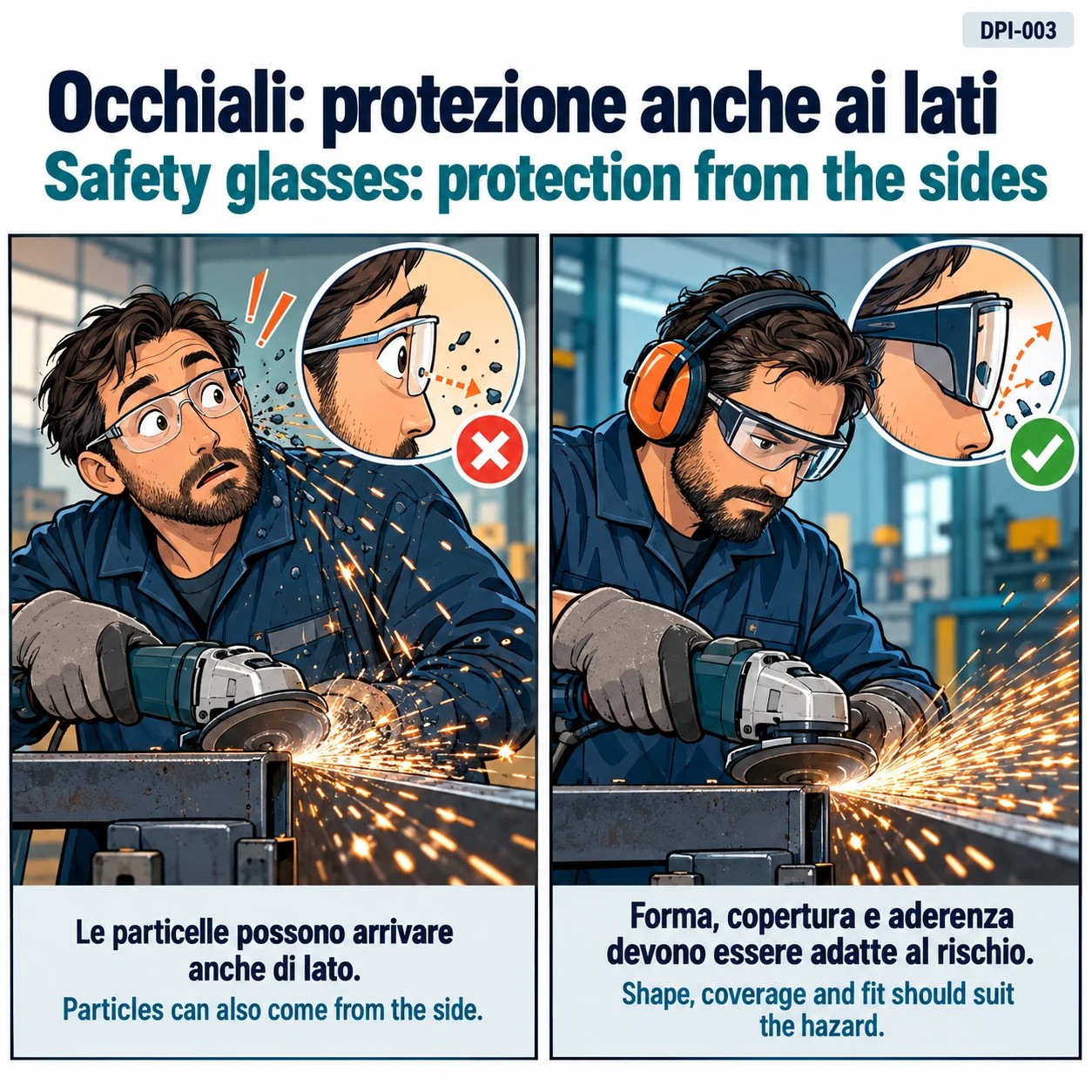
The direction of flying particles matters when selecting eye protection. Shape, coverage and fit should suit the hazard and the other equipment worn. What information do you…
Read the insight ↗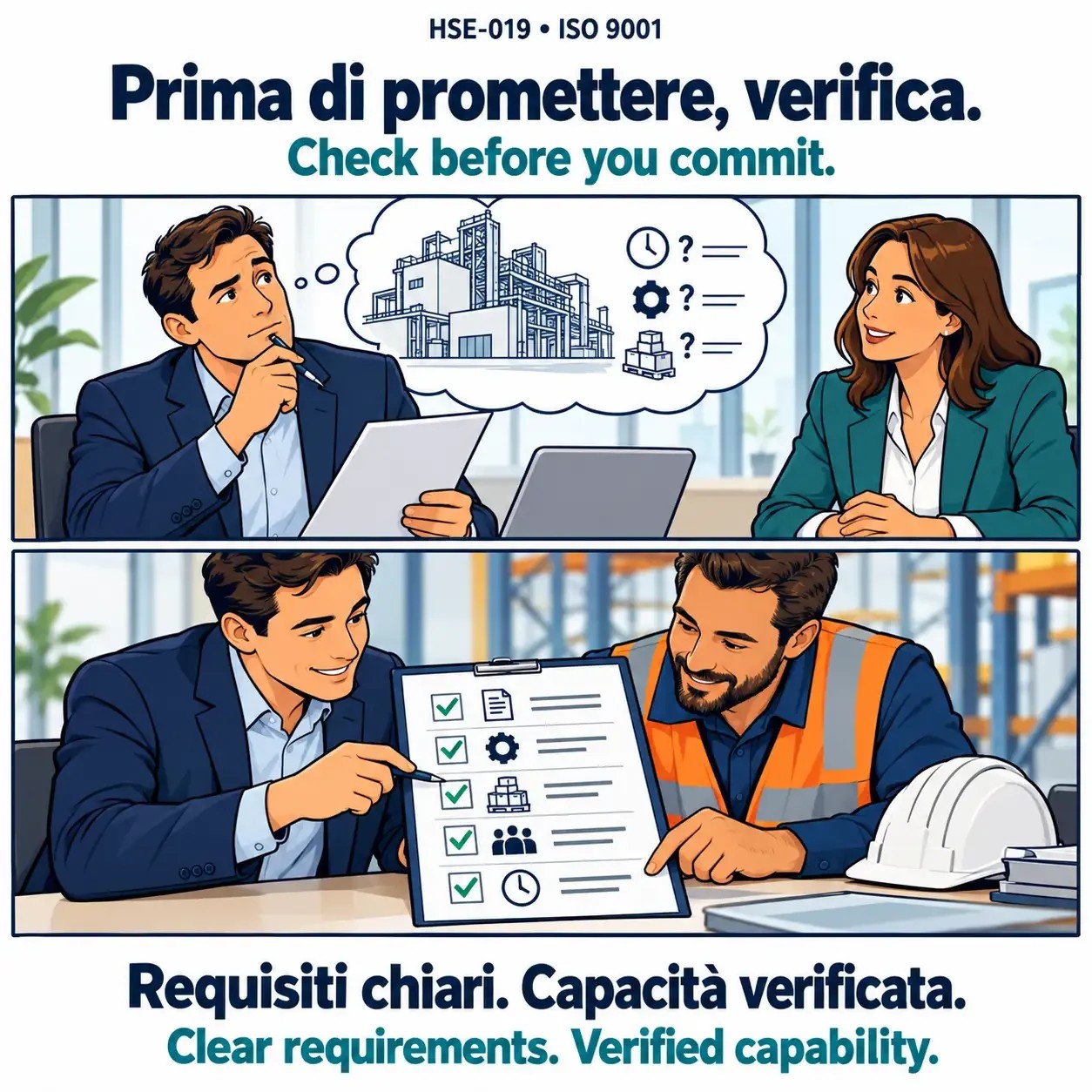
A commercial promise can become an operational constraint. Reviewing requirements, capability and uncertainties before commitment reduces delivery surprises. Which data makes…
Read the insight ↗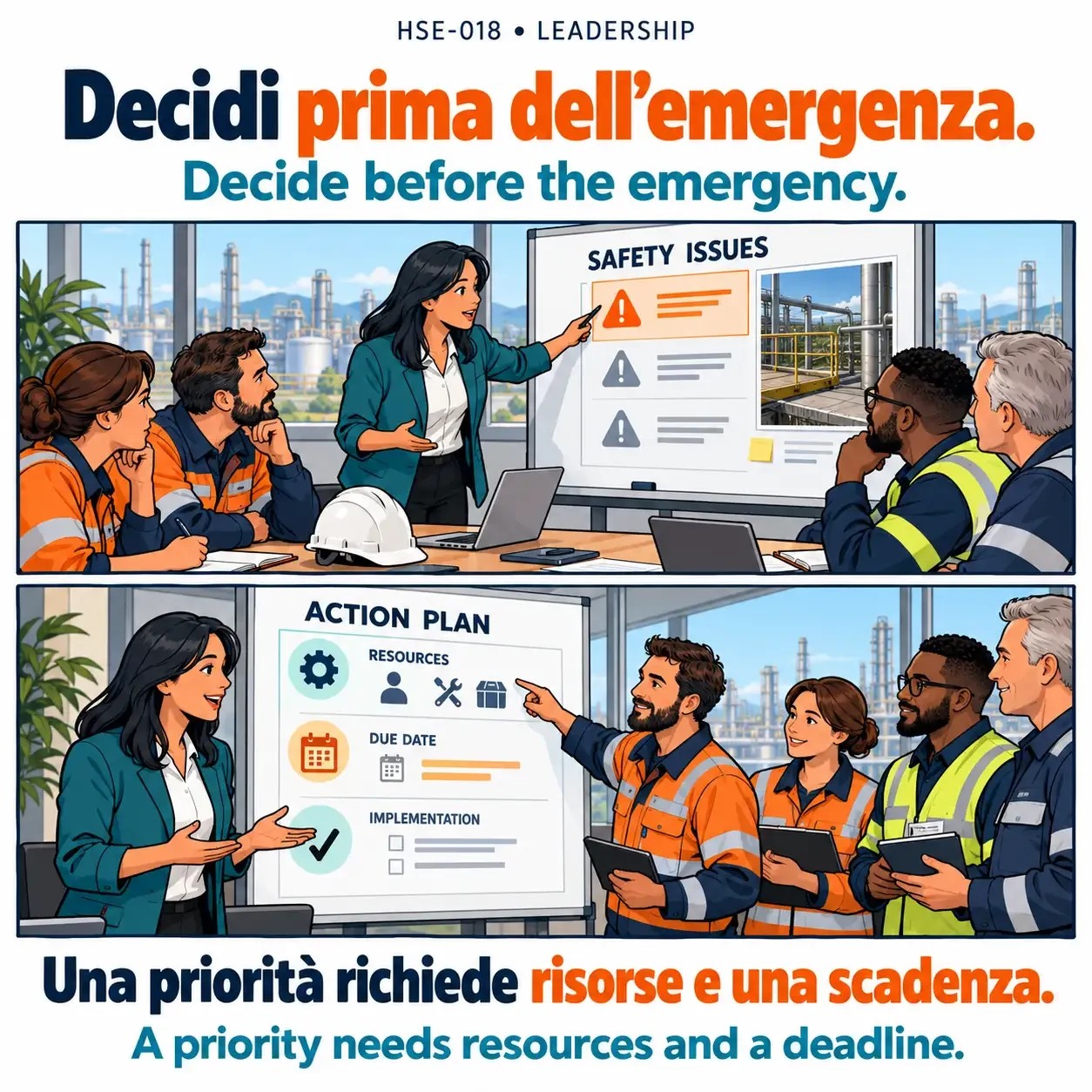
An HSE priority becomes credible when it receives a decision, resources and a deadline. Repeated deferral without explicit assessment leaves risk with those doing the work. Which…
Read the insight ↗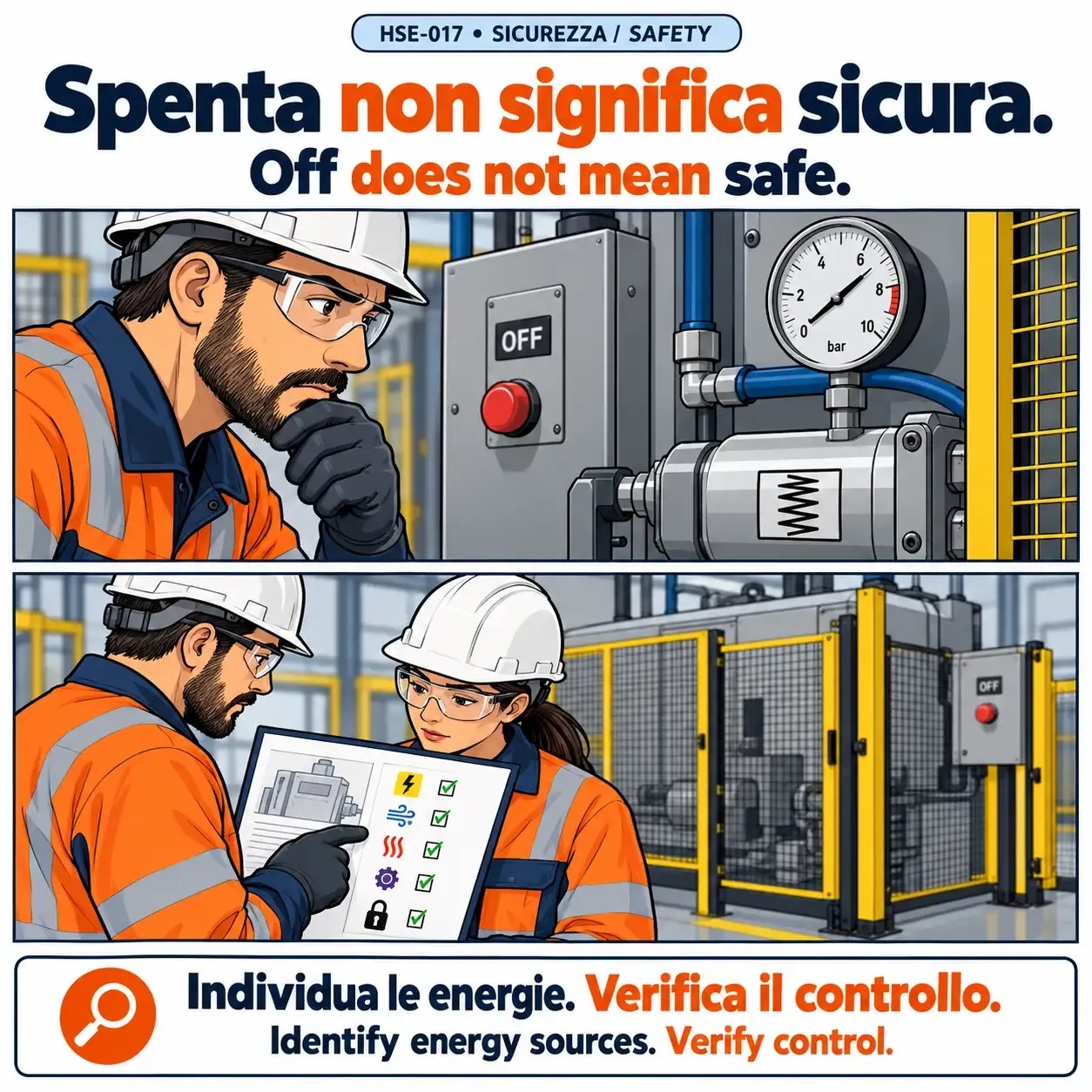
Compressed air, springs and suspended parts may remain hazardous after shutdown. Maintenance needs planned isolation covering every energy source and verification that it is…
Read the insight ↗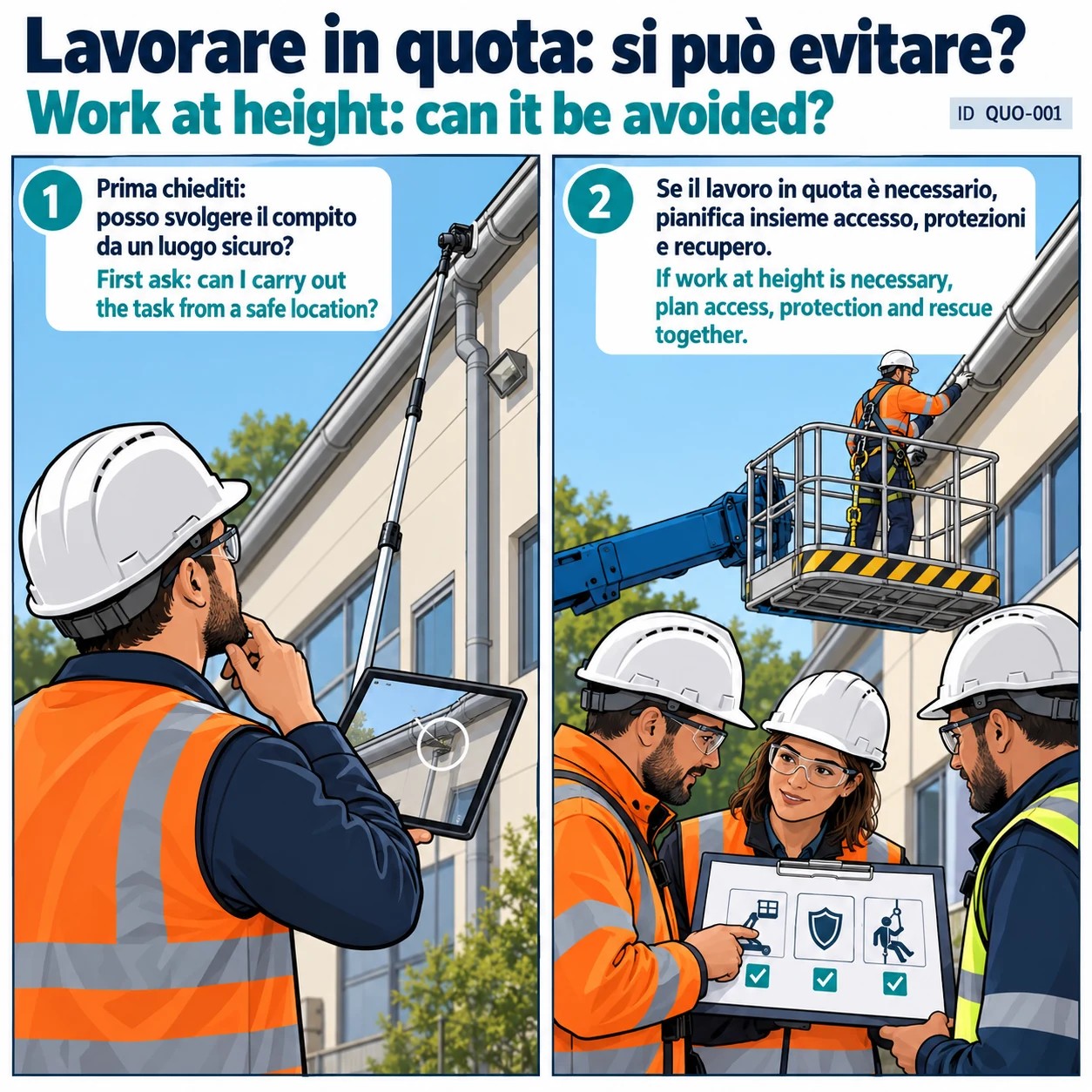
First ask whether the task can be done from a safe location. Where work at height is necessary, plan access, protection and rescue together. Which condition would make you…
Read the insight ↗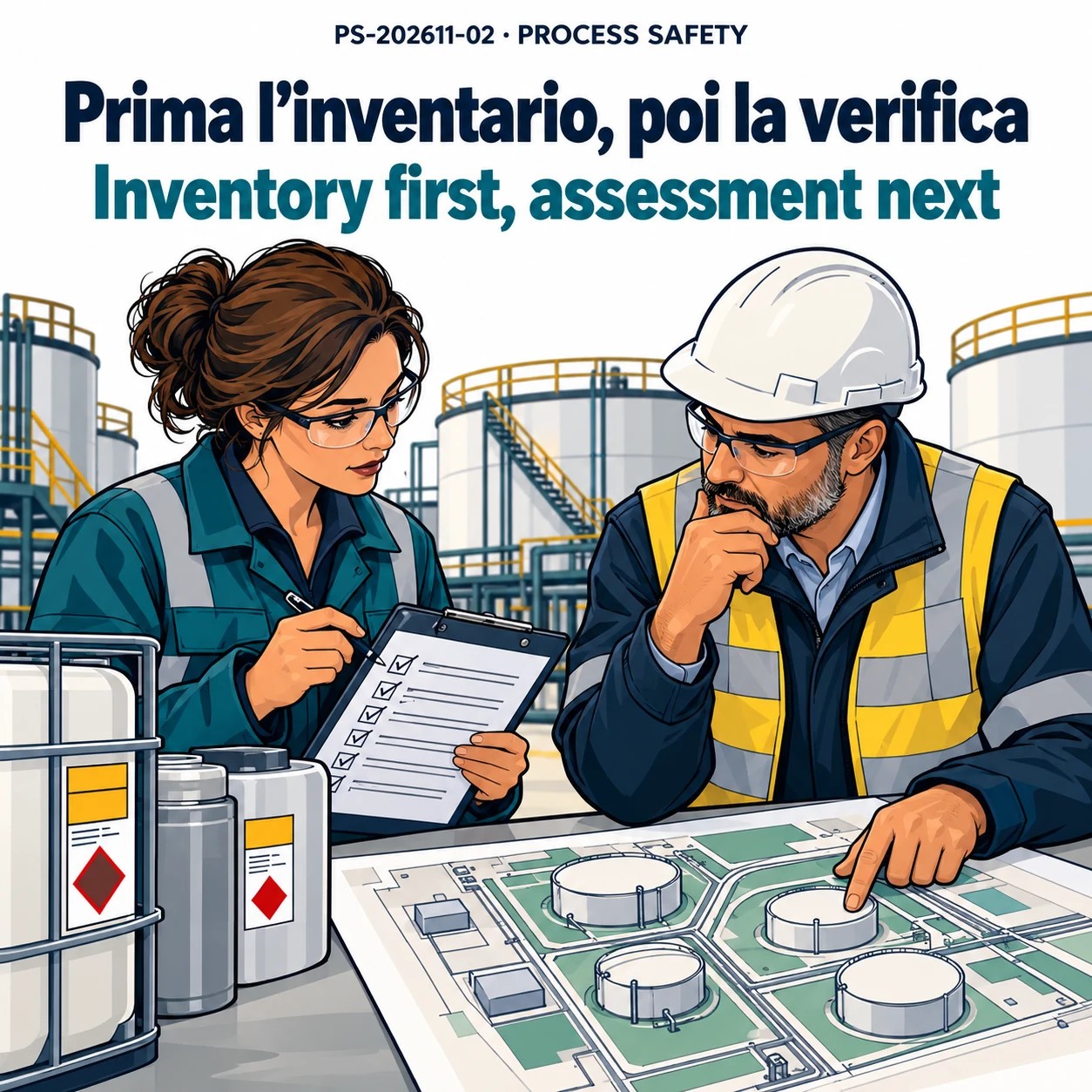
The first Seveso check starts with substances, not the company's name. Italian Legislative Decree 105/2015 implements Seveso III. Applicability requires assessment of…
Read the insight ↗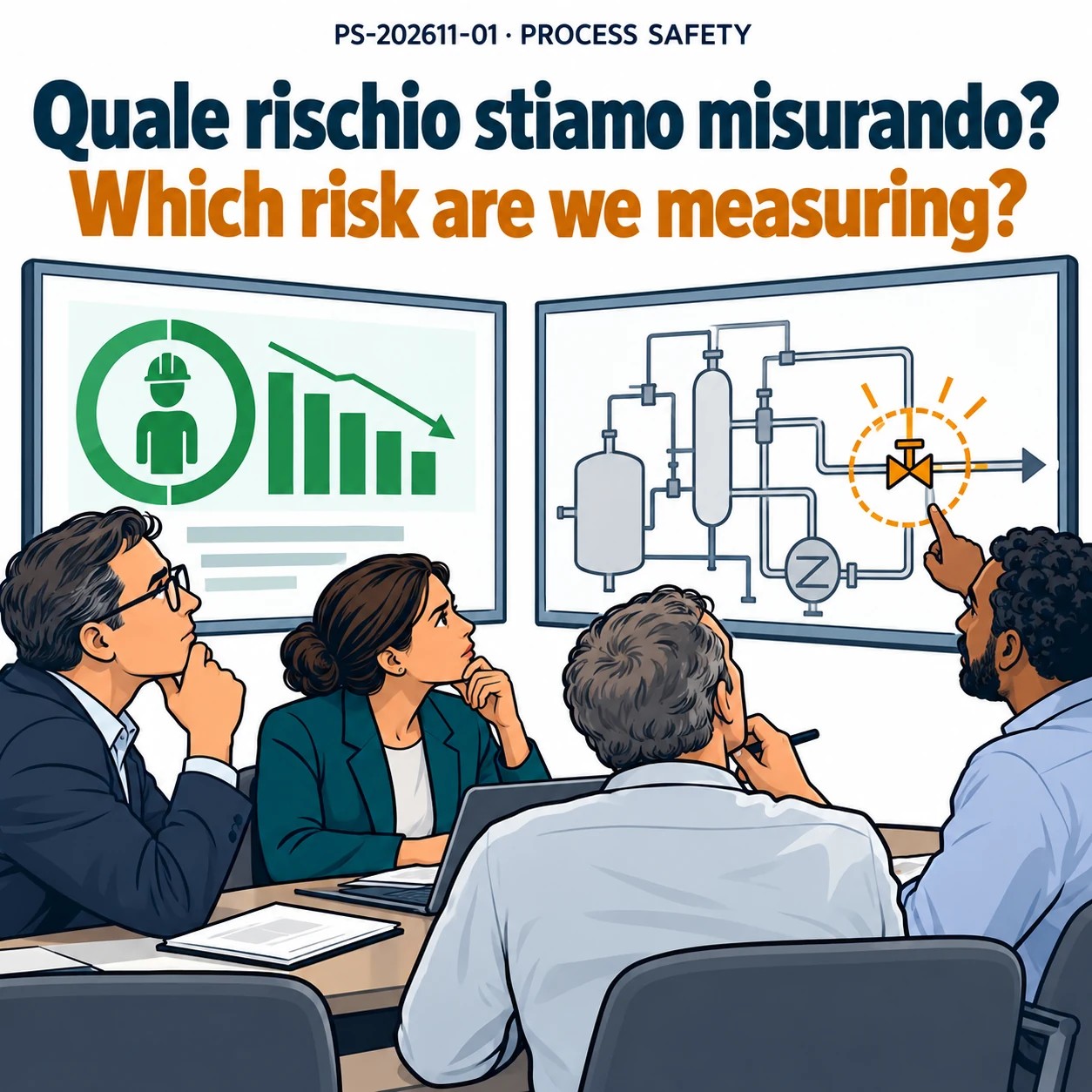
Zero injuries does not mean zero major accident risk. A site can report excellent personal safety results while accumulating overdue tests, containment leaks and forgotten…
Read the insight ↗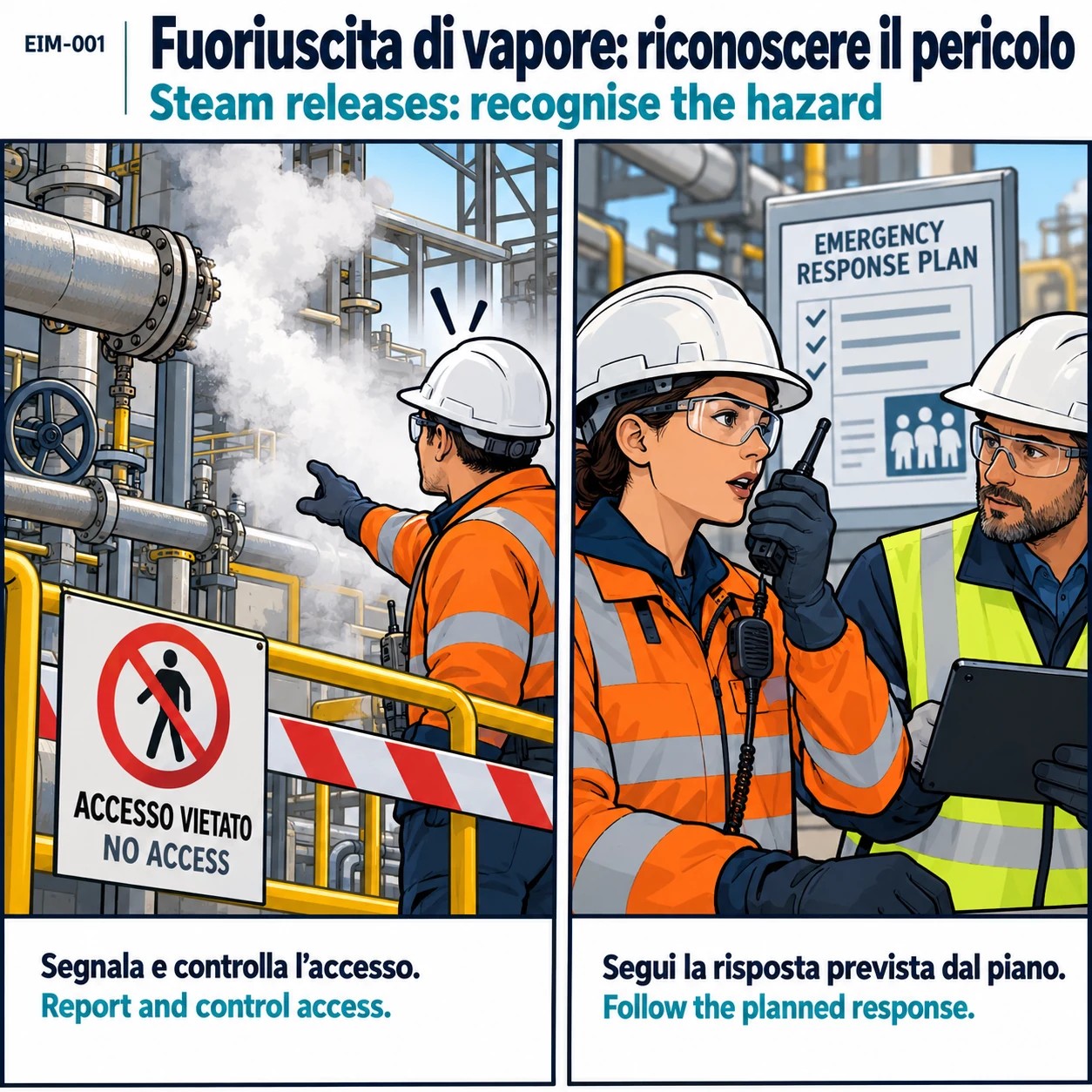
A release from a pressure system needs the planned response. Reporting and access control come before improvised attempts to locate or stop the leak. Which interface deserves a…
Read the insight ↗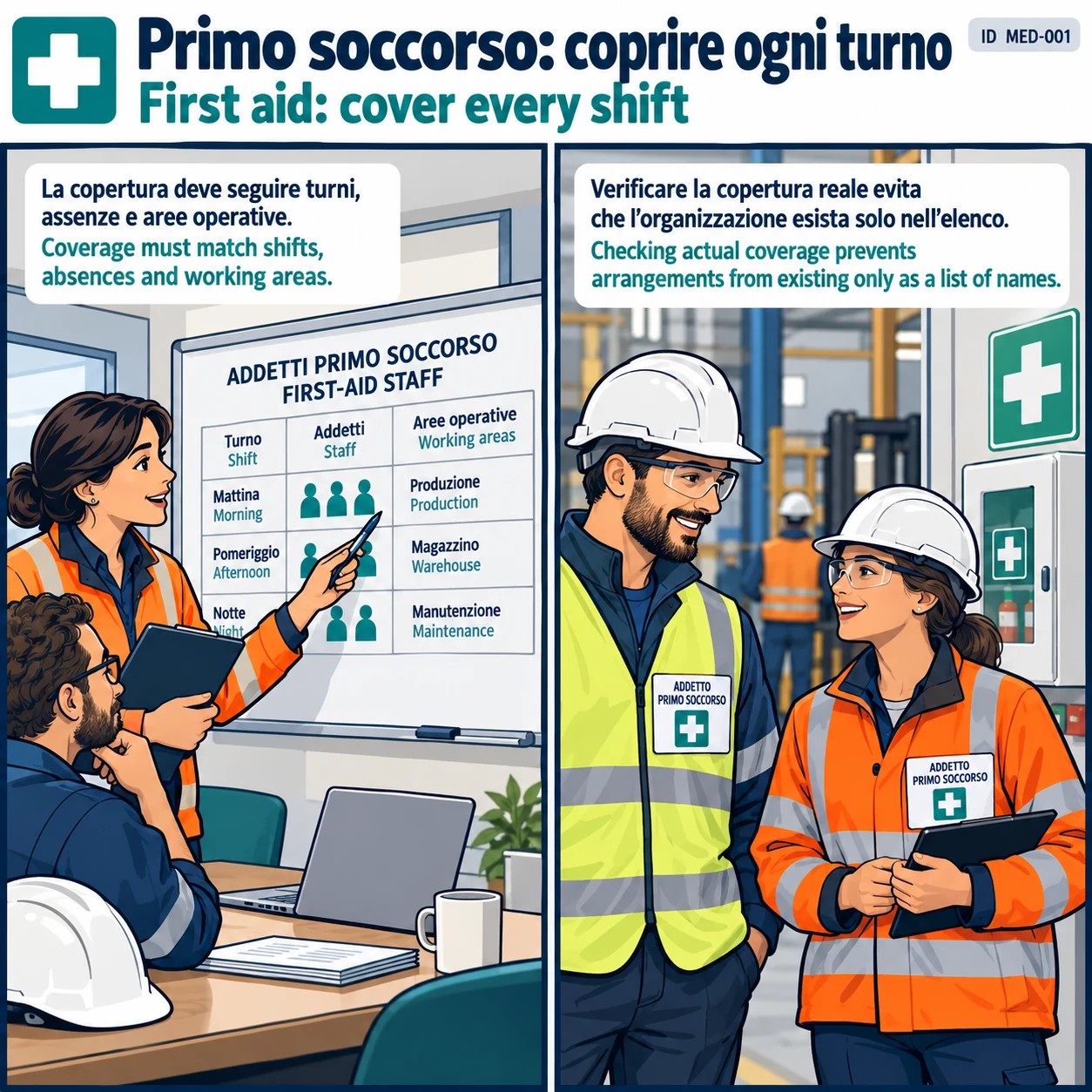
First-aid availability should match shifts, absences and working areas. Checking actual coverage prevents arrangements from existing only as a list of names. Which step did you…
Read the insight ↗
A procedure helps when the correct version is available when needed. Searching through different copies can create uncertainty during work. Define where to find valid documents…
Read the insight ↗
Recognising a container and knowing its contents helps people handle it correctly. Integrity, closure and identification need ongoing attention. Check that applicable labels are…
Read the insight ↗
A workstation should fit the person and the task. Small adjustments can improve comfort and reduce awkward postures. Check seating, foot support, screen and keyboard positions…
Read the insight ↗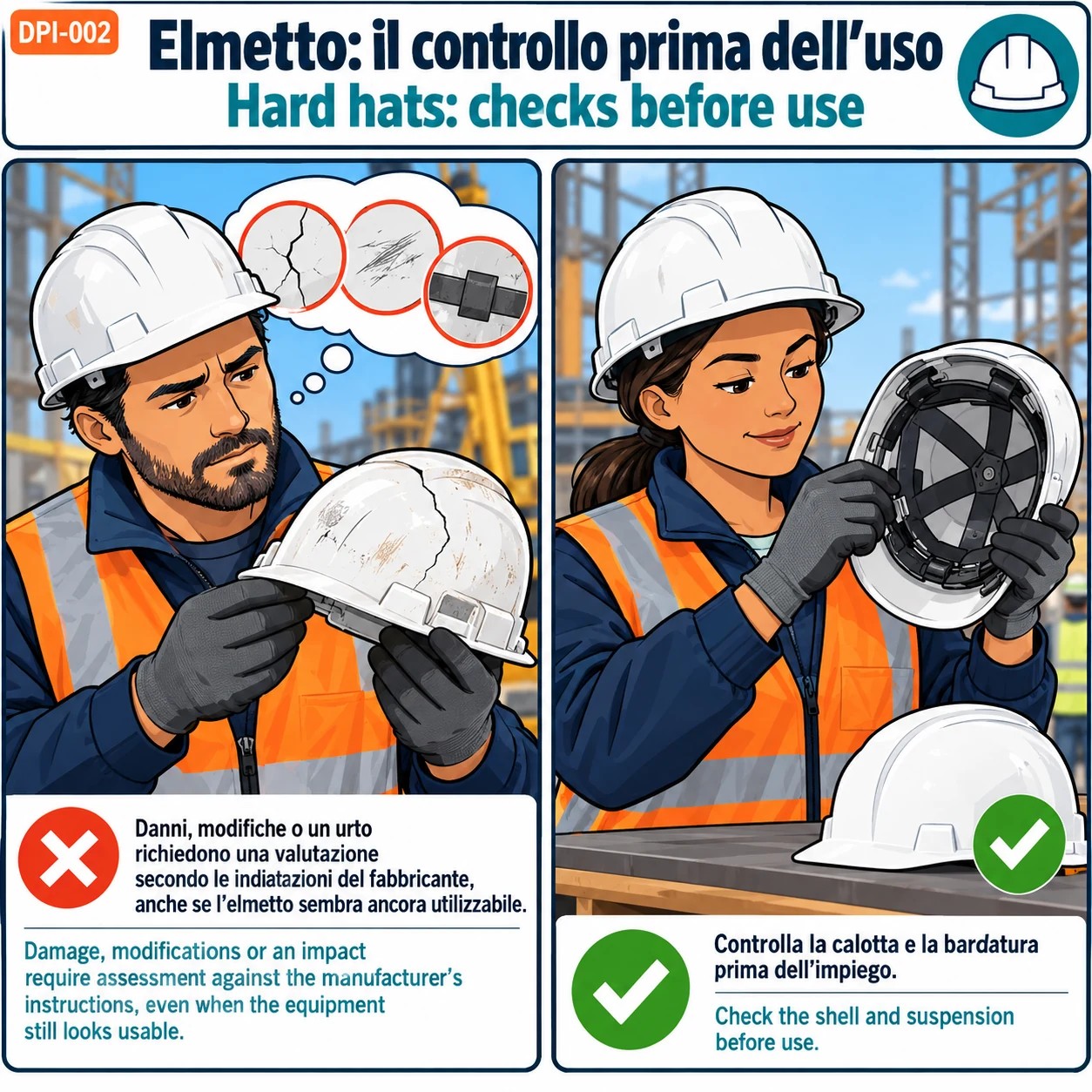
Check the shell and suspension before use. Damage, modifications or an impact require assessment against the manufacturer’s instructions, even when the equipment still looks…
Read the insight ↗
A complaint contains information about an experience that did not meet expectations. Analysing it well can improve the process behind it. Gather the facts, clarify the issue and…
Read the insight ↗
A concern is useful when it reaches the appropriate recipient and receives follow-up. In risk governance, the information route matters too. For information flows linked to a 231…
Read the insight ↗
A toolbox talk is useful when it prepares people for the work ahead. One concrete topic and a few questions can start an important discussion. Discuss the hazards of the planned…
Read the insight ↗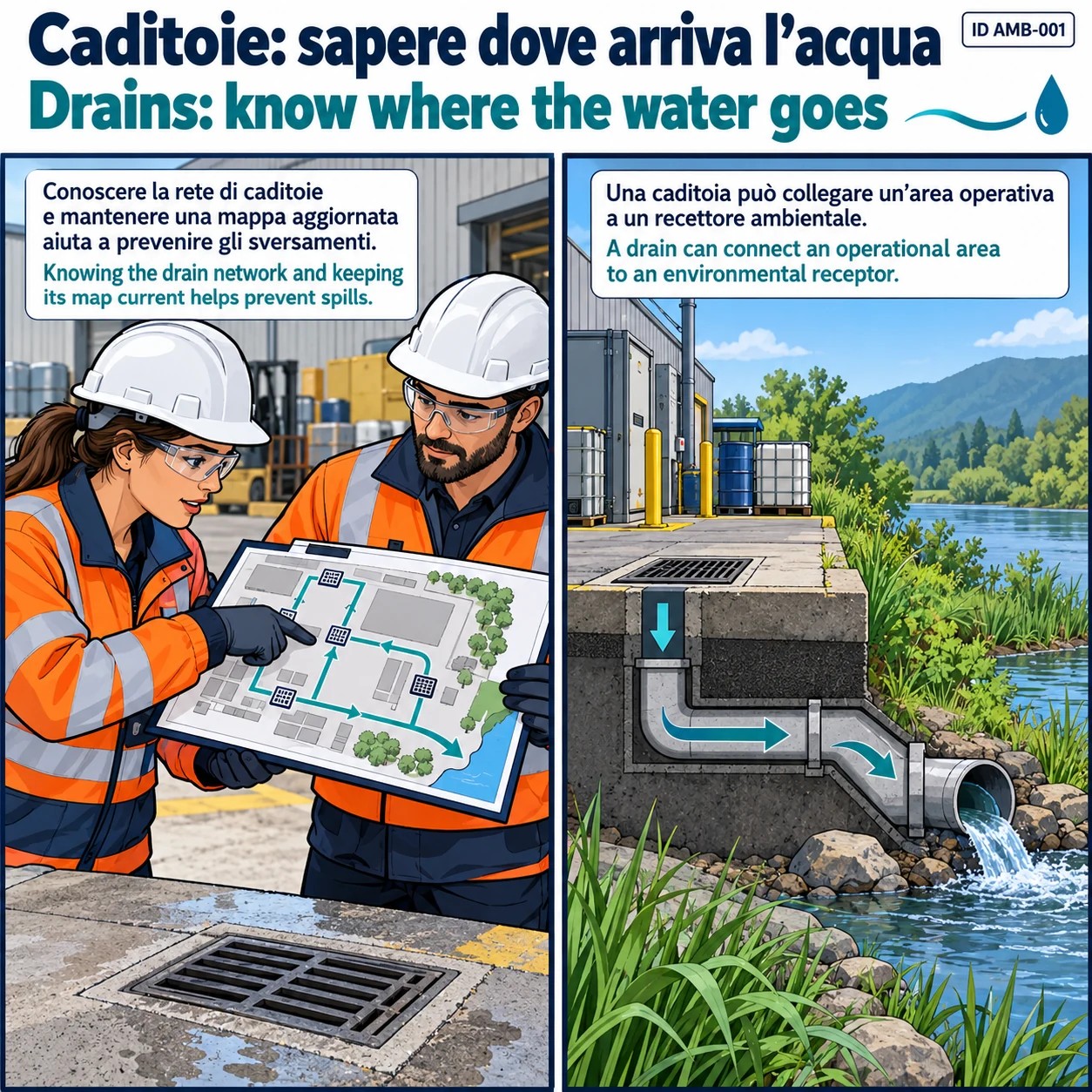
A drain can connect an operational area to an environmental receptor. Knowing the network and keeping its map current supports spill prevention planning. Which field check makes…
Read the insight ↗
Assigning a task requires clarity about outcomes and responsibilities. A name beside a task does not resolve uncertainty about resources and decisions. Clarify who coordinates…
Read the insight ↗
Fatigue deserves attention before it affects work. Pace, task duration, environmental conditions and recovery should be considered together. Encourage people to report…
Read the insight ↗
Waste prevention starts before the collection bin. Purchasing, packaging and working methods influence what will become waste. Consider where to reduce unnecessary materials, use…
Read the insight ↗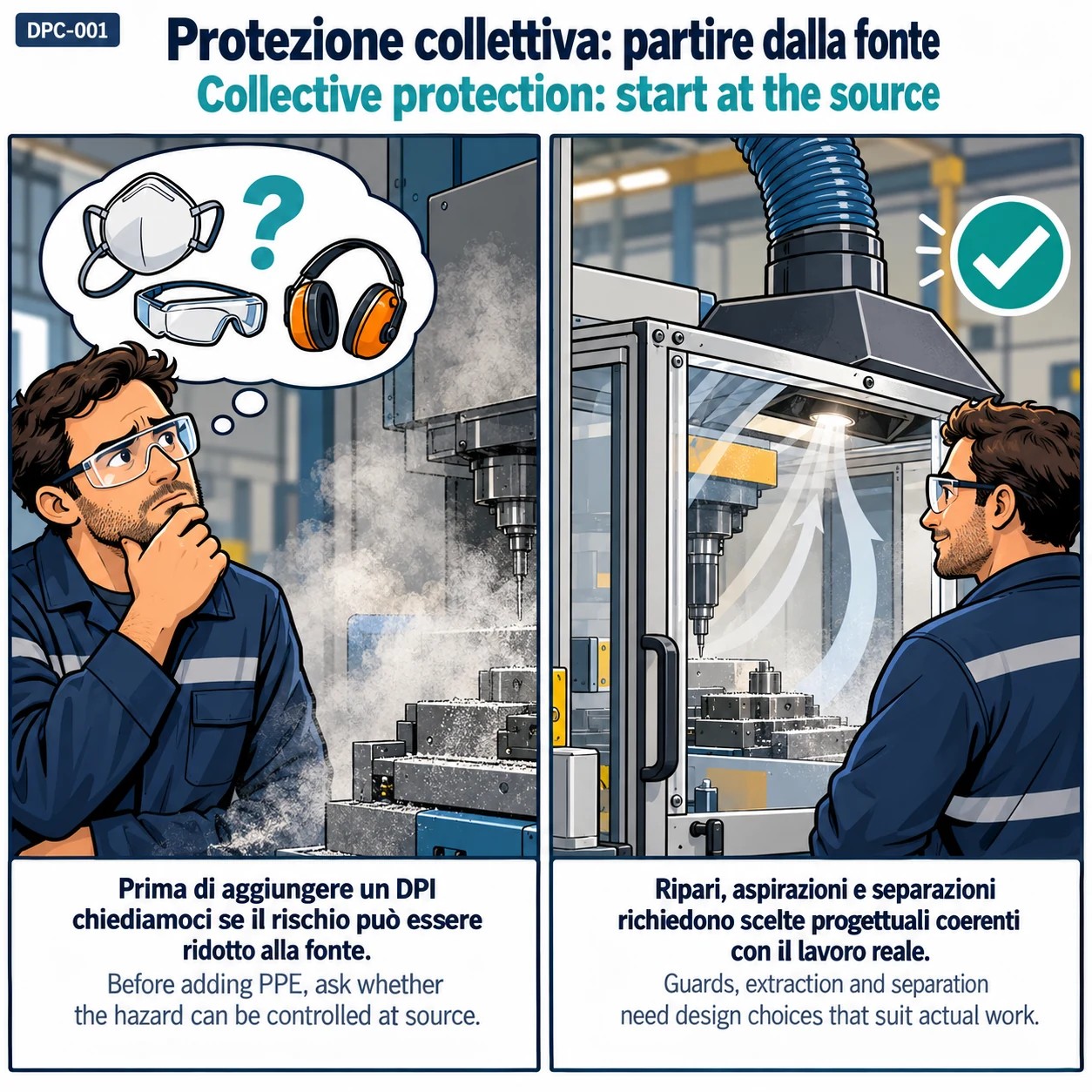
Before adding PPE, ask whether the hazard can be controlled at source. Guards, extraction and separation need design choices that suit actual work. How do you check that the…
Read the insight ↗
An organisational model gains meaning through everyday decisions: who authorises, who checks and what evidence remains of the work performed. In the context of Italian…
Read the insight ↗
A handover works better when the person delivering understands what the recipient needs. An unclear request can lead to rework, delays and misunderstandings. Clarify the expected…
Read the insight ↗
Before starting a task, taking time to observe is already a preventive action. Access routes, obstacles, energy sources and nearby activities can change even when the task feels…
Read the insight ↗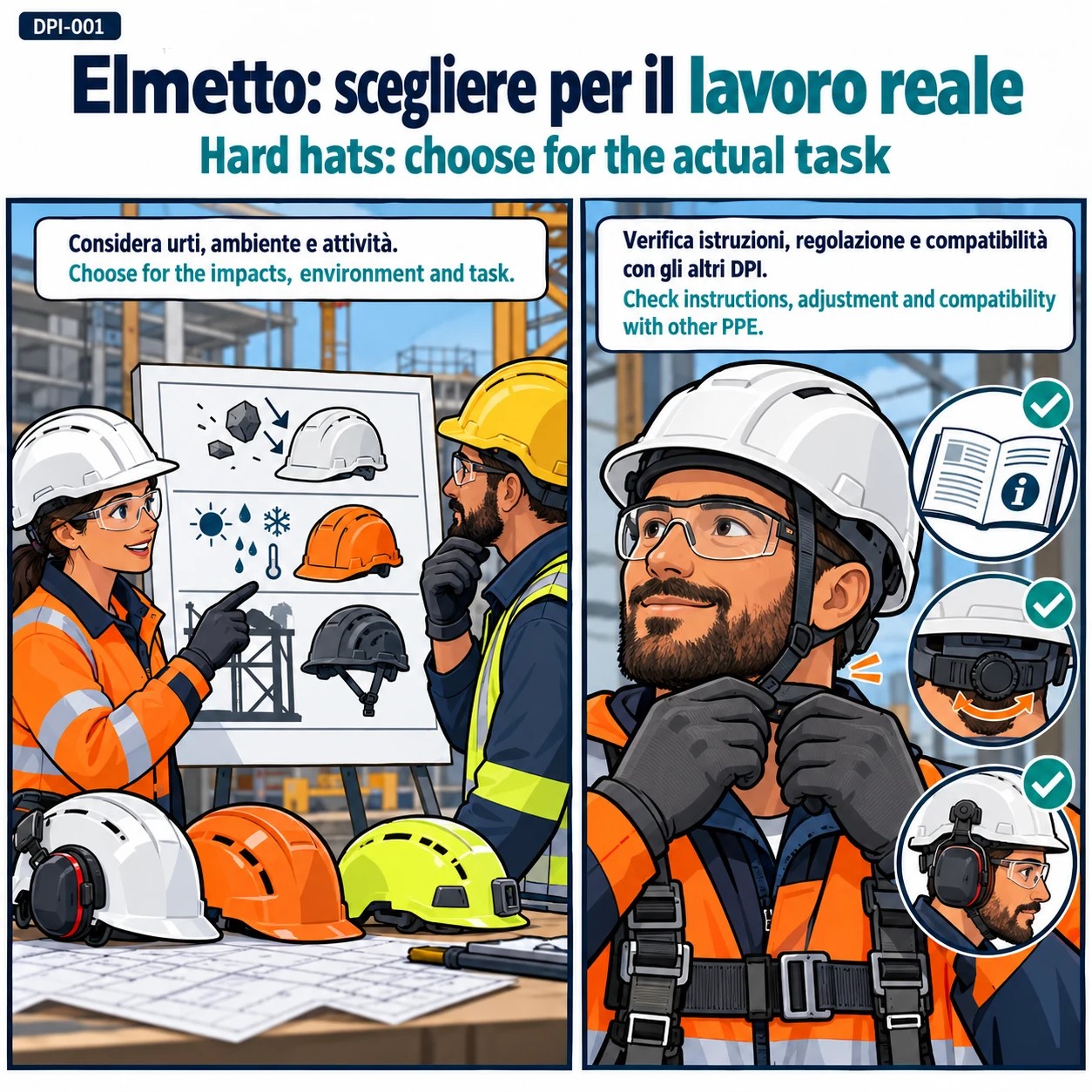
Choose head protection for the impacts, environment and task involved. Instructions, adjustment and compatibility with other PPE matter more than colour alone. What do you check…
Read the insight ↗
A leaking container, an untidy storage area or missing absorbent materials can turn a small issue into a wider problem. Before starting work, ask: are containers intact and…
Read the insight ↗
Installing a safeguard, updating a procedure or issuing PPE is one step. The next is checking on site whether the solution fits the actual work. Is the safeguard being used? Is…
Read the insight ↗
A concern raised is an opportunity to act before a hazard leads to an incident. People working on site notice details that a procedure alone cannot capture. That is why we need…
Read the insight ↗
Simply making equipment available is not enough: it must suit the hazard, work with other protective equipment, remain in good condition and be used correctly. Before starting a…
Read the insight ↗No articles match your search.