Environment
Storage: identifiable containers
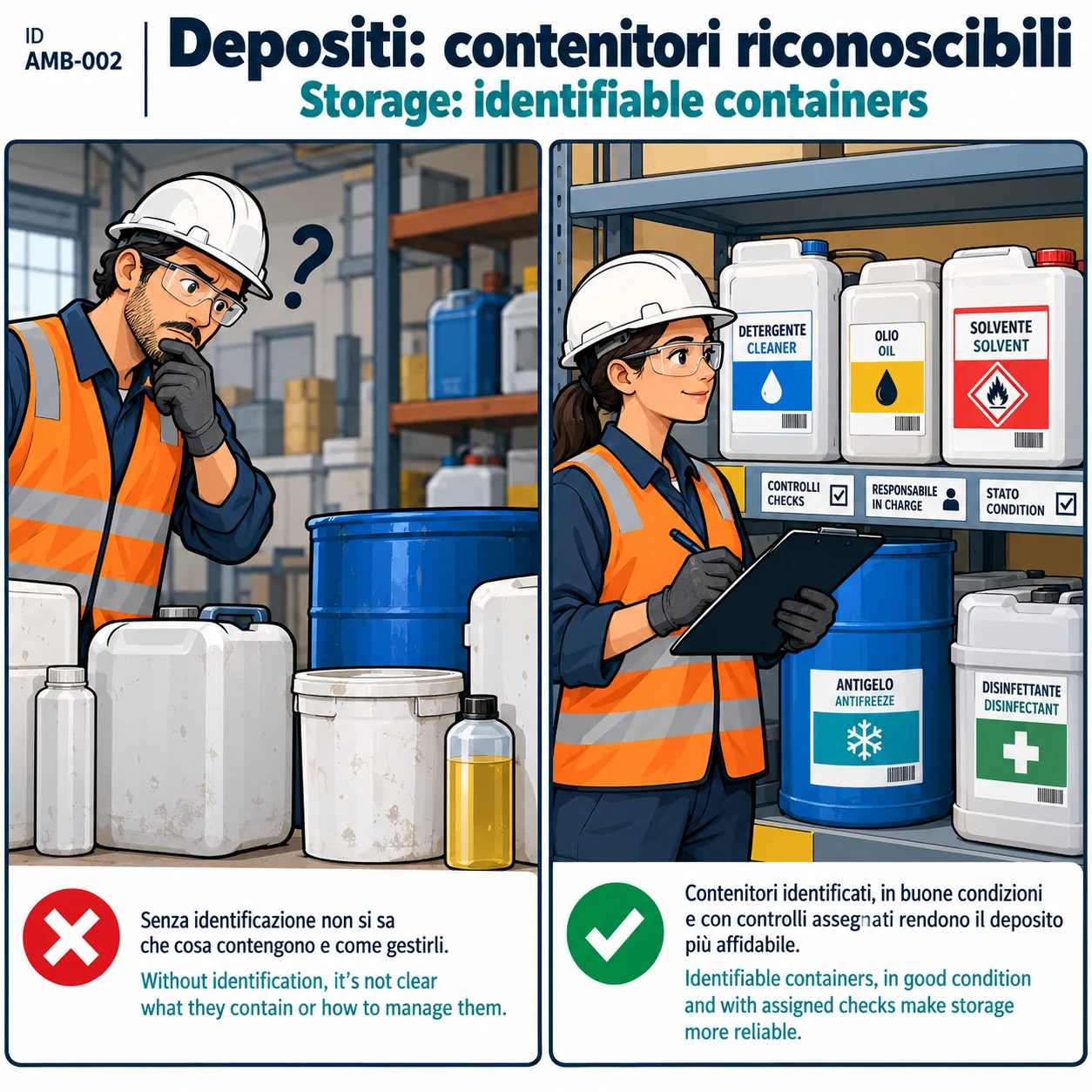
A container should make its contents and management requirements clear. Identification, condition and assigned checks make everyday storage more reliable.
How do you check that a report has received follow-up?
A readable label loses value if a container is moved into an unintended area or nobody knows who checks it. Observing storage can connect identification, condition and defect management. A photograph of a problem does not replace ownership: make clear how the concern reaches someone able to act.
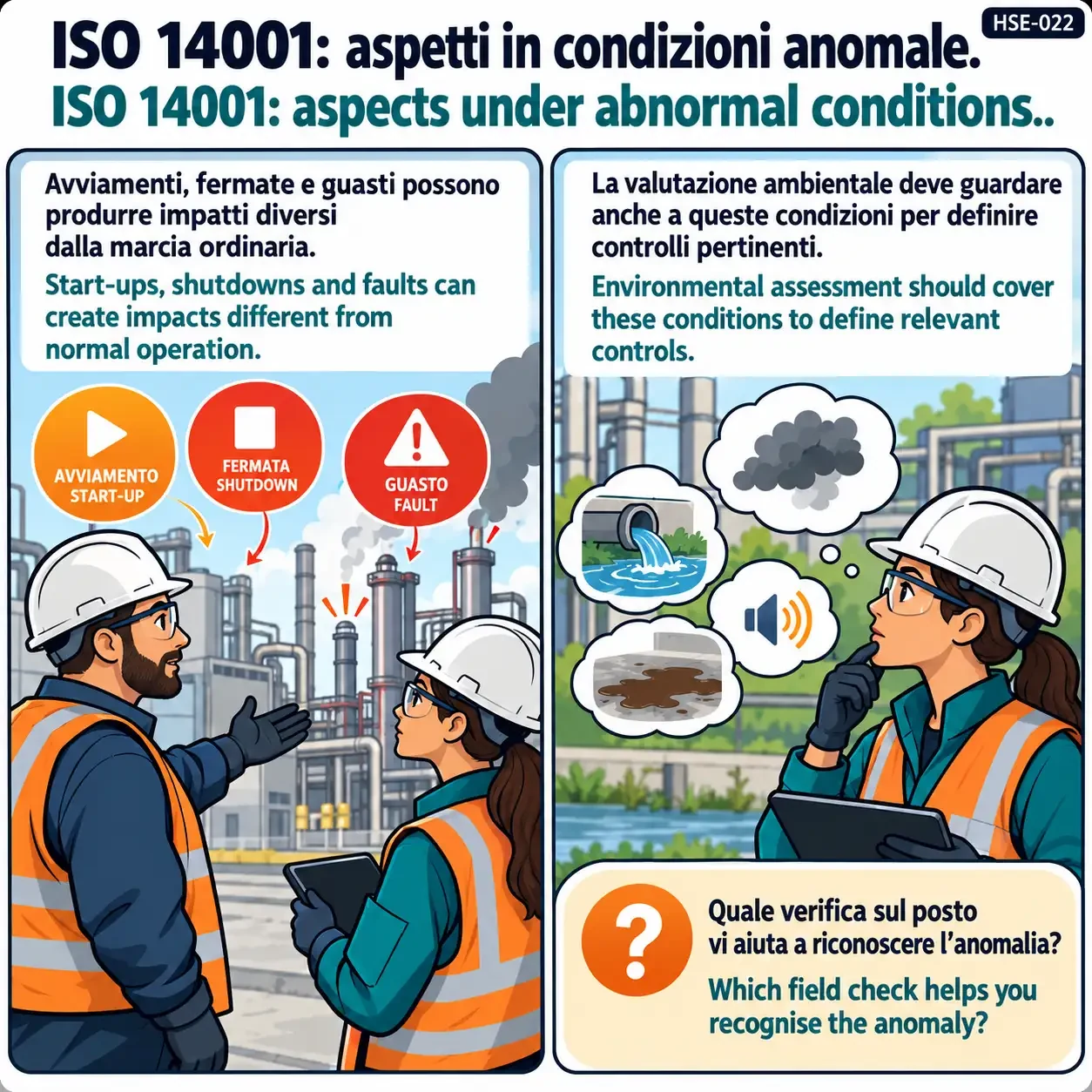
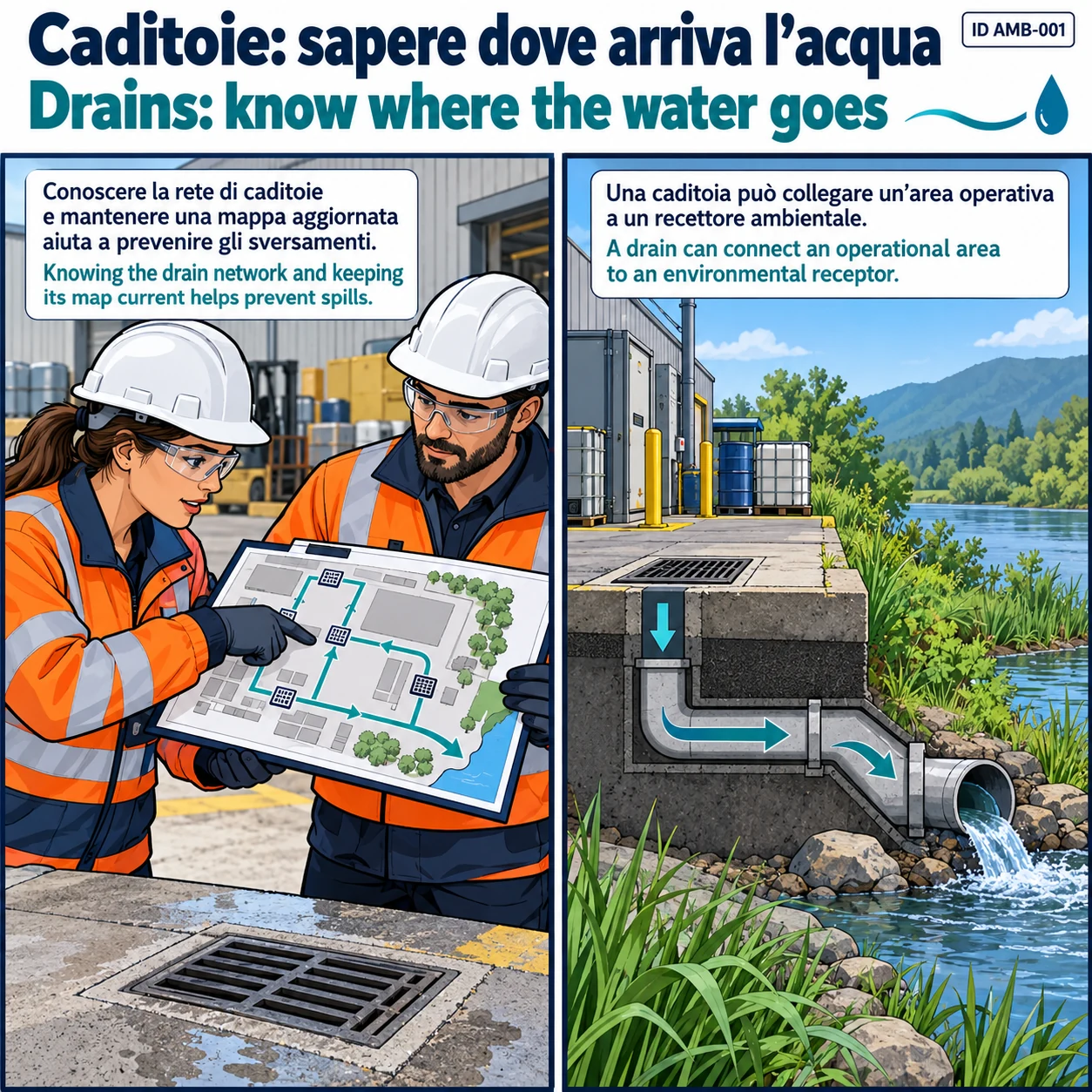
A useful environmental control connects the area, activity and potential external effect. Personnel need to recognise an anomaly and know the defined reporting route. Comparing documented arrangements with actual conditions can reveal needed updates and information that has not reached those concerned. The review should include changes and conditions beyond routine operation.
For the next discussion, choose a concrete situation and ask which evidence would help explain it. Follow up the observations by making ownership of open questions visible and explaining how feedback will be provided to the people involved.