Environment
Drains: know where the water goes
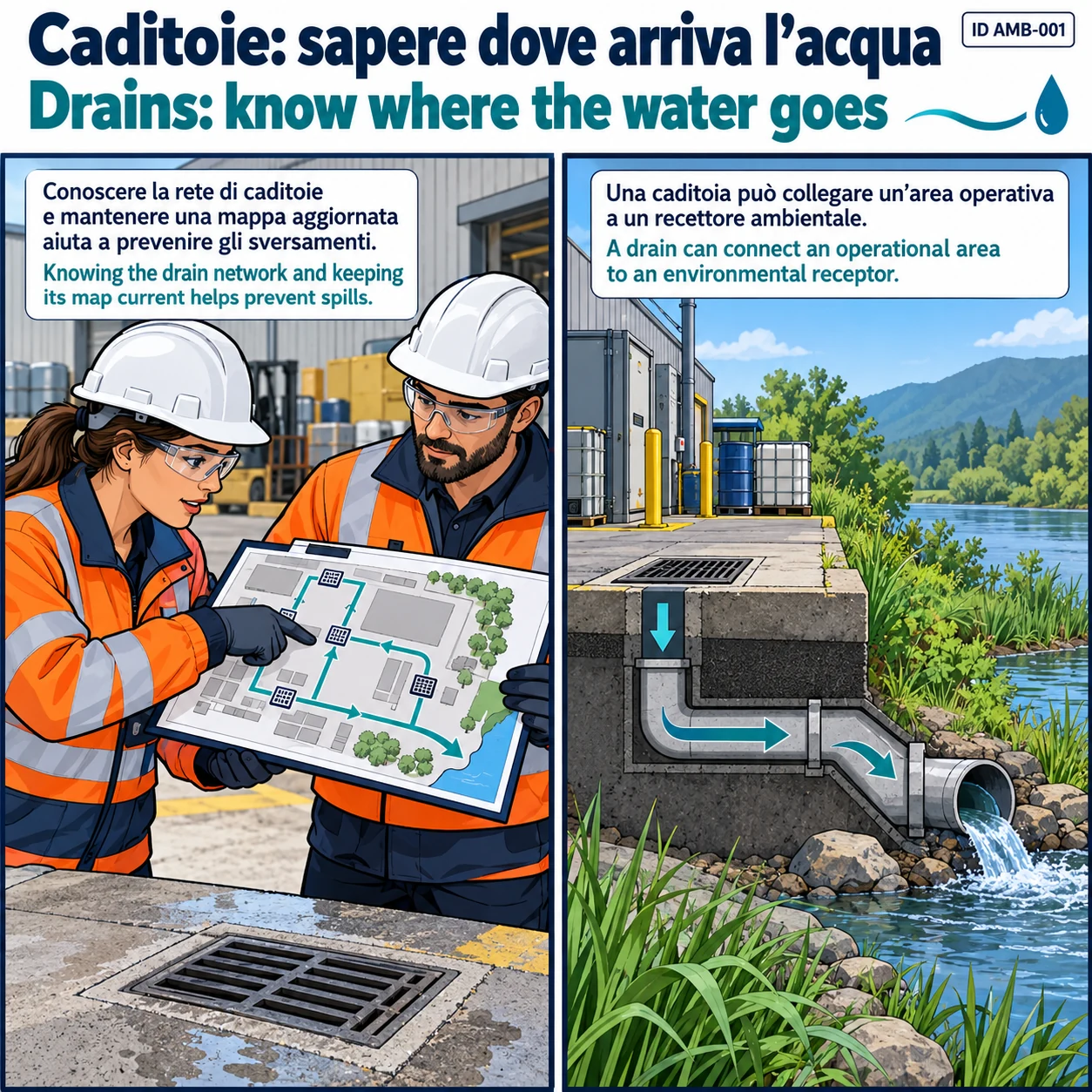
A drain can connect an operational area to an environmental receptor. Knowing the network and keeping its map current supports spill prevention planning.
Which field check makes this issue visible?
A drainage map becomes useful when personnel can relate it to the actual area. Changes, temporary storage and material movements may create interfaces needing review. Field discussion should check who maintains the information and how anomalies are reported, rather than inferring water destination from a drain’s location alone.
A useful environmental control connects the area, activity and potential external effect. Personnel need to recognise an anomaly and know the defined reporting route. Comparing documented arrangements with actual conditions can reveal needed updates and information that has not reached those concerned. The review should include changes and conditions beyond routine operation.
For the next discussion, choose a concrete situation and ask which evidence would help explain it. Follow up the observations by making ownership of open questions visible and explaining how feedback will be provided to the people involved.