Safety and people
Safety glasses: protection from the sides
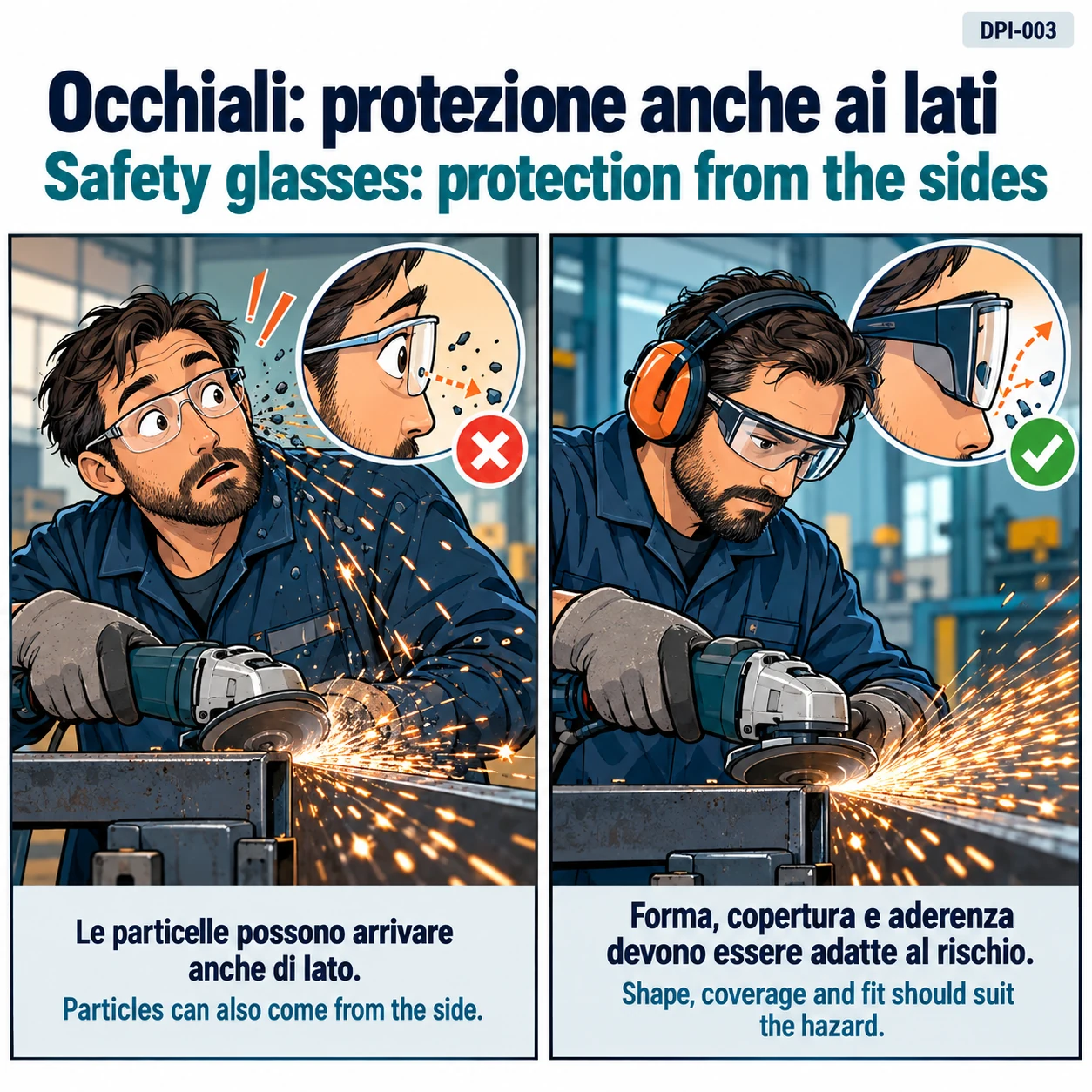
The direction of flying particles matters when selecting eye protection. Shape, coverage and fit should suit the hazard and the other equipment worn.
What information do you request before selecting protection?
Eye protection depends on the exposure scenario and the device’s characteristics. Comfort matters but does not replace checking the required performance. Selection should also address compatibility, cleaning and replacement: equipment in stock needs to suit the activity, not merely be available.
During field discussion, ask how a foreseeable difficulty is handled: who can be involved and which information supports a decision? Connecting observations, ownership and feedback helps establish whether a control is workable as well as documented. The review should consider actual conditions rather than assume that the same arrangement fits every task.
For the next discussion, choose a concrete situation and ask which evidence would help explain it. Follow up the observations by making ownership of open questions visible and explaining how feedback will be provided to the people involved.