Safety and people
Gas alarms: know the planned response
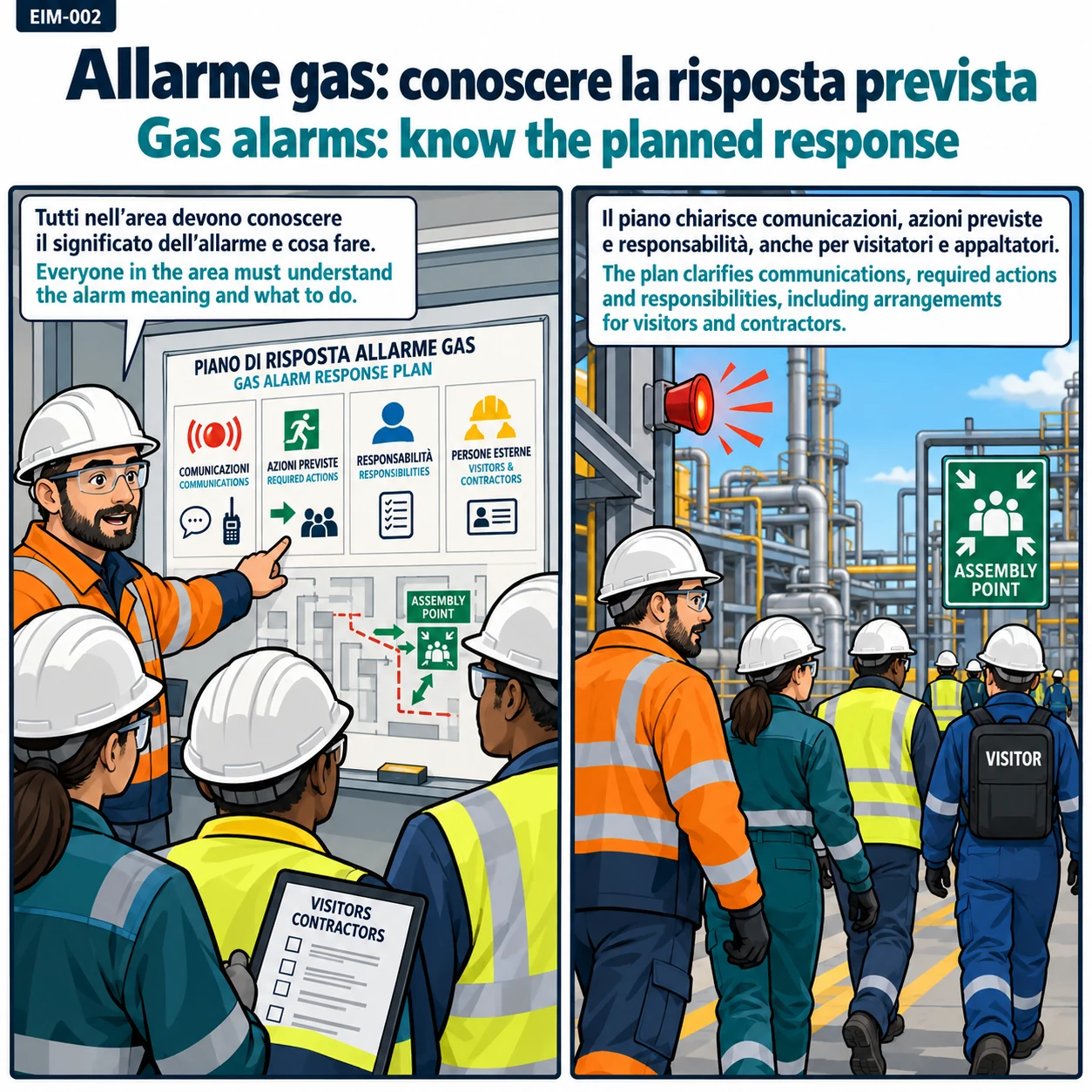
People working in an area should understand its alarms. The plan should clarify communications, required actions and responsibilities, including arrangements for visitors and contractors.
Who needs this information before an emergency?
An audible signal does not explain the required response by itself. Visitors, contractors and shift personnel may know the area differently. Initial information should make clear how signals are recognised and where relevant instructions can be found. An organisational exercise can reveal misunderstandings that a sign alone will not expose.
During field discussion, ask how a foreseeable difficulty is handled: who can be involved and which information supports a decision? Connecting observations, ownership and feedback helps establish whether a control is workable as well as documented. The review should consider actual conditions rather than assume that the same arrangement fits every task.
For the next discussion, choose a concrete situation and ask which evidence would help explain it. Follow up the observations by making ownership of open questions visible and explaining how feedback will be provided to the people involved.