
Safety and people
Separating pedestrians and vehicles
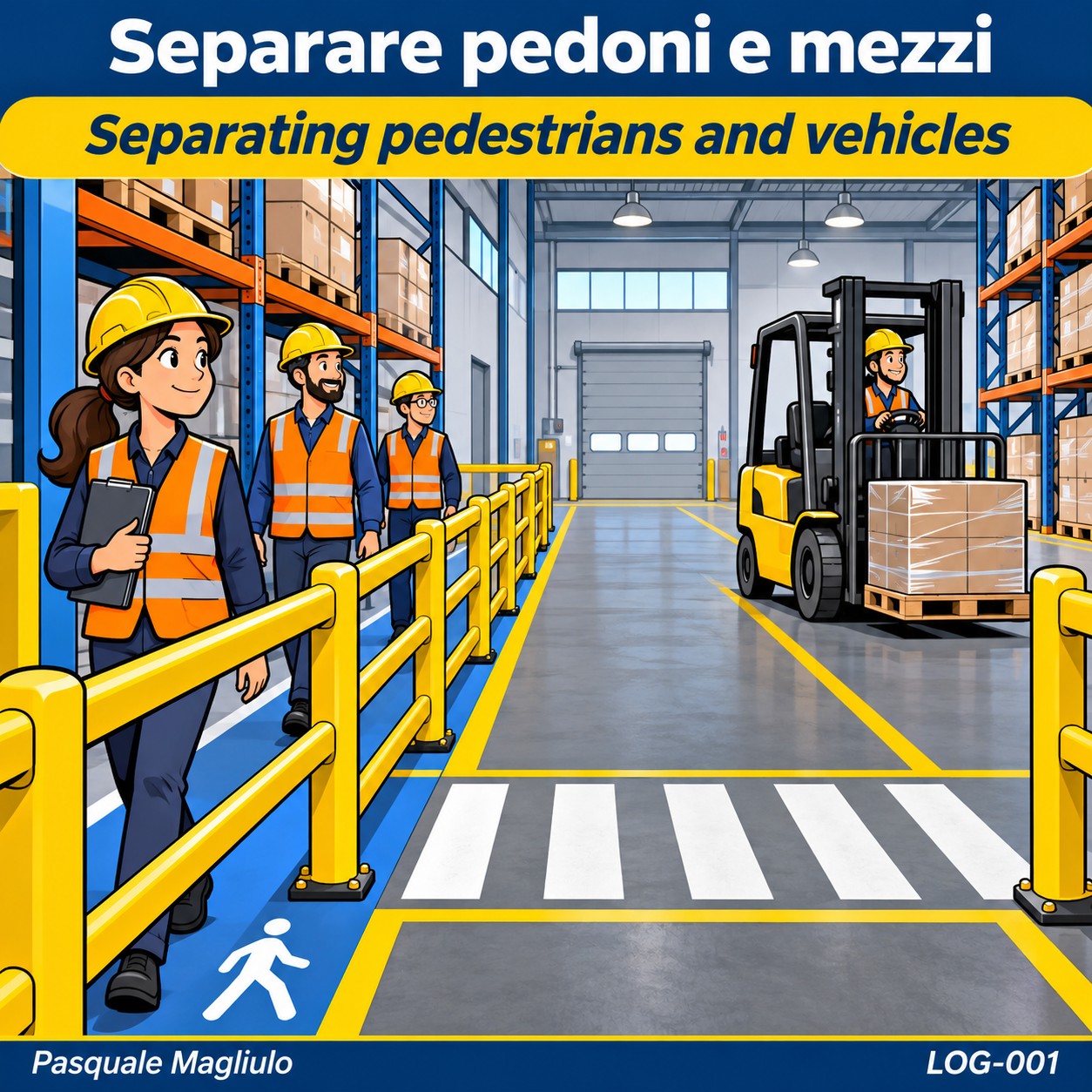
Use pedestrian routes and designated crossings: painted lines need segregation measures suited to the risk.
Before your next shift, check how this risk is managed in your work.
A painted line provides useful information, but it is not always adequate separation. Observe where people actually walk: office exits, welfare facilities, loading bays and junctions with restricted visibility. An impractical route invites shortcuts; a pallet left in a walkway may push someone into the vehicle area.
Assessment should consider flows, speed, manoeuvres, loads and visitors. Where possible, physical separation and the organisation of activities reduce encounters. Crossings need specific attention and rules understood by both drivers and pedestrians. High-visibility clothing cannot correct a poor layout on its own.
On a walk-through, I would involve a driver and someone who uses the area on foot: the same junction can look very different from their positions. Where do people hesitate during a shift? Starting with that observation makes improvement practical, and gives those who use the routes a part in checking whether the change works.