
Safety and people
Prescription glasses and eye protection
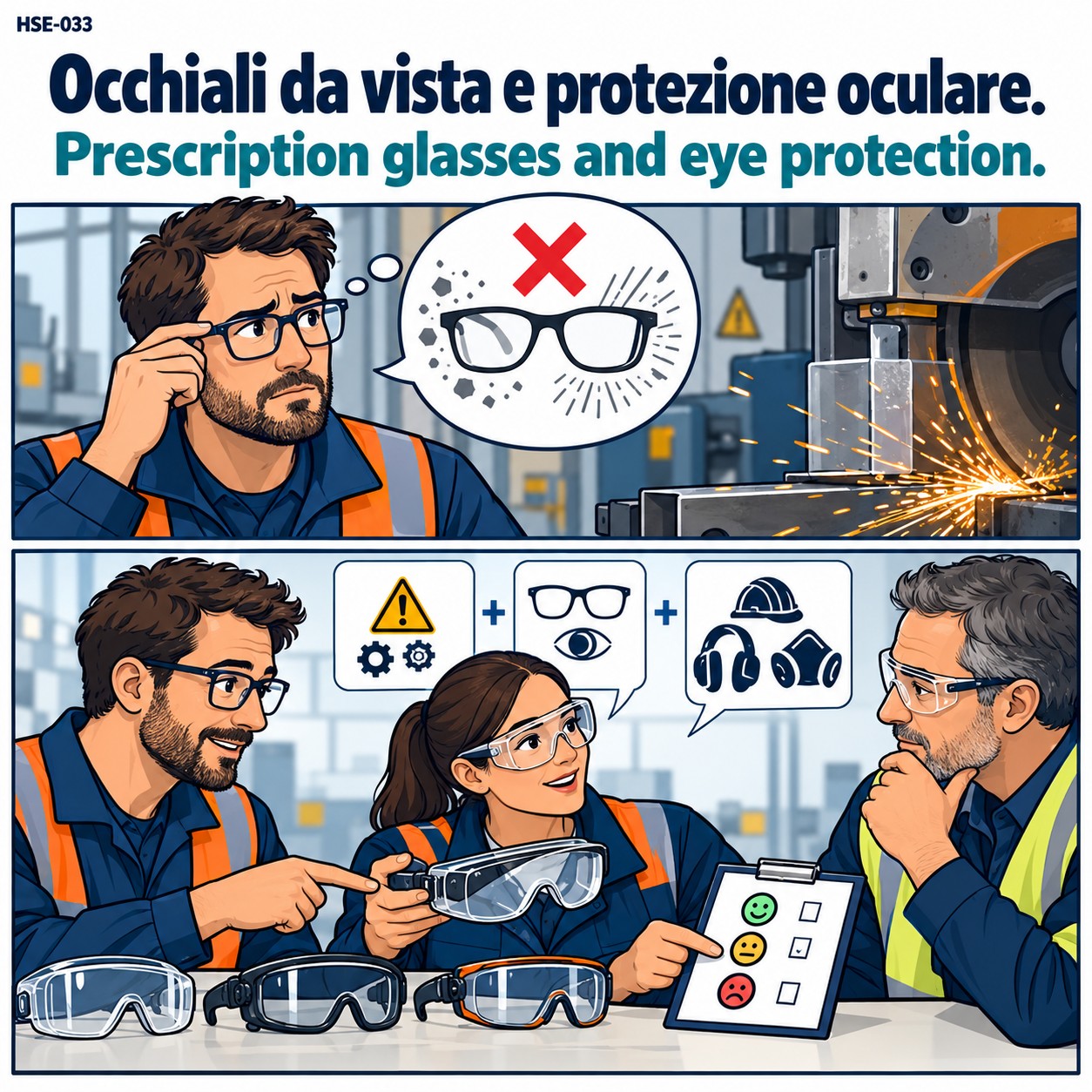
Ordinary prescription glasses do not automatically replace eye protection.
Selection should consider the hazard, vision correction and compatibility with other PPE.
How do you collect feedback from the wearer?
Prescription glasses and protective eyewear serve different purposes. Selection should start with the hazard: flying particles, dust, splashes or other exposure call for suitable protection with verified characteristics and limitations. A frame that looks strong or covers the front of the eyes is not enough.
For people who need corrective lenses, consider compatible protective options: over-spectacles, inserts or prescription safety eyewear suited to the task. Fit, field of vision, fogging and compatibility with helmets and other PPE affect actual use. The manufacturer’s instructions help clarify what a device can and cannot protect against.
Before considering the issue closed at handover, I would ask the wearer to try the protection in the intended conditions and report difficulties. Cleaning, storage and replacement are also part of the arrangement. What practical problem might lead someone to remove protection while working? Listening to that answer helps make selection effective.